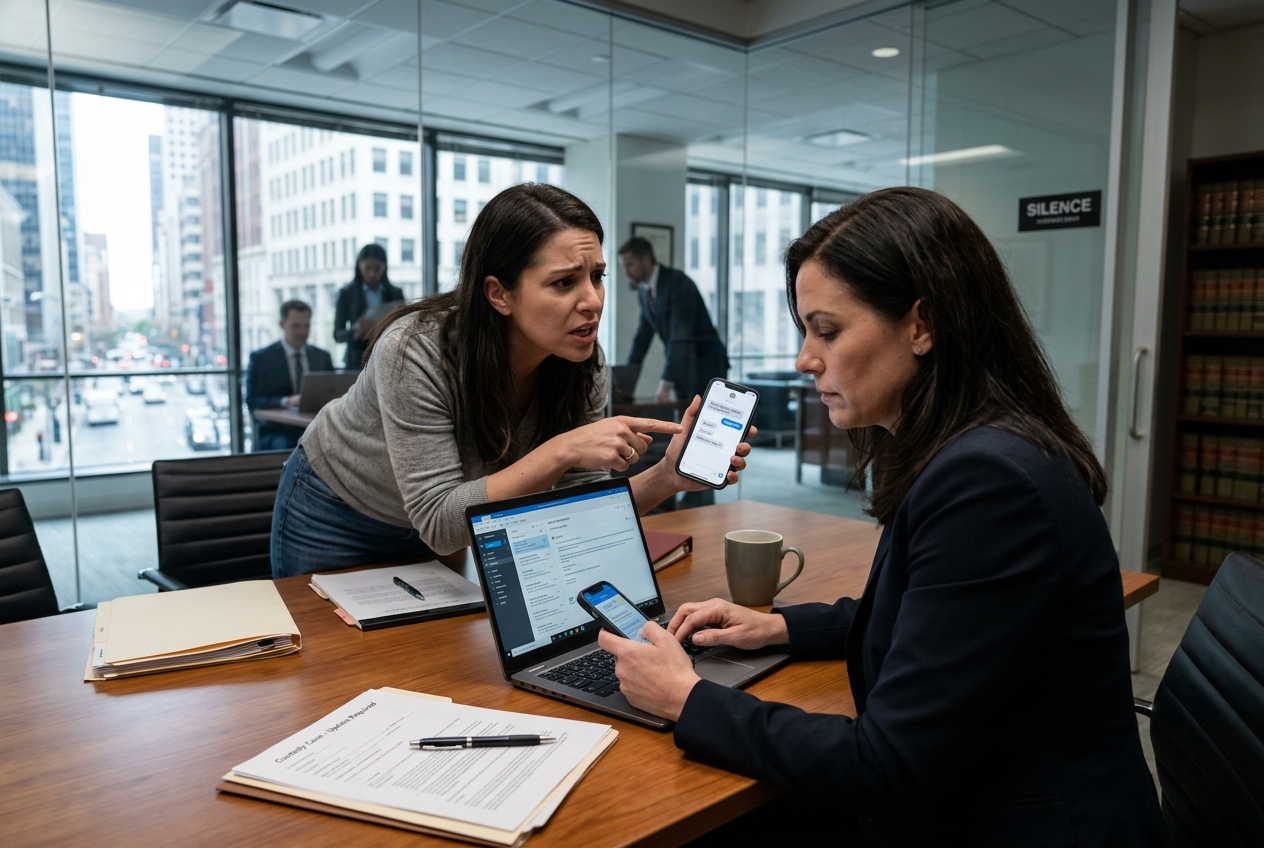
Boundaries are what separate a sustainable family law practice from a chaotic one — and knowing how to set them is one of the clearest ways family law attorneys attract new clients and keep existing ones. When a client starts asking for daily updates, that’s not just a communication preference. It’s a signal that anxiety is driving the relationship, and without a clear structure in place, it will drive your workflow too.
The good news: you can keep clients feeling supported without letting their fear run your calendar. It comes down to smarter communication and the right tools.
Establishing Boundaries Without Losing Trust
Effective communication builds trust — but when a client wants daily updates, it can quietly erode the efficiency that makes your service valuable in the first place. Setting boundaries isn’t about being unavailable. It’s about being sustainable.
A Harvard Business Review study found that frequent interruptions can cut productivity by up to 40%. For family law attorneys, that’s not a statistic — it’s a case that takes longer to resolve because three other clients needed hand-holding. Help clients understand that boundary isn’t about them. It’s about the quality of work they’re paying for.
Start setting expectations at the initial consultation. Be transparent about typical response times and explain when and how updates will come. Clients who understand the rhythm upfront are far less likely to chase you for reassurance later.
A secure client portal can do a lot of heavy lifting here. When clients can log in and see their documents, upcoming dates, and case notes whenever they want, the urge to call every morning fades. A Legal Services Corporation report found that firms using technology to handle routine tasks saw significant gains in both satisfaction and efficiency.
When you do communicate, make it count. Find out early whether your client’s biggest worry is custody, property division, or something else entirely — then anchor your updates to those priorities. A focused update at a meaningful case milestone does more to reassure a client than a daily “nothing new to report.”
And when a client still pushes for more contact, lead with empathy before you lead with policy. That daily call request usually isn’t about entitlement. It’s about fear. Acknowledge it. Explain what the process looks like and where their case sits in it. That context often does more than any update could.
Track communication patterns over time, document your interactions, and make adjustments when something isn’t working. When boundaries need reinforcing, frame it around service quality — not as a penalty, but as a way of protecting your ability to do the work well for everyone.
Using Technology to Provide Nonstop Reassurance
Family law is personal. The stakes are high, emotions run hot, and clients often feel like they’re waiting in the dark. Technology won’t replace the human connection — but it can make the silence between calls feel a lot less unsettling.
A Client Relationship Management (CRM) system is a strong starting point. CRMs track case progress, store documents, and can send automated updates without anyone picking up the phone. A Capterra survey found that 74% of CRM users reported better access to customer data — and better data means fewer gaps that clients feel the need to fill by calling you.
A secure client portal takes that further. When clients can check case status, share documents, review upcoming dates, and send messages on their own schedule, the pressure to reach out constantly drops. The American Bar Association has found that client portals improve not just communication but clients’ overall perception of a firm’s professionalism — which matters when they’re deciding whether to refer you.
For clients who still want a human face, video check-ins strike the right balance. They’re scheduled, bounded, and personal enough to feel meaningful. Seventy percent of professionals in recent studies credited video conferencing tools with productivity gains — and for clients, a scheduled video call can feel like more attention, not less.
Instant messaging apps can also work well, provided you set the terms. Specific messaging hours, clear response-time expectations, and a defined channel keep things manageable. A 2021 Deloitte study found secure messaging improved communication efficiency, particularly for firms with limited resources.
Finally, don’t underestimate client education. An online library of FAQs, explainer articles, or short videos can answer the questions clients would otherwise bring to you. Think of it as giving someone a map before a road trip — they still call, but they call less, and the calls are more focused. A Legal Services Corporation survey confirmed that client education significantly increased satisfaction in family law cases.
Turning Frequent Communication into Billing Clarity
Daily check-ins have a cost. If that cost isn’t visible to clients, billing friction is almost inevitable.
Clio’s Legal Trends report found that 67% of people who’ve hired a lawyer were put off by perceived high fees. The word “perceived” matters. Often it’s not the amount — it’s the surprise. When clients don’t see the connection between communication and cost, the invoice feels arbitrary.
The fix is documentation done right. Every interaction — phone call, email, portal message — should be logged with a timestamp, duration, and purpose. Not just “phone call” but “call to discuss revised custody proposal, 18 minutes.” That level of detail shows clients that each interaction is moving something forward, not just adding to a bill.
Carry that clarity into your invoices. Instead of a line item that says “communications,” break it down: “Phone call — child support calculation review, 25 minutes.” Clients who can see what they’re paying for are clients who trust the bill.
Client portals help here too. When clients can watch case progress in real time alongside related charges, billing feels connected to results rather than overhead. The ABA’s Legal Technology Survey found that around 63% of law firms now offer portals — and the firms using them tend to have fewer billing disputes.
Upfront education closes the loop. Walk clients through your communication policies before they ever wonder about them. Explain what’s billable, what isn’t, and why. If a client knows that a brief portal message handles what would otherwise be a billable phone call, they’ll often choose the message — and appreciate you for making it easy.
Frequent communication and billing clarity aren’t in conflict. With the right records, the right invoicing, and the right tools, they reinforce each other — and your clients will feel it. To see how other firms have put these strategies into practice, browse our case studies. If you’re ready to build a more sustainable practice, get in touch with our team.

Boundaries are what separate a sustainable family law practice from a chaotic one — and knowing how to set them is one of the clearest ways family law attorneys attract new clients and keep existing ones. When a client starts asking for daily updates, that’s not just a communication preference. It’s a signal that anxiety is driving the relationship, and without a clear structure in place, it will drive your workflow too.
The good news: you can keep clients feeling supported without letting their fear run your calendar. It comes down to smarter communication and the right tools.
Establishing Boundaries Without Losing Trust
Effective communication builds trust — but when a client wants daily updates, it can quietly erode the efficiency that makes your service valuable in the first place. Setting boundaries isn’t about being unavailable. It’s about being sustainable.
A Harvard Business Review study found that frequent interruptions can cut productivity by up to 40%. For family law attorneys, that’s not a statistic — it’s a case that takes longer to resolve because three other clients needed hand-holding. Help clients understand that boundary isn’t about them. It’s about the quality of work they’re paying for.
Start setting expectations at the initial consultation. Be transparent about typical response times and explain when and how updates will come. Clients who understand the rhythm upfront are far less likely to chase you for reassurance later.
A secure client portal can do a lot of heavy lifting here. When clients can log in and see their documents, upcoming dates, and case notes whenever they want, the urge to call every morning fades. A Legal Services Corporation report found that firms using technology to handle routine tasks saw significant gains in both satisfaction and efficiency.
When you do communicate, make it count. Find out early whether your client’s biggest worry is custody, property division, or something else entirely — then anchor your updates to those priorities. A focused update at a meaningful case milestone does more to reassure a client than a daily “nothing new to report.”
And when a client still pushes for more contact, lead with empathy before you lead with policy. That daily call request usually isn’t about entitlement. It’s about fear. Acknowledge it. Explain what the process looks like and where their case sits in it. That context often does more than any update could.
Track communication patterns over time, document your interactions, and make adjustments when something isn’t working. When boundaries need reinforcing, frame it around service quality — not as a penalty, but as a way of protecting your ability to do the work well for everyone.
Using Technology to Provide Nonstop Reassurance
Family law is personal. The stakes are high, emotions run hot, and clients often feel like they’re waiting in the dark. Technology won’t replace the human connection — but it can make the silence between calls feel a lot less unsettling.
A Client Relationship Management (CRM) system is a strong starting point. CRMs track case progress, store documents, and can send automated updates without anyone picking up the phone. A Capterra survey found that 74% of CRM users reported better access to customer data — and better data means fewer gaps that clients feel the need to fill by calling you.
A secure client portal takes that further. When clients can check case status, share documents, review upcoming dates, and send messages on their own schedule, the pressure to reach out constantly drops. The American Bar Association has found that client portals improve not just communication but clients’ overall perception of a firm’s professionalism — which matters when they’re deciding whether to refer you.
For clients who still want a human face, video check-ins strike the right balance. They’re scheduled, bounded, and personal enough to feel meaningful. Seventy percent of professionals in recent studies credited video conferencing tools with productivity gains — and for clients, a scheduled video call can feel like more attention, not less.
Instant messaging apps can also work well, provided you set the terms. Specific messaging hours, clear response-time expectations, and a defined channel keep things manageable. A 2021 Deloitte study found secure messaging improved communication efficiency, particularly for firms with limited resources.
Finally, don’t underestimate client education. An online library of FAQs, explainer articles, or short videos can answer the questions clients would otherwise bring to you. Think of it as giving someone a map before a road trip — they still call, but they call less, and the calls are more focused. A Legal Services Corporation survey confirmed that client education significantly increased satisfaction in family law cases.
Turning Frequent Communication into Billing Clarity
Daily check-ins have a cost. If that cost isn’t visible to clients, billing friction is almost inevitable.
Clio’s Legal Trends report found that 67% of people who’ve hired a lawyer were put off by perceived high fees. The word “perceived” matters. Often it’s not the amount — it’s the surprise. When clients don’t see the connection between communication and cost, the invoice feels arbitrary.
The fix is documentation done right. Every interaction — phone call, email, portal message — should be logged with a timestamp, duration, and purpose. Not just “phone call” but “call to discuss revised custody proposal, 18 minutes.” That level of detail shows clients that each interaction is moving something forward, not just adding to a bill.
Carry that clarity into your invoices. Instead of a line item that says “communications,” break it down: “Phone call — child support calculation review, 25 minutes.” Clients who can see what they’re paying for are clients who trust the bill.
Client portals help here too. When clients can watch case progress in real time alongside related charges, billing feels connected to results rather than overhead. The ABA’s Legal Technology Survey found that around 63% of law firms now offer portals — and the firms using them tend to have fewer billing disputes.
Upfront education closes the loop. Walk clients through your communication policies before they ever wonder about them. Explain what’s billable, what isn’t, and why. If a client knows that a brief portal message handles what would otherwise be a billable phone call, they’ll often choose the message — and appreciate you for making it easy.
Frequent communication and billing clarity aren’t in conflict. With the right records, the right invoicing, and the right tools, they reinforce each other — and your clients will feel it. To see how other firms have put these strategies into practice, browse our case studies. If you’re ready to build a more sustainable practice, get in touch with our team.
Published on March 26, 2026

