painting companies marketing

Your Brand Is Either Building Trust or Costing You Jobs

Your logo, fonts, and color choices are either quietly building trust with potential clients — or quietly costing you jobs. For painters trying to figure out how to book more painting jobs, this is where the answer often starts: not with more ads or better pricing, but with whether your brand looks like it belongs in someone’s home. From the logo that greets your customers to the colors and fonts that carry your message, every detail shapes how clients judge you before you ever pick up a brush.

In the painting industry, clients often make snap decisions based on visual cues. A cohesive, professional brand image can set you apart from the competition, build recognition across platforms, and foster the kind of trust that turns one-time clients into long-term relationships.

Choosing Visuals That Convey Professionalism

Selecting the right visuals for your painting business is crucial in establishing a professional image. Your logo, font, and color scheme are subtle yet powerful tools that communicate trustworthiness and quality to potential clients.

Logo: The Face of Your Brand

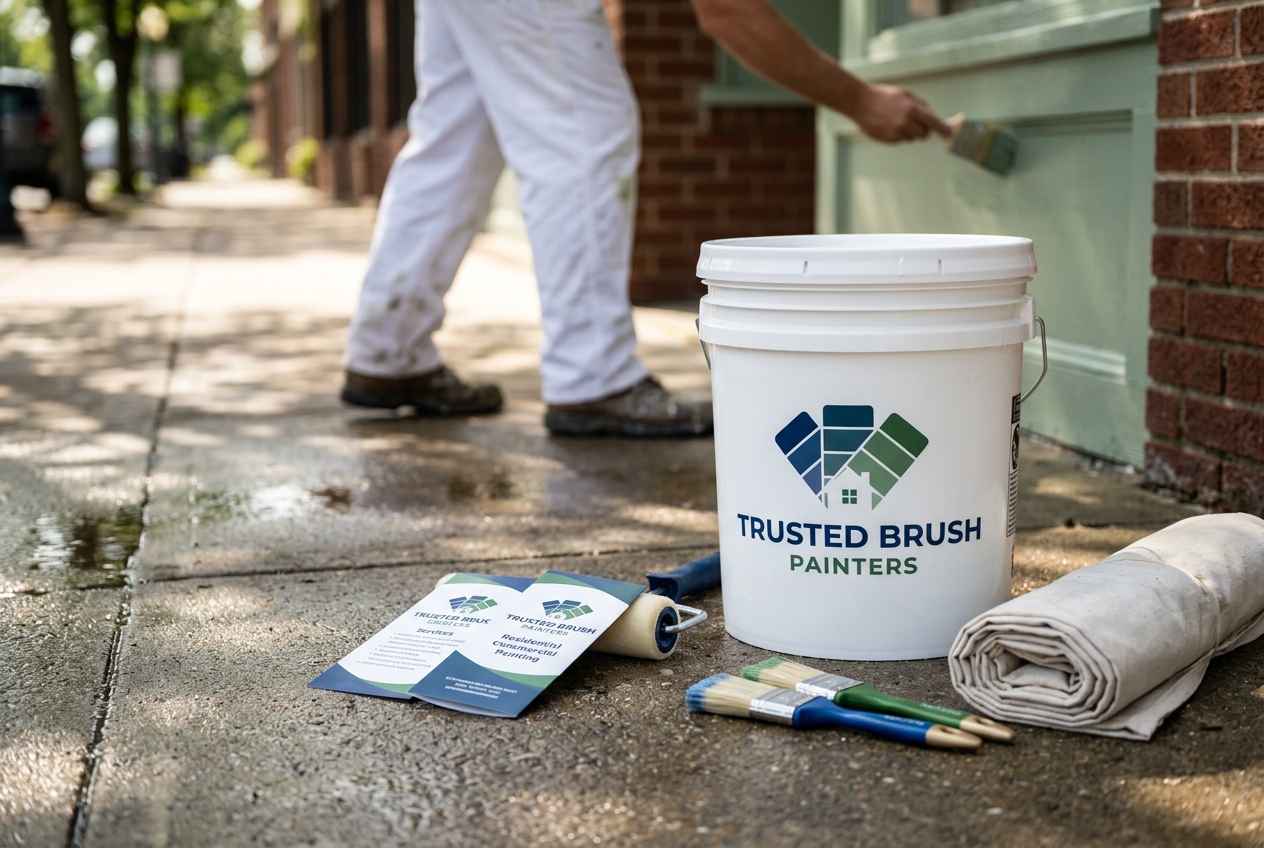
Your logo is often the first thing people associate with your brand. A well-designed logo should be simple, memorable, and aligned with your service. Think of FedEx or Nike — their logos are minimalist but evoke a strong identity. For painters, a logo might include elements like paintbrushes or color swatches, but it should avoid being overly complex. Sherwin-Williams is a good example: their logo not only represents paint but embodies a promise of quality. A study from the Harvard Business Review found that consumers take about 90 seconds to form an opinion about a product, and a significant portion of that judgment is based on color alone. That’s how much weight your logo’s color choice carries.

Fonts: Simplicity and Legibility

The font you choose plays a subtle but real role in how your business is perceived. Professional fonts like Helvetica or Arial are popular for a reason — they’re easy to read and convey stability. Overly ornate or hard-to-read fonts, on the other hand, can push potential clients away before they’ve read a single word. According to Smashing Magazine, users spend less than 15 seconds on a website if the content isn’t easily readable. Clean, professional typography signals that your brand is polished and worth trusting.

Color Psychology: Painting the Right Picture

Color plays a critical role in how your brand is perceived. A study by the University of Loyola, Maryland indicates that color increases brand recognition by up to 80%. For painting businesses, the right palette can do more than attract attention — it can establish emotional connections with clients. Blues and greens are often associated with reliability and calm, making them ideal for service-based businesses. Warmer colors like red or orange can evoke energy or urgency but should be used sparingly to avoid overstimulation. Take a cue from Benjamin Moore: notice how they balance rich color with neutral tones to create visual harmony rather than visual noise.

Visual Consistency Across Platforms

Whether you’re designing business cards, building a website, or posting on social media, all your visual elements should align. A consistent brand image enhances recall and builds trust. Prudential published a study highlighting that consistent branding can increase revenue by up to 23%. For painters looking to increase bookings, a unified look across all promotional materials directly influences how potential clients perceive your reliability.

Choose visuals that radiate professionalism, and you’re not just boosting bookings — you’re building relationships that last. As paint is to canvas, the right visuals are to a brand: essential and transformative.

Aligning Design Choices With Your Target Audience

Aligning your design choices with your target audience is crucial for painting companies looking to build a trustworthy brand. Logos, fonts, and color schemes all play a significant role in communicating your commitment to quality and reliability. Research from the University of Loyola suggests that color can increase brand recognition by up to 80% — which means the choices you make aren’t just aesthetic, they’re strategic.

Start by understanding who you’re trying to reach. Are your potential customers homeowners looking for residential painting services, or businesses in need of commercial work? Each group responds differently to design. Residential clients may prefer softer, more inviting colors, while commercial clients often gravitate toward subdued, professional tones.

Once you know your audience, build a logo that reflects their expectations. Simple and memorable wins every time. According to a study published in the Journal of Consumer Research, easily recognizable logos lead to increased consumer trust and loyalty. Elements like brushes or color swatches can instantly communicate your industry focus — just keep it clean. An overly detailed logo loses its impact the moment it’s shrunk down to fit a business card or a truck door.

Font choice matters too. According to the MIT Sloan Management Review, fonts influence perceptions of trust and professionalism. Serif fonts convey tradition and reliability, which works well for painters who want to emphasize experience. Sans-serif fonts read as modern and clean, better suited for audiences who prefer a contemporary aesthetic. If your business focuses on eco-friendly painting services, pairing sans-serif type with natural, earthy tones could resonate strongly with environmentally conscious clients.

Color ties everything together. Blue signals trust and security. Green evokes peace and health. Red communicates energy and passion. Sherwin-Williams uses color in their branding deliberately, aligning their visual choices with the emotional responses they want to trigger. Understanding that psychology helps you build a palette that reflects your values and connects with the right clients.

To pressure-test your choices, consider running your logo, font, and color options by a small focus group of your target audience. Their feedback can reveal disconnects you’d never notice on your own — and save you from a rebrand down the line.

Creating Consistency Across Online and Offline Materials

For painting companies, brand consistency is one of the most straightforward ways to build trust — and one of the most commonly overlooked.

Start with your logo. It should look identical everywhere: business cards, your website, your van, your invoices. The proportions, colors, and design don’t change. Pepsi has maintained a consistent logo across all media for decades, and that repetition is a big reason their brand is embedded in consumers’ minds worldwide. The same principle applies at any scale.

Font choice reinforces that consistency. Audiences notice discrepancies even when they can’t name what bothered them. Pick one or two fonts that reflect your brand’s tone and use them everywhere — digital signage, brochures, invoices, social media. MIT researchers have found that font uniformity improves readability and reinforces brand identity.

Colors work the same way. Sherwin-Williams uses a consistent color scheme across their paint cans, online promotions, and employee uniforms. That repetition makes their brand instantly recognizable. Pick your palette and stick to it.

A brand guideline document makes all of this manageable. Think of it as a one-page rulebook: logo usage, approved fonts, exact color codes, and any other core design elements. It keeps everyone on your team aligned and prevents the small inconsistencies that quietly erode your brand’s credibility.

Your online presence should mirror your physical materials. If your flyers promote a spring discount, your social media should too. That alignment builds trust — it shows clients that what they see in one place matches what they find in another.

And don’t overlook customer feedback. Ask clients whether they find your materials easy to recognize and visually consistent. Have they noticed anything that felt off? Those insights can guide small adjustments that make a real difference in how your brand is perceived.

A seamless, cohesive brand experience doesn’t require a massive budget. It just requires intention and follow-through. You can see how these principles translate into real results by browsing Aginto’s case studies.

Frequently Asked Questions

How can painters get more residential painting jobs?

To secure more residential painting jobs, focus on building a credible presence both online and offline:

  1. Optimize your online presence. Build a website with testimonials and a portfolio of completed projects. Use SEO best practices so you show up when potential customers search for painters in your area.
  2. Use social media strategically. Instagram and Facebook are ideal for before-and-after photos. Share painting tips and project highlights that demonstrate your expertise.
  3. Build local partnerships. Connect with interior designers, real estate agents, and other home improvement businesses who can send referrals your way.
  4. Ask for reviews. Happy clients are usually willing to leave a Google or Yelp review — they just need a nudge. Those reviews carry real weight with prospective clients.

What advertising strategies help painting companies succeed?

A mix of traditional and digital approaches tends to work best:

  1. Pay-per-click advertising. Target keywords related to painting services in your area to reach clients who are actively searching.
  2. Content marketing. Blog posts, how-to guides, and short videos that address common painting questions can position you as a trusted authority — not just another contractor.
  3. Print advertising and flyers. Local newspapers and direct mail still reach audiences who prefer traditional media, particularly in residential neighborhoods.
  4. Email marketing. A simple newsletter with seasonal tips or a limited-time promotion keeps your business in front of past and potential clients without requiring a big budget.

How can painting businesses manage slow seasons?

Slow seasons are a chance to set yourself up for a stronger busy season:

  1. Offer seasonal discounts. Incentivize bookings during off-peak periods with bundled offers or reduced rates on specific services.
  2. Diversify your services. Wallpaper installation, cabinet refinishing, or faux finishes can open up new revenue streams and reach a broader market.
  3. Double down on marketing. Use the downtime to build your pipeline — update your website, post more consistently, and reach out to past clients.
  4. Invest in your team. Training sessions during slow periods pay dividends when demand picks back up.

Brushstrokes Ahead

Building a trustworthy, recognizable brand comes down to strategic visual choices made consistently over time. Thoughtfully selected logos, fonts, and colors — aligned with your business goals and the clients you want to attract — can significantly elevate how your brand is perceived. And when those elements show up consistently across every platform and material, they don’t just look professional. They build the kind of familiarity that makes clients choose you over the competitor down the street.

As you evaluate your branding, consider testing your visuals with a small focus group to see how they land with real people. That feedback can be invaluable. If you’re ready to take your home services marketing seriously and want guidance tailored to your specific business, reach out to Aginto. A free consultation can help you clarify your objectives and make design choices that connect with the clients you’re trying to reach.

Your business is unique. Let’s discuss your specific goals. Schedule a consultation.

Your Brand Is Either Building Trust or Costing You Jobs

Your logo, fonts, and color choices are either quietly building trust with potential clients — or quietly costing you jobs. For painters trying to figure out how to book more painting jobs, this is where the answer often starts: not with more ads or better pricing, but with whether your brand looks like it belongs in someone’s home. From the logo that greets your customers to the colors and fonts that carry your message, every detail shapes how clients judge you before you ever pick up a brush.

In the painting industry, clients often make snap decisions based on visual cues. A cohesive, professional brand image can set you apart from the competition, build recognition across platforms, and foster the kind of trust that turns one-time clients into long-term relationships.

Choosing Visuals That Convey Professionalism

Selecting the right visuals for your painting business is crucial in establishing a professional image. Your logo, font, and color scheme are subtle yet powerful tools that communicate trustworthiness and quality to potential clients.

Logo: The Face of Your Brand

Your logo is often the first thing people associate with your brand. A well-designed logo should be simple, memorable, and aligned with your service. Think of FedEx or Nike — their logos are minimalist but evoke a strong identity. For painters, a logo might include elements like paintbrushes or color swatches, but it should avoid being overly complex. Sherwin-Williams is a good example: their logo not only represents paint but embodies a promise of quality. A study from the Harvard Business Review found that consumers take about 90 seconds to form an opinion about a product, and a significant portion of that judgment is based on color alone. That’s how much weight your logo’s color choice carries.

Fonts: Simplicity and Legibility

The font you choose plays a subtle but real role in how your business is perceived. Professional fonts like Helvetica or Arial are popular for a reason — they’re easy to read and convey stability. Overly ornate or hard-to-read fonts, on the other hand, can push potential clients away before they’ve read a single word. According to Smashing Magazine, users spend less than 15 seconds on a website if the content isn’t easily readable. Clean, professional typography signals that your brand is polished and worth trusting.

Color Psychology: Painting the Right Picture

Color plays a critical role in how your brand is perceived. A study by the University of Loyola, Maryland indicates that color increases brand recognition by up to 80%. For painting businesses, the right palette can do more than attract attention — it can establish emotional connections with clients. Blues and greens are often associated with reliability and calm, making them ideal for service-based businesses. Warmer colors like red or orange can evoke energy or urgency but should be used sparingly to avoid overstimulation. Take a cue from Benjamin Moore: notice how they balance rich color with neutral tones to create visual harmony rather than visual noise.

Visual Consistency Across Platforms

Whether you’re designing business cards, building a website, or posting on social media, all your visual elements should align. A consistent brand image enhances recall and builds trust. Prudential published a study highlighting that consistent branding can increase revenue by up to 23%. For painters looking to increase bookings, a unified look across all promotional materials directly influences how potential clients perceive your reliability.

Choose visuals that radiate professionalism, and you’re not just boosting bookings — you’re building relationships that last. As paint is to canvas, the right visuals are to a brand: essential and transformative.

Aligning Design Choices With Your Target Audience

Aligning your design choices with your target audience is crucial for painting companies looking to build a trustworthy brand. Logos, fonts, and color schemes all play a significant role in communicating your commitment to quality and reliability. Research from the University of Loyola suggests that color can increase brand recognition by up to 80% — which means the choices you make aren’t just aesthetic, they’re strategic.

Start by understanding who you’re trying to reach. Are your potential customers homeowners looking for residential painting services, or businesses in need of commercial work? Each group responds differently to design. Residential clients may prefer softer, more inviting colors, while commercial clients often gravitate toward subdued, professional tones.

Once you know your audience, build a logo that reflects their expectations. Simple and memorable wins every time. According to a study published in the Journal of Consumer Research, easily recognizable logos lead to increased consumer trust and loyalty. Elements like brushes or color swatches can instantly communicate your industry focus — just keep it clean. An overly detailed logo loses its impact the moment it’s shrunk down to fit a business card or a truck door.

Font choice matters too. According to the MIT Sloan Management Review, fonts influence perceptions of trust and professionalism. Serif fonts convey tradition and reliability, which works well for painters who want to emphasize experience. Sans-serif fonts read as modern and clean, better suited for audiences who prefer a contemporary aesthetic. If your business focuses on eco-friendly painting services, pairing sans-serif type with natural, earthy tones could resonate strongly with environmentally conscious clients.

Color ties everything together. Blue signals trust and security. Green evokes peace and health. Red communicates energy and passion. Sherwin-Williams uses color in their branding deliberately, aligning their visual choices with the emotional responses they want to trigger. Understanding that psychology helps you build a palette that reflects your values and connects with the right clients.

To pressure-test your choices, consider running your logo, font, and color options by a small focus group of your target audience. Their feedback can reveal disconnects you’d never notice on your own — and save you from a rebrand down the line.

Creating Consistency Across Online and Offline Materials

For painting companies, brand consistency is one of the most straightforward ways to build trust — and one of the most commonly overlooked.

Start with your logo. It should look identical everywhere: business cards, your website, your van, your invoices. The proportions, colors, and design don’t change. Pepsi has maintained a consistent logo across all media for decades, and that repetition is a big reason their brand is embedded in consumers’ minds worldwide. The same principle applies at any scale.

Font choice reinforces that consistency. Audiences notice discrepancies even when they can’t name what bothered them. Pick one or two fonts that reflect your brand’s tone and use them everywhere — digital signage, brochures, invoices, social media. MIT researchers have found that font uniformity improves readability and reinforces brand identity.

Colors work the same way. Sherwin-Williams uses a consistent color scheme across their paint cans, online promotions, and employee uniforms. That repetition makes their brand instantly recognizable. Pick your palette and stick to it.

A brand guideline document makes all of this manageable. Think of it as a one-page rulebook: logo usage, approved fonts, exact color codes, and any other core design elements. It keeps everyone on your team aligned and prevents the small inconsistencies that quietly erode your brand’s credibility.

Your online presence should mirror your physical materials. If your flyers promote a spring discount, your social media should too. That alignment builds trust — it shows clients that what they see in one place matches what they find in another.

And don’t overlook customer feedback. Ask clients whether they find your materials easy to recognize and visually consistent. Have they noticed anything that felt off? Those insights can guide small adjustments that make a real difference in how your brand is perceived.

A seamless, cohesive brand experience doesn’t require a massive budget. It just requires intention and follow-through. You can see how these principles translate into real results by browsing Aginto’s case studies.

Frequently Asked Questions

How can painters get more residential painting jobs?

To secure more residential painting jobs, focus on building a credible presence both online and offline:

  1. Optimize your online presence. Build a website with testimonials and a portfolio of completed projects. Use SEO best practices so you show up when potential customers search for painters in your area.
  2. Use social media strategically. Instagram and Facebook are ideal for before-and-after photos. Share painting tips and project highlights that demonstrate your expertise.
  3. Build local partnerships. Connect with interior designers, real estate agents, and other home improvement businesses who can send referrals your way.
  4. Ask for reviews. Happy clients are usually willing to leave a Google or Yelp review — they just need a nudge. Those reviews carry real weight with prospective clients.

What advertising strategies help painting companies succeed?

A mix of traditional and digital approaches tends to work best:

  1. Pay-per-click advertising. Target keywords related to painting services in your area to reach clients who are actively searching.
  2. Content marketing. Blog posts, how-to guides, and short videos that address common painting questions can position you as a trusted authority — not just another contractor.
  3. Print advertising and flyers. Local newspapers and direct mail still reach audiences who prefer traditional media, particularly in residential neighborhoods.
  4. Email marketing. A simple newsletter with seasonal tips or a limited-time promotion keeps your business in front of past and potential clients without requiring a big budget.

How can painting businesses manage slow seasons?

Slow seasons are a chance to set yourself up for a stronger busy season:

  1. Offer seasonal discounts. Incentivize bookings during off-peak periods with bundled offers or reduced rates on specific services.
  2. Diversify your services. Wallpaper installation, cabinet refinishing, or faux finishes can open up new revenue streams and reach a broader market.
  3. Double down on marketing. Use the downtime to build your pipeline — update your website, post more consistently, and reach out to past clients.
  4. Invest in your team. Training sessions during slow periods pay dividends when demand picks back up.

Brushstrokes Ahead

Building a trustworthy, recognizable brand comes down to strategic visual choices made consistently over time. Thoughtfully selected logos, fonts, and colors — aligned with your business goals and the clients you want to attract — can significantly elevate how your brand is perceived. And when those elements show up consistently across every platform and material, they don’t just look professional. They build the kind of familiarity that makes clients choose you over the competitor down the street.

As you evaluate your branding, consider testing your visuals with a small focus group to see how they land with real people. That feedback can be invaluable. If you’re ready to take your home services marketing seriously and want guidance tailored to your specific business, reach out to Aginto. A free consultation can help you clarify your objectives and make design choices that connect with the clients you’re trying to reach.

Your business is unique. Let’s discuss your specific goals. Schedule a consultation.

Published on May 1, 2026

About the Author: Chris Williams

Founder at Aginto, and an organic marketing specialist, Chris has worked on everything from SEO to social media marketing to conversion optimization. He spends his downtime raising his daughter, volunteering with the Salvation Army, and obsessing over the Ohio State Buckeyes on Twitter. You can follow him here.