
Real Stories Close Cases
Real stories close cases. That’s something every personal injury attorney learns eventually — and it’s why video testimonials have become one of the most effective ways to build trust with people who are scared, overwhelmed, and trying to decide who to hire. If you’re focused on how personal injury attorneys get more leads, authentic client video testimonials deserve a serious place in your strategy.
Building trust in the legal space isn’t just about listing victories or citing past successes. It’s about inviting prospective clients into a relatable journey — one where they can envision their own path to resolution. Video testimonials bridge that hesitation. With the right approach, they become a beacon of assurance for anyone navigating the daunting legal process.
Encouraging Clients to Share Stories Authentically
Encouraging clients to share authentic stories is one of the most powerful things a personal injury attorney can do to attract new leads. Video testimonials give future clients a genuine glimpse into real experiences, helping them feel more confident choosing your firm. The key is making sure those stories feel real — not rehearsed.
Start by building trust with your clients long before you ask for anything. Trust is foundational to obtaining heartfelt testimonials, and it’s built through consistent communication and genuine empathy. Check in regularly with case updates. A study by the American Bar Association found that clients greatly value communication and transparency. When clients feel their attorney truly cares, they’re far more willing to open up.
Timing matters, too. The best moment to ask for a testimonial is shortly after a successful resolution, when positive emotions are still fresh. The Legal Marketing Association found that clients are more willing to provide positive feedback right after a favorable outcome. When you make the ask, help them understand how their story could help someone else in the same situation — that reframe often makes people much more willing.
When preparing clients for their testimonials, encourage them to focus on specifics: the challenges they faced, your role in helping them through it, and how things turned out. That arc — problem, support, resolution — is what makes a story land. Ask them to tell it in their own words, not yours.
Avoid scripts. Scripted testimonials tend to sound stilted and unconvincing, even when the underlying experience is genuinely positive. Instead, suggest bullet points to guide their thoughts. Genuine, slightly unpolished speech is almost always more relatable than a perfectly crafted paragraph.
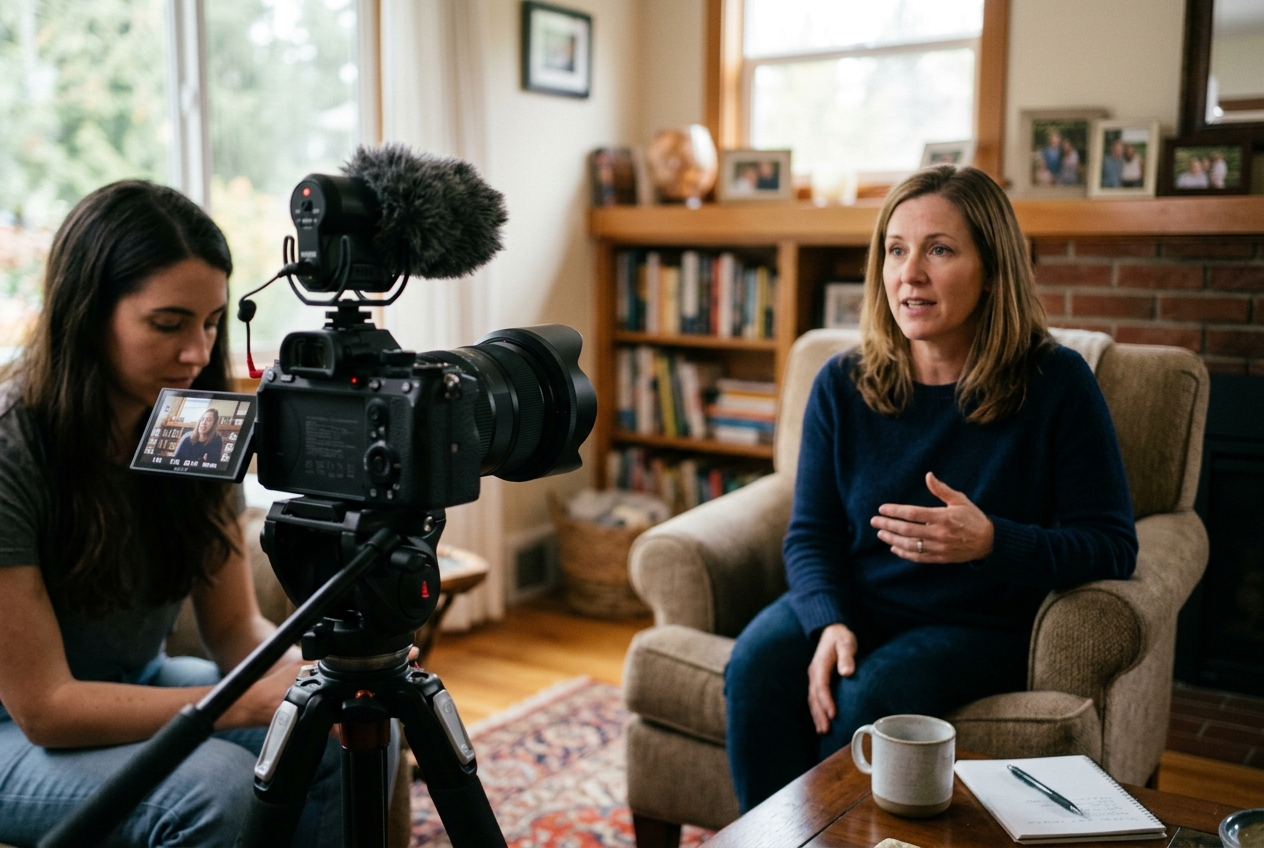
Make the recording environment as comfortable as possible. A lot of people freeze in front of a camera. Filming at their home or your office, suggesting casual dress, and keeping the tone relaxed can do a lot to put someone at ease — and that ease comes through on screen.
Finally, remind clients that their story matters beyond their own case. According to Nielsen’s Global Trust in Advertising report, 92% of consumers trust recommendations from individuals over ads. One client’s experience, honestly told, can be the deciding factor for someone urgently searching for help.
Filming Testimonials That Feel Relatable
Producing a video testimonial that actually resonates takes more than pointing a camera at someone. The goal is to make the viewer feel like they’re hearing from a real person, not watching a marketing asset.
Start with the Right Questions
Instead of broad prompts like “How was your experience?”, try something more specific: “Can you tell us about a moment you felt really supported?” Targeted questions lead clients toward personal stories rather than generic statements — and personal stories are what connect.
Choose the Right Setting
Where you film shapes how the testimonial feels. A familiar environment — a client’s home, a comfortable conference room — signals honesty and puts the person at ease. Think about what backdrop reinforces the story being told.
Capture Genuine Emotions
Authenticity draws people in. A tearful moment of relief, a quiet smile, a visible exhale — these small details convey something that polished production never can. Let those moments happen naturally rather than editing around them.
Keep It Concise
Research indicates that videos around one to two minutes maintain viewer engagement effectively. Focus on one or two key points rather than trying to cover everything. A tight, clear story is more powerful than a complete one.
Invest in Production Quality
Content is king, but poor audio or shaky visuals will undercut even the most compelling story. A decent camera, good lighting, and a simple lav mic go a long way. You don’t need a film crew — just enough quality that nothing distracts from the message.
Highlight Specific Outcomes
Vague praise (“they were great to work with”) doesn’t move people. Specific outcomes do. If a client shares that your timely intervention secured them a significant settlement, that’s tangible evidence of what you can do — and it mirrors what a prospective client is hoping for.
Tell a Story with a Shape
Each testimonial should have a narrative arc: problem, process, resolution. That structure humanizes the legal experience, making it feel less intimidating and more like a personal victory. People connect with stories. Give them one.
Respect Privacy
Not every client will want to appear on camera — and that’s completely fine. Voiceovers paired with b-roll footage (short supplemental clips of a relevant environment or setting) can be just as powerful, without requiring anyone to show their face. Privacy respected, message delivered.
Placing Videos Strategically on Digital Channels
Knowing where to put your videos is just as important as making them. The goal is to meet potential clients where they already are — and give them a reason to stay.
Facebook and Instagram are natural starting points. A HubSpot study found that video posts on Facebook receive 59% more engagement than other post types. Short, impactful testimonials perform especially well here — they’re easy to share, and organic reach can extend your reputation further than paid ads alone.
YouTube is worth its own strategy. As the second-largest search engine in the world, it surfaces content based on what people are actively searching for. Host your testimonials on a dedicated channel, and optimize titles and descriptions with relevant terms — “personal injury attorney,” “client victory stories,” “car accident settlement” — so people can find them when they need them most.
Your website should be the foundation. According to Animoto, 73% of consumers are more likely to move forward after watching a video that explains a service. In legal, that translates directly to the intake process. Put testimonials on your homepage for a strong first impression, and embed them on relevant service or case result pages for deeper validation.
Don’t overlook email. HubSpot found that emails featuring video can increase click-through rates by up to 300%. A personalized message linking to a relevant client story — sent at the right moment, like after someone submits an inquiry — can meaningfully warm up a cold lead.
Across all of it, make sure your videos are optimized for mobile. A Video Marketing Group study found that mobile video drives higher engagement rates, and most people browsing for a lawyer are doing it on their phone. High quality matters, but so does load speed. Simple and authentic almost always outperforms overproduced.
Frequently Asked Questions
How can personal injury attorneys reduce client drop-off?
Clear, empathetic communication is the biggest factor. That means regular case updates, realistic expectations, and easy access to support throughout the process. A thoughtful onboarding experience that addresses common fears, combined with digital tools that make communication and document sharing simple, goes a long way toward keeping clients engaged and reducing attrition.
What intake strategies increase conversions for injury law firms?
Respond quickly, simplify your intake forms, and train your team to lead with empathy — not process. Offering multiple contact options (phone, email, chat) accommodates different client preferences. Integrating a CRM to track leads and automate follow-up ensures no one slips through the cracks, which is where a lot of potential clients are lost.
How does content marketing help personal injury lawyers stand out?
It positions you as a credible, knowledgeable resource before someone ever picks up the phone. Blog posts, videos, and testimonials that address real client fears build trust over time. Combined with smart SEO for law firms, that content also makes you easier to find — which matters enormously when someone is searching for help at a stressful moment in their life.
Winning Trust, Step by Step
Authentic video testimonials work because they let real people tell real stories — and prospective clients can see themselves in those stories. The strategies above, from asking better questions to placing videos on the right platforms, all serve one purpose: making it easier for someone in need to trust you with their case.
Start small if you need to. Pick one strategy, implement it, watch what happens, and adjust. Gather feedback from clients about what felt comfortable and what didn’t. If you want help thinking through how video testimonials could fit your specific practice, Aginto offers free consultations to help you map out a digital strategy that fits your firm’s goals and voice.