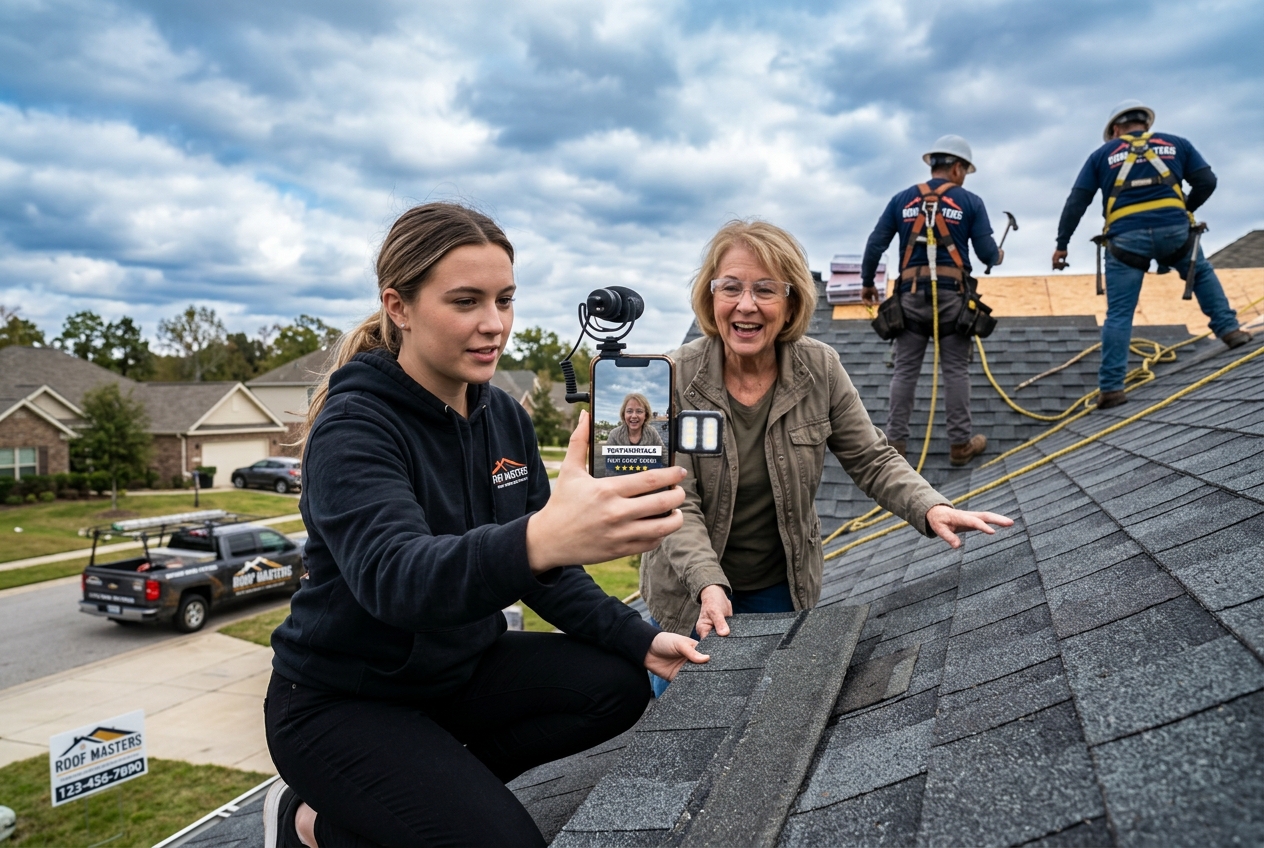

Editing Client Feedback Into Short, Impactful Clips
Your next lead might already be on your phone — you just haven’t hit record yet. When a roofing company combines real client feedback with engaging visuals, it creates something more valuable than a brochure: a story that builds trust. This is one of the most underrated ways roofing companies get leads online. Turning honest testimonials into short, impactful clips captures human experiences, making potential customers visualize themselves receiving the same exceptional service. This process is more than just a branding exercise — it’s about creating a connection.
Attention spans are short. But concise stories that hit emotionally can still stop the scroll. Strong visuals and a clear narrative let you speak directly to what your audience needs and wants. As marketing and storytelling blur together, authentic testimonials can set your brand apart on crowded social media feeds — building both presence and credibility.
Start with Authentic Feedback
An honest review from a satisfied customer is powerful. Gather feedback that reflects genuine experiences — encourage clients to get specific. A customer might mention how quickly your team completed an unexpected roof repair, or how respectfully your crew navigated the job site. That kind of detail makes a testimonial feel real. According to a BrightLocal consumer survey, 88% of consumers trust online reviews as much as personal recommendations, which underscores why authentic, specific stories matter.
Craft Powerful Visuals
Mix in before-and-after shots, videos of your team in action, or drone footage of completed projects. Eye-catching imagery significantly enhances a testimonial’s impact. A study by Wyzowl indicates that users watch 95% of a video message versus reading just 10% of text — visuals make a measurable difference in engagement.
Keep It Short and Sweet
Studies by Microsoft suggest the average human attention span is around eight seconds. Keep your clips to 30–60 seconds. Each video should tell a clear, focused story that highlights one key aspect of your service — long enough to connect, short enough to hold attention.
Incorporate Clear Narratives
Structure each video like a story: start with the problem the customer faced, present the solution your team provided, then end with the result. That arc keeps viewers engaged and helps them see the real-world benefit of choosing you over a competitor.
Use Social Proof
Posting client testimonials on Facebook, Instagram, and YouTube expands your reach. Social media algorithms tend to favor video content, boosting its visibility. Encourage clients to share their testimonials on their own pages too — word-of-mouth spreads fast online, and a recommendation from a neighbor carries more weight than any ad.
Employ Consistent Branding
Make sure your brand shows up in every clip. Use your logo, maintain consistent colors, and choose music or voiceovers that match your tone. Consistency makes your videos recognizable across platforms — even when someone’s just scrolling past.
By turning client testimonials into engaging video reels, roofing companies can strengthen their online presence and improve lead generation. Each clip becomes a testimonial, a portfolio showcase, and a brand ambassador — all in one.
Posting on Platforms Where Homeowners Engage
Knowing where to post matters just as much as what you post. Here’s where roofing companies can show up in front of homeowners who are already looking.
Facebook: A Community Hub
Facebook remains a powerful tool for roofing contractors. Its group feature connects neighbors and local communities — places where people regularly ask for service recommendations. Join those local groups and participate when someone asks about roofing. Facebook Live is also worth trying: a quick video walking through signs a roof needs replacement can pull in viewers who aren’t yet thinking about hiring anyone.
Instagram: The Power of Visuals
Homeowners scroll Instagram for inspiration, especially when they’re thinking about home improvements. A series of before-and-after shots highlights your quality and attention to detail. Add a testimonial to the caption and you’ve made the post even more compelling. According to Pew Research Center, Instagram users are generally more engaged with visual content, making it a natural fit for roofing work.
Nextdoor: Local Focus
Nextdoor is built for neighborhoods. Roofing companies can create business profiles, post educational content about roof maintenance, or share tips on prepping for storm season. This positions you as a helpful community resource — not just a vendor.
YouTube: Educational Content
Homeowners turn to YouTube to figure things out. Short videos explaining common roofing issues or walking through what a repair involves can position your company as a trusted authority. When someone searches “how do I know if my roof needs replacing,” you want to be the one who answers.
Pinterest: Idea Generation
It might not seem obvious, but Pinterest is where homeowners collect ideas for their homes. Pins linking to roofing style galleries or informative blog posts can drive real traffic. Rich pins can embed contact details or location directly, making it easy for interested viewers to take the next step.
LinkedIn: Professional Networking
For companies growing through referral partnerships or commercial work, LinkedIn is worth the effort. Sharing milestones, industry insights, or project highlights can attract both collaborators and clients.
Knowing where homeowners spend time online helps you focus your marketing where it actually moves the needle.
Using Authentic Stories to Drive Conversions
Roofing companies face a specific trust challenge — homeowners are about to make a significant investment, often after something went wrong. Authentic customer stories are one of the most effective ways to meet that moment.
A study by Stanford University found that stories are 22 times more memorable than facts alone. They engage the emotional centers of our brains, making the message stick. When a homeowner hears how a roofing company handled a storm-damaged roof quickly and professionally, they don’t just note the information — they feel the relief of that other homeowner and start imagining the same outcome for themselves.
Turning a written testimonial into a video brings that story to life. A Wyzowl survey found that 84% of people felt more compelled to buy after watching a brand’s video. For a roofing company, filming a satisfied client describing their experience creates something both authentic and persuasive. Share it on Instagram and Facebook, and you’re reaching people who would never stop to read a paragraph of text.
Authenticity matters here. Potential clients can spot a scripted or inflated testimonial quickly. Focus on real-life scenarios they might recognize — like a family who discovered a leak mid-storm, called a roofing company, and had a crew on-site within hours. That mirrors actual situations people face, which makes your company’s response feel credible and reassuring.
Details make the difference too. Mentioning that your crew arrived on time, cleaned up before leaving, or followed up after the job addresses the unspoken concerns most homeowners carry. Those specifics turn a decent testimonial into a convincing one.
You don’t need a big budget to make this work. A smartphone video filmed with good lighting and clear audio can be completely genuine and professional enough to share. Free or low-cost editing tools can add your branding, subtitles, or call-out graphics without much effort.
Clips of team members on the job, or a quick call from a happy customer, humanize the brand further. Real people sharing real experiences — that’s what converts a curious viewer into a booked appointment. Want to see how other home service companies have put this into practice? Browse our case studies to get a sense of what’s possible.
Frequently Asked Questions
What is the best way for roofers to get local leads?
The most effective approach combines several strategies: optimizing your website for local SEO, keeping your Google Business Profile current, staying active on social media, and consistently collecting and sharing customer reviews. Networking with local businesses and showing up at community events builds the kind of relationships that turn into referrals over time.
Do roof inspection ads generate full replacement jobs?
Yes — and often more effectively than ads that lead with the big ask. Offering a free or low-cost inspection gets you in front of homeowners before they’ve fully decided what they need. The inspection itself becomes an opportunity to educate them about what you’re seeing, which naturally opens the door to larger repair or replacement conversations.
How can roofers use social media to build trust?
Show up consistently and be useful. Share roofing tips, maintenance advice, and honest answers to common questions. Respond to comments and messages. Post real project photos, customer testimonials, and behind-the-scenes footage of your crew at work. The more you act like a knowledgeable neighbor rather than an advertiser, the faster trust builds.
Raising the Next Roofline
Effective use of client testimonials in video form can bridge the gap between potential customers and the credibility your business needs to grow. With the strategies outlined above, you can harness authentic feedback to build trust and extend your reach — without a big production budget or a marketing department.
Focus on real stories. Address the concerns homeowners in your community actually have. A well-crafted testimonial does more than describe your work — it shows people what it feels like to hire you and be taken care of.
Keep refining as you go. Track views, shares, and engagement across platforms to learn what resonates. Experiment to find where your audience is most active. And if you’re ready to sharpen your approach, reach out for a free consultation to explore how best to position your company for the work you want to be doing.