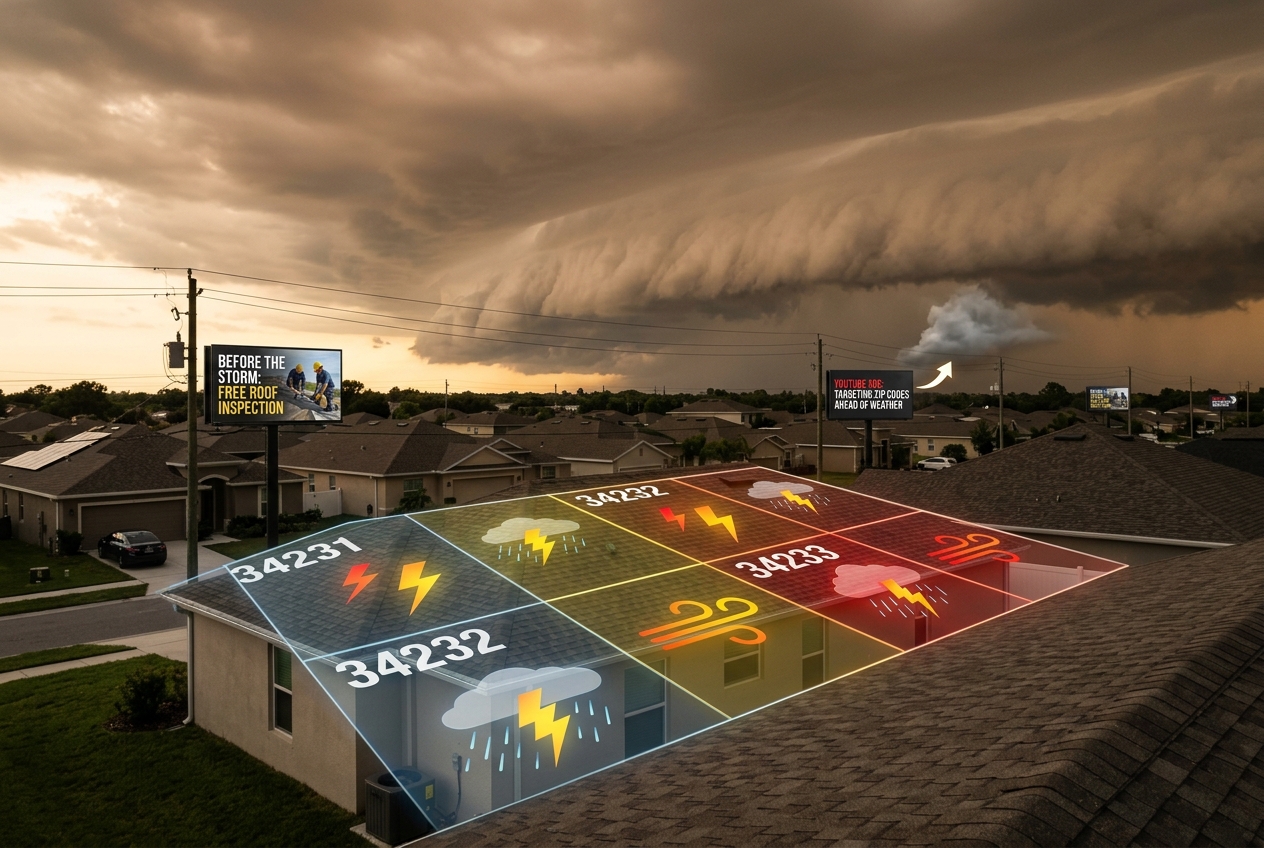

What if you could reach a homeowner the night before a storm rolls through their neighborhood, long before they think to search for a roofer? That is the promise of YouTube advertising built around weather. Most roofing companies wait for the phone to ring after the damage is done, then compete with a dozen other crews for the same panicked search clicks. A smarter approach puts your video in front of households in specific zip codes ahead of severe weather, so your name is already familiar when shingles start lifting. To see how this fits a wider lead strategy, our guide on streaming TV for roofers walks through where your competitors are not showing up yet. This article breaks down how to time campaigns, build trust early, and measure the leads that actually turn into jobs.
Crafting Campaigns That Align With Weather Patterns
Understanding how roofing companies get leads online starts with timing. Weather is the single biggest driver of roofing demand, and YouTube lets you act on forecasts instead of reacting to aftermath. When a hail event or wind storm is predicted for a region, you can raise your bids and tighten your geographic targeting to the exact zip codes in the path. Homeowners streaming content that evening see a roofer who already understands their risk, which feels less like an ad and more like a timely heads-up.
The audience is enormous and still growing. Connected TV penetration in the United States has reached roughly 90 percent of households, with about 117 million households now using connected TV devices according to eMarketer forecasts. Because YouTube runs on phones, smart TVs, tablets, and laptops, you can reach the same household across several screens without buying a traditional cable spot.
Geographic precision is what makes this work for a local roofer. Rather than spraying a whole metro area, you layer targeting: pick the counties or zip codes where the storm is heading, then narrow by homeowner-relevant signals like household income, age range, and interests tied to home improvement. A crew that serves three suburbs has no reason to pay for views two states away.
Seasonality matters too. Spring hail belts, late-summer hurricane corridors, and the first hard freezes each create predictable spikes. Build a calendar of your region’s typical weather events and prepare creative in advance so you can launch within hours of a forecast rather than scrambling. Keep budgets flexible. Shift spend toward zip codes under threat and pull back from calm areas. A QR code or a simple “schedule a free inspection” overlay closes the gap between a viewer noticing your ad and actually booking. Done consistently, weather-aligned campaigns put your brand in front of the right households at the moment their need is about to become urgent.
Using Video to Build Trust Before Urgency Strikes
Strong roofing contractor marketing strategies recognize a simple truth: people hire roofers they already trust, and trust is hard to build during a crisis. Video earns that trust early. A short clip showing your crew finishing a clean install, a foreman explaining what storm damage actually looks like, or a satisfied customer describing the experience does more than any list of services. When the storm finally hits, a homeowner who has seen your face three times is far more likely to call you than a stranger from a search ad.
The data backs this up. Wyzowl’s research found that 89 percent of consumers say video quality affects their trust in a brand, which means a polished, well-lit video is not vanity, it is credibility. Grainy footage or a rambling script can quietly cost you jobs, so invest in clear audio, steady shots, and a confident, plain-spoken tone.
Content should answer the questions homeowners already have. Walk through how to spot a failing roof, explain the difference between a repair and a full replacement, and show how an inspection works so the process feels safe rather than mysterious. Keep videos under a minute when they run as ads. The goal is to leave one clear impression, not to cover everything.
Storytelling beats feature lists. Instead of saying you install architectural shingles, tell the 45-second story of a family who called on a Friday night and had a dry, secure home by the weekend. Specific, human narratives stick in memory in a way that bullet points never do. Geo-targeted detail helps as well: mention the local conditions your audience knows, like the hailstorms that hammer the area each spring, so you read as a neighbor rather than a faceless national brand. Show your licensing, manufacturer certifications, and a few real reviews on screen. Each of these signals reduces the perceived risk of letting a contractor onto the roof. By building this familiarity before urgency strikes, you turn a cold prospect into a warm lead who already feels they know you.
Measuring Conversions From Emergency Leads
The best seo practices for roofing businesses all share one habit: measuring what actually drives signed contracts. With YouTube weather campaigns, the risk is celebrating views and impressions while ignoring whether those eyeballs became inspections and jobs. Set up tracking before you spend a dollar so you can connect each lead back to the campaign that produced it.
Start with a clear definition of a quality lead. Think about your best recent customers, often owners of older homes with visible weather damage, and use that profile as your benchmark. Then build a dedicated landing page for each weather campaign rather than sending traffic to a generic homepage. A page that speaks directly to “storm just hit your area” converts better and shows you exactly how many visitors came from that push.
Call tracking and form tracking close the loop. Assign a unique phone number to each ad so you know which campaign prompted each call, and tag form submissions by source. Pair this with a CRM that follows a lead from first contact to signed contract, which lets you see which zip codes and which forecasts produced the most profitable work. This matters because trust runs deep online: consumers read an average of around ten reviews before they feel they can trust a local business, per BrightLocal, so a steady stream of fresh reviews from these emergency jobs feeds future campaigns.
Watch lead quality, not just lead volume. Ten people who clicked and bounced are worth less than one homeowner who watched, visited your landing page, and booked an inspection. Review your numbers monthly rather than only at the end of a campaign, and shift budget toward the formats, creative, and zip codes that produce real appointments. A short follow-up survey asking how a customer found you can surface insights no dashboard shows. Over time this discipline turns weather-aligned YouTube ads from a gamble into a repeatable system that gets more efficient each storm season instead of just more expensive.
Frequently Asked Questions
What is the best way for roofers to get local leads?
Combine targeted advertising built around localized keywords and weather forecasts with a fully optimized Google Business Profile featuring current photos and steady reviews. Local partnerships also help. Referral relationships with real estate agents, insurance adjusters, and general contractors create a dependable flow of leads that paid ads alone rarely match.
Do roof inspection ads generate full replacement jobs?
Yes. A free or discounted inspection is one of the strongest top-of-funnel offers available. It gets you on the roof of homeowners who may not realize they have a problem. Once you can show them aging shingles, failing flashing, or storm damage in person, transparent guidance often turns that free visit into a signed replacement contract.
How can roofers use social media to build trust?
Post consistently with before-and-after photos, short maintenance tips, and genuine customer testimonials. Reply promptly to comments and questions so you appear attentive and professional. Highlighting licensing, manufacturer partnerships, and local recognition adds credibility. Occasional live question-and-answer sessions are underused by most roofers and can quickly build a loyal local following.
Raising the Next Roofline
Weather-aligned YouTube advertising lets you reach homeowners before the storm and before your competitors, building familiarity that pays off the moment a roof starts failing. The pieces fit together: time campaigns to forecasts, earn trust with honest video, and measure leads down to the signed contract. If you want help building a YouTube and connected TV strategy tuned to your service area and storm patterns, Aginto’s home services marketing team and our roofer marketing specialists offer a free consultation to map out a plan that fits your goals. Reach out today and be the roofer homeowners already trust when the next storm rolls in.