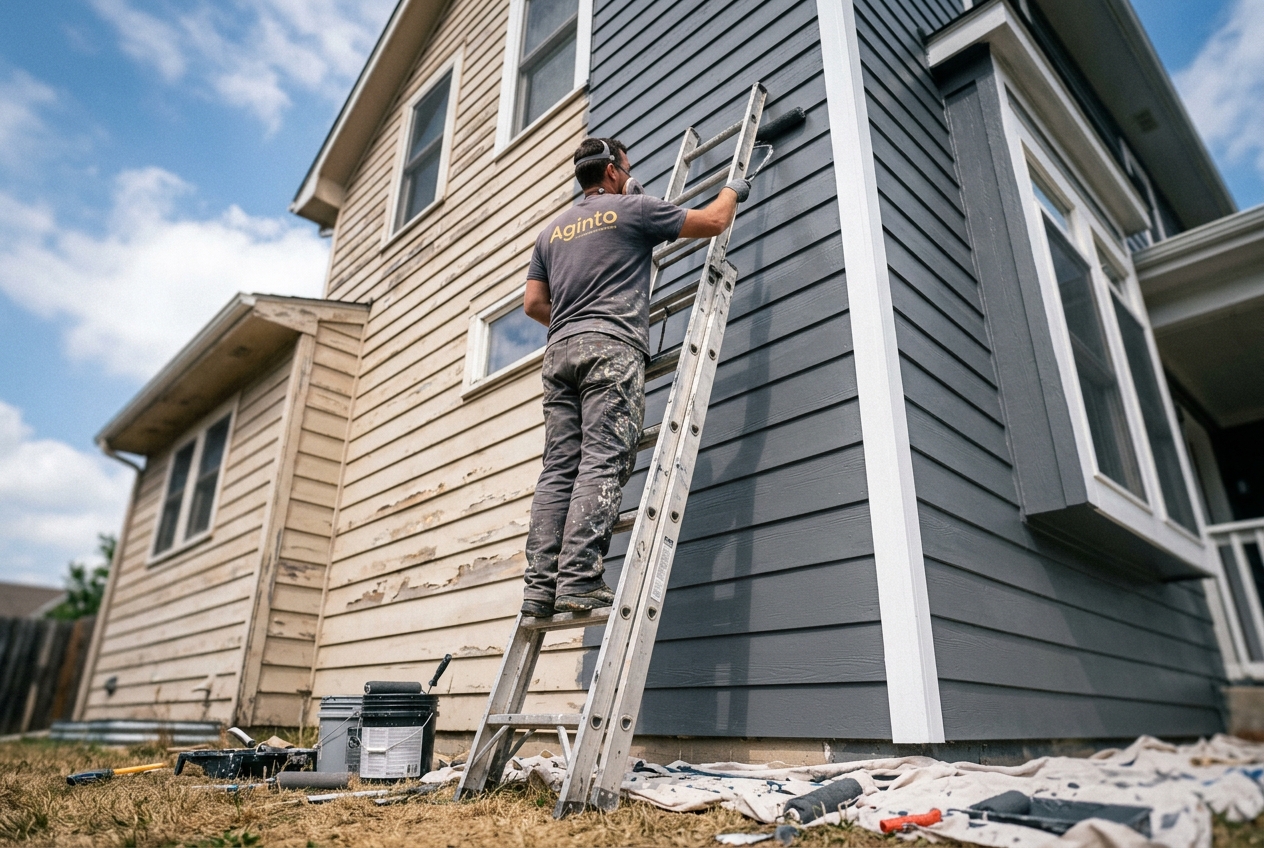

Why do some painting websites turn casual browsers into booked jobs while others, with identical services, barely get a call? Often the difference comes down to one underused asset: the before-and-after gallery. Homeowners struggle to picture what fresh paint will do for their own space, so they look for proof. A well-built gallery hands them that proof instantly, showing the transformation they’re hoping for in a way words never could. Done right, those side-by-side images do the selling for you, quietly answering “can these painters deliver?” before a prospect ever fills out a form. Our deep dive on before-and-after photos that convert site visitors covers the fundamentals; here we focus specifically on residential painters and how to choose, organize, and frame galleries so they reliably turn into bookings rather than just admiration.
Choosing Projects That Demonstrate Dramatic Change
When painters want to book more painting jobs, the projects they showcase matter as much as the work itself. A gallery full of subtle, hard-to-read changes won’t move anyone. The images that convert are the ones where the “before” and “after” look like two different homes. Lead with transformations that make a visitor pause: a dated, dingy room reborn in clean modern color, or a weathered exterior restored to something a neighbor would envy.
Exterior work is especially persuasive because curb appeal is something buyers and homeowners genuinely value. According to Zillow’s guidance on curb appeal, homes with well-maintained, attractive exteriors can sell for meaningfully more than comparable homes that look tired and neglected. When a homeowner sees that a fresh exterior paint job doesn’t just look better but can protect or raise property value, your gallery stops being decoration and starts being an argument for hiring you.
Choose projects that solve problems your ideal clients already have. If you serve older neighborhoods, feature a faded Victorian brought back to life. If you work with new families upgrading starter homes, show a builder-beige interior transformed into a warm, personal space. When a visitor recognizes their own situation in your “before” photo, the “after” feels like a preview of what you’ll do for them specifically.
Variety helps too. Include interior and exterior work, different color palettes, and a range of home styles so visitors with different tastes all find something that fits. A single dramatic kitchen repaint is great, but a gallery that spans bedrooms, trim work, cabinets, and full exteriors signals range and reliability across the kinds of jobs you want to win.
Be honest with your imagery. Avoid heavy editing that makes the result look unreal, because savvy homeowners spot it and trust drops the moment they suspect a photo is too good to be true. Shoot both images from the same angle, in similar light, so the comparison is fair and obvious. Authentic, dramatic, relatable transformations are the raw material of a gallery that books work instead of just collecting compliments.
Organizing Galleries for Easy Browsing
Smart SEO strategies for painting contractors include structuring a gallery so both visitors and search engines can make sense of it. A pile of unlabeled images frustrates people and wastes the trust your photos could earn. Organization is what turns a collection of pictures into a tool that guides someone toward booking. The research is clear on why this is worth the effort: the Content Marketing Institute reports that content with relevant visuals can earn dramatically more views than text alone, so making those visuals easy to find and browse directly affects how many people engage.
Start by grouping images logically. Separate interior from exterior, then sort by room or project type, cabinets, trim, full exteriors, decks, and so on. A visitor who came specifically for kitchen cabinet refinishing should be able to find those examples in seconds, not scroll past twenty unrelated shots. The faster people find what’s relevant to them, the longer they stay and the closer they get to contacting you.
Keep the layout clean. A simple grid with consistent image sizes looks professional and lets the transformations speak for themselves. Cluttered pages with mismatched dimensions and busy backgrounds pull attention away from the work. White space isn’t wasted space; it frames each project and keeps the focus where you want it.
Add short, useful captions. A line or two describing the home, the challenge, and the solution gives context that pure images can’t. “1950s ranch exterior, peeling and sun-faded, restored with a two-coat premium finish” tells a story and reassures the reader you understand the work. Captions also give you a natural place to include the keywords prospects search for, helping the page surface in local results.
Don’t forget the technical basics. Compress images so the gallery loads quickly, since slow pages drive people away before the photos even appear. Add descriptive alt text to every image so search engines understand what’s shown and so the page becomes accessible to all visitors. An organized, fast, well-labeled gallery makes browsing effortless, and effortless browsing is what keeps a prospect moving toward a booking.
Adding Calls-to-Action Next to Visuals
Among the most practical social media ideas for house painting businesses is pairing every striking transformation with a clear next step. A gallery that impresses but offers no obvious way to act leaves bookings on the table. The moment a homeowner thinks “I want that for my house” is the moment to give them somewhere to go. Placement matters: research from Nielsen on consumer trust shows that 92% of people trust recommendations and authentic content from others over polished brand messaging, which is exactly why a real before-and-after paired with a quote and a quick action button outperforms a generic ad.
Put a call-to-action right beside the visuals, not buried at the bottom of the page. A button reading “Get a Free Quote for a Look Like This” next to a dramatic kitchen repaint connects the inspiration directly to the action. When the prompt sits where the emotion peaks, more visitors follow through instead of drifting away to think about it later, which usually means forever.
Match the call-to-action to the project. Under an exterior transformation, “Schedule Your Exterior Estimate” feels more relevant than a generic “Contact Us.” Specificity signals that you handle exactly the kind of job they’re looking at, and it lowers the mental effort of taking the next step. The easier and more obvious you make it, the more people act.
Reinforce the prompt with light social proof. A short client quote, “They finished on time and the house looks brand new,” placed beside the photo and the button adds credibility at the decision point. People are reassured by others who took the same step and were glad they did. That combination of visual proof and human endorsement is hard to resist.
Consider interactive touches where they fit. A before-and-after slider that lets visitors drag between the two states keeps them engaged longer and makes the transformation feel tangible. Just make sure a clear booking option stays visible the whole time. The goal is simple: every time a visitor is moved by your work, there’s an immediate, low-friction path to becoming your next customer.
Frequently Asked Questions
How can painters get more residential painting jobs?
Show proof of quality work through organized before-and-after galleries, pair every transformation with a clear booking prompt, and make your site easy to browse on a phone. Combine that with strong local search visibility and authentic client reviews. Visual proof plus a low-friction next step turns interested browsers into booked estimates.
What advertising strategies help painting companies succeed?
Lead with visual content, since before-and-after images outperform text-heavy ads. Target local homeowners with specific, relevant offers, and feature genuine testimonials beside your best work. Retargeting past site visitors and showcasing seasonal services keeps you top of mind. The strongest campaigns let your transformations do the persuading and make booking effortless.
How can painting businesses manage slow seasons?
Promote interior projects during colder months when exterior work slows, and use the downtime to build out your gallery and request reviews from recent clients. Offer off-season scheduling incentives to fill the calendar. Staying visible and nurturing past leads through email keeps work flowing even when demand naturally dips.
Brushstrokes Ahead
A before-and-after gallery is one of the most persuasive marketing tools a residential painter can build, but only when it’s intentional: dramatic projects, clean organization, and a clear call-to-action beside every transformation. Get those three right and your portfolio stops being a scrapbook and starts booking jobs. If you’d like help turning your best work into a gallery that converts, along with broader home services marketing and specialized home restoration marketing support, reach out to Aginto for a free consultation and let’s put your transformations to work.