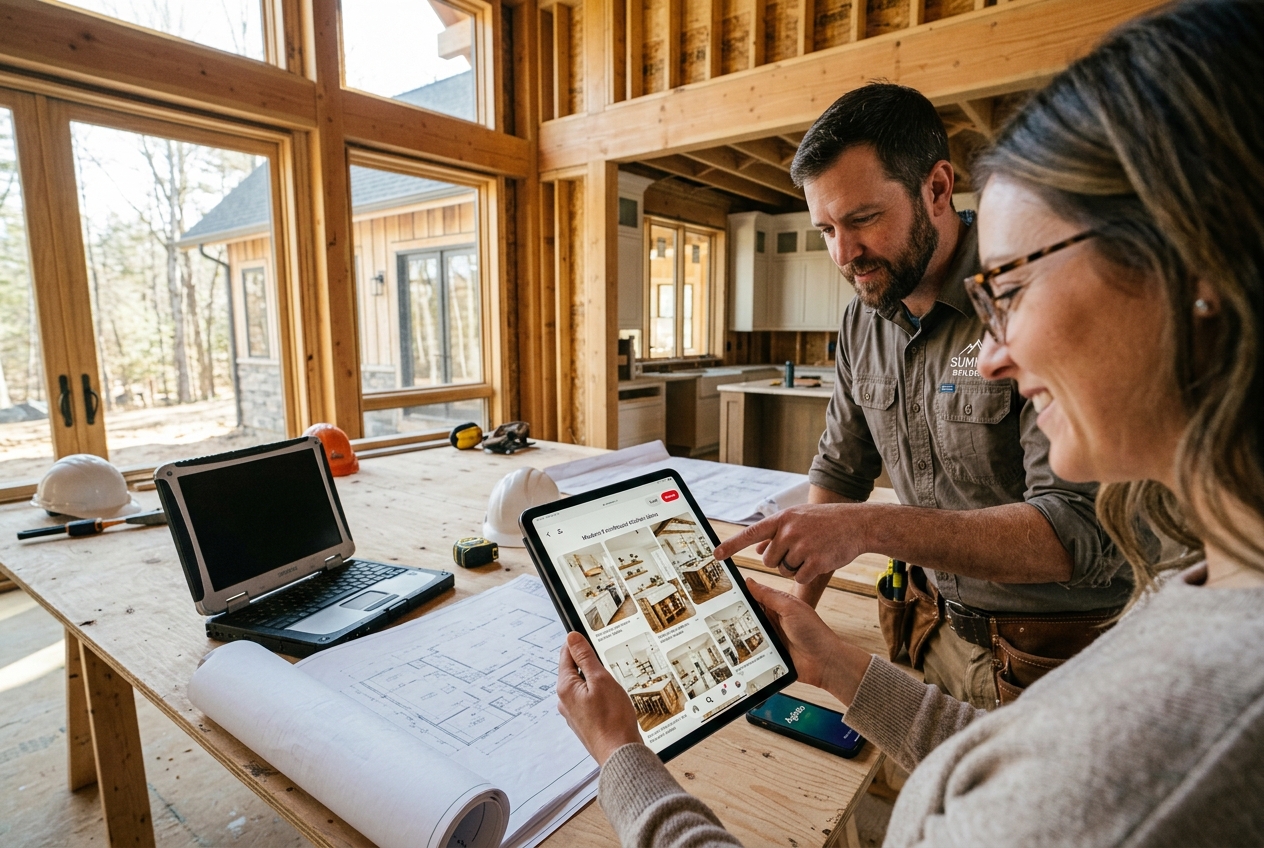

Where do people go when they start dreaming about building a custom home? Long before they call a builder, they’re saving photos of kitchens, staircases, and sunlit great rooms — and more often than not, they’re saving them on Pinterest. For a custom home builder, that’s a remarkable opening: a captive audience actively planning the exact project you deliver. The challenge is turning that inspiration into a signed consult. If you want practical context on visual marketing for builders, our piece on positioning custom homes as lifestyle investments pairs well with a strong Pinterest strategy. Done right, the platform becomes one of the most effective SEO strategies for home builders and contractors in your toolkit.
Showcasing High-Resolution Portfolio Content
Pinterest rewards builders who treat it as a portfolio, not a billboard, and that mindset is central to smart SEO strategies for home builders and contractors. Users come here to plan and dream, which means your best, most aspirational work belongs front and center. Grainy phone snapshots and cluttered job-site photos won’t cut it. High-resolution, professionally lit images of your finished homes — wide exteriors, detailed kitchens, dramatic entryways, custom built-ins — are what get saved, shared, and remembered. Every pin is effectively a permanent ad working on your behalf long after you upload it.
The demand for this content is enormous. According to SocialPilot’s Pinterest research, home decor is one of the platform’s most popular categories with tens of billions of pins and roughly 79% of users expressing interest in it, while around 83% of Pinners use the platform specifically to plan future purchases and projects. For a custom builder, that’s a perfectly matched audience — people who are planning, not just browsing — and they’re hungry for exactly the kind of imagery you produce on every job.
Optimize each pin so it actually gets found. Pinterest works like a visual search engine, so write clear, keyword-rich descriptions that mention the style, room, materials, and your service area — think “modern farmhouse kitchen with quartz island in Austin.” Use vertical images, which take up more screen space and earn more attention, and add a tasteful text overlay so the value of the image is obvious at a glance. These small details dramatically improve how often your work surfaces in search and related-pin feeds.
Organize your content into well-named boards that mirror how clients think: “Custom Kitchens,” “Outdoor Living Spaces,” “Luxury Primary Suites,” “Modern Exteriors.” This structure makes your profile easy to explore and signals depth and specialization. Rich Pins, which automatically pull metadata from your website, add another layer of credibility and keep your branding consistent. Above all, post consistently. A steady stream of fresh, high-quality portfolio images tells the algorithm you’re active and keeps your homes circulating in front of new planners every week, building a library of inspiration that quietly markets your craftsmanship around the clock.
Driving Traffic Through Visual Inspiration Boards
Inspiration is only half the job — the real goal is moving people off Pinterest and onto your website, which is where this channel quietly outperforms others for how to generate leads for construction companies. Every pin should function as a doorway. When someone falls in love with a soaring great room you built, the next click needs to lead them to a project gallery, a relevant blog post, or a service page on your site, not a dead end. That handoff from inspiration to your own digital turf is what turns passive admiration into a real prospect you can nurture.
Pinterest is exceptionally good at this kind of referral. According to WebFX, Pinterest drives 33% more referral traffic to shopping sites than Facebook, making it one of the strongest social platforms for pushing visitors toward an external destination. For a builder whose buying cycle starts with months of visual planning, that traffic is unusually valuable — these aren’t idle scrollers, they’re people deliberately gathering ideas for a project they intend to commission.
Build your boards with intent rather than randomness. Curate themed collections that tell a story — “Hill Country Custom Builds,” “Smart Home Features We Install,” “Before and After Transformations” — and make sure every pin in them links back to a specific, relevant page on your site. Mix your own finished work with carefully chosen complementary content so your boards feel like genuine planning resources, which keeps users following you and returning as they refine their vision.
Treat your pin descriptions as mini landing-page copy. A great photo earns the look; a clear, benefit-driven description earns the click. Mention what makes the project special, hint at the process, and include a soft call to action like “See the full home tour” that points to your website. Use Pinterest’s analytics to watch outbound clicks closely, then double down on the boards and image styles that send the most traffic. When you consistently connect beautiful imagery to a clear next step, your inspiration boards become a dependable pipeline funneling qualified, project-minded visitors straight to your door.
Turning Pins Into Consult Requests
Traffic is meaningless if it doesn’t convert, so the final piece is engineering the path from a saved pin to a booked consultation — the payoff behind every smart list of marketing ideas for custom home builders. Pinterest brings motivated planners to your website; your job is to make requesting a consult the obvious, frictionless next step. This is where many builders leave money on the table, sending hard-won traffic to a generic homepage instead of a page designed to capture intent and turn interest into a conversation.
The intent on this platform is unusually strong, which is exactly why it converts. According to Sprout Social, roughly 90% of weekly Pinners use the platform to inform purchase decisions, meaning the people clicking through from your boards are already in a buying mindset. They’re not killing time — they’re shortlisting builders. That readiness is your advantage, but only if your website meets them with a clear invitation rather than a maze.
Send pin traffic to purpose-built landing pages, not your front door. If someone clicked a custom kitchen photo, drop them on a page about your custom home process featuring that style, a few more examples, and a prominent, low-pressure call to action — “Request a Design Consultation” or “Get Your Project Estimate.” Keep your intake form short. Asking for a name, email, project type, and timeline captures the essentials without scaring off someone who’s still early in their planning.
Reduce the commitment required to raise a hand. Not everyone is ready for a full sales meeting, so offer lighter entry points: a downloadable design guide, a “cost to build” checklist, or a portfolio lookbook in exchange for an email. These tools capture leads you’d otherwise lose and let you nurture prospects until they’re ready to talk. Add trust signals throughout — client testimonials, awards, finished-home galleries — so the moment someone arrives from Pinterest, they feel confident you’re the builder who can deliver the home they’ve been pinning. With a clear, reassuring path in place, the inspiration you sparked turns reliably into consult requests.
Frequently Asked Questions
How can home builders generate more high-quality leads?
Focus on channels where buyers actively plan, like Pinterest and search, then route that traffic to dedicated landing pages with clear calls to action. Strong portfolio imagery, local SEO, and lead magnets such as design guides capture interest early, while prompt follow-up and testimonials turn curious browsers into qualified consultation requests.
What role does SEO play in growing a construction business?
SEO makes your business visible exactly when buyers search for builders, custom homes, or specific features in your area. Optimized service pages, geographic keywords, and helpful content help you rank above competitors. Because Pinterest also works as a visual search engine, the same keyword discipline strengthens your reach across both platforms simultaneously.
How can contractors manage client expectations effectively?
Set clear expectations at contract signing, then communicate consistently throughout the build. Use visual progress updates, realistic timelines, and honest conversations about budget and changes. When clients understand each phase before it happens, surprises shrink, trust grows, and the finished project is far more likely to earn referrals and repeat business.
Laying the Next Foundation
Pinterest gives custom home builders a rare advantage: an audience that’s already planning the exact project you build, gathering inspiration months before they commit. When you pair high-resolution portfolio content with intentional boards that drive traffic and landing pages engineered to convert, you create a pipeline that turns daydreams into consultations. The platform works hardest when it’s part of a coordinated strategy rather than an afterthought. If you’re ready to build a Pinterest and website approach that inspires and converts, explore our home builder marketing solutions or contact Aginto for a consultation to map a plan around your business goals.