Could the greenest part of your HVAC business also be the most profitable part of your marketing? More homeowners than ever are weighing energy use, efficiency, and environmental impact when they choose who installs and services their heating and cooling. That shift creates an opening for contractors willing to talk openly about sustainable practices, high-efficiency equipment, and the savings that come with both. Yet many HVAC companies still bury this story, treating eco-friendly work as a technical footnote instead of a selling point. For a deeper look at building steady, resilient revenue, Aginto’s guide to building a predictable HVAC business in an unpredictable climate shows how efficiency and smart positioning go together. This article breaks down how to make sustainability work for your bottom line.
Positioning Sustainability as a Selling Point
Smart HVAC marketing strategies that generate service calls increasingly lean on sustainability, because buyers reward it with their wallets. According to PwC’s Voice of the Consumer survey, consumers are willing to pay an average of 9.7% more for goods that meet environmental criteria, and roughly 80% say they will pay some premium for sustainably produced products. For an HVAC company, that means an energy-efficient system or a maintenance plan that reduces waste is not just better for the planet; it is something a meaningful share of your market will gladly pay extra to get. The job is to make that value visible.
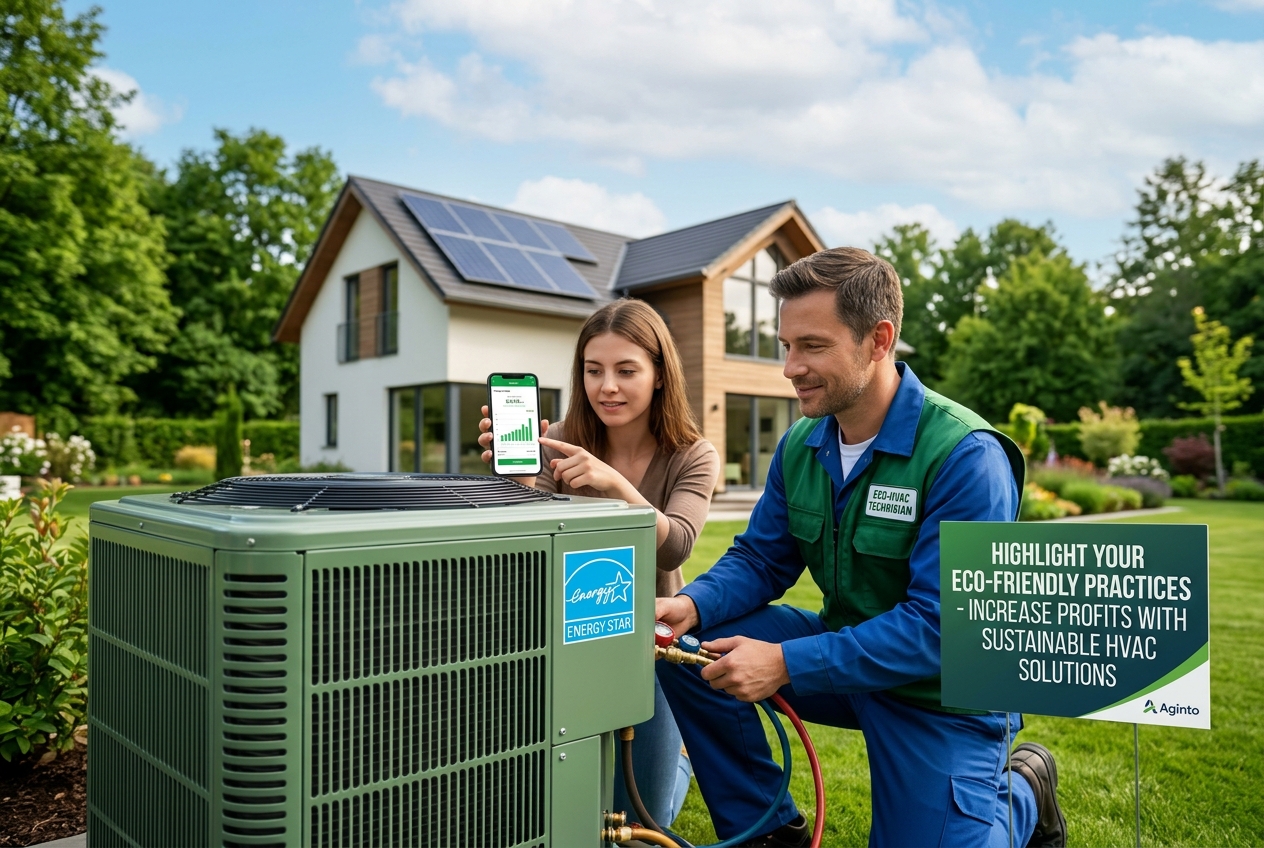
Start by naming the eco-friendly things you already do. If you install ENERGY STAR-rated units, recover and recycle refrigerant properly, right-size systems so they do not waste energy, or recommend smart thermostats, say so plainly on your website and in your sales conversations. Many contractors do this work quietly and never get credit for it. Translate the technical into the practical: instead of leading with SEER ratings, lead with what homeowners actually care about, namely lower bills, a quieter home, and a smaller footprint.
Positioning also means choosing the right audience. Younger homeowners and growing families tend to weigh environmental factors more heavily, so your messaging and channels should reflect that. Tie sustainability to comfort and cost rather than guilt, because the strongest pitch combines doing good with saving money. Offer a clear “efficiency upgrade” path for older systems and frame replacement not as an expense but as an investment that pays back over years. Train your technicians to mention efficiency naturally during service calls, since a trusted tech explaining how a newer unit would cut a customer’s summer bills is more persuasive than any ad. When you make sustainability concrete, local, and tied to real savings, it stops being a buzzword and becomes a reason customers pick you over the contractor down the street who never bothers to bring it up.
Using Green Messaging in Ads and Content
Understanding how HVAC companies can reduce seasonal slowdowns often comes down to staying visible and trusted year-round, and green messaging helps on both fronts when it is handled honestly. Here is the catch: consumers have grown skeptical of vague environmental claims. Research on green marketing found that a majority of people have encountered misleading sustainability claims and many assume brands engage in greenwashing. Generic phrases like “we’re green” or “eco-friendly” without proof can actually erode trust. The fix is specificity and evidence.
Build your content around concrete, verifiable details. Instead of “we care about the environment,” write “our recommended systems carry ENERGY STAR certification and can cut household cooling costs by a measurable amount.” Show the certifications, cite the standards, and include real numbers from manufacturers or federal agencies. Third-party labels do heavy lifting here because they reassure customers that the claim is not just marketing. Photos of actual installs, short videos of your team explaining how a high-efficiency unit works, and customer stories about lower bills all turn an abstract promise into something believable.
Spread this messaging across the channels where homeowners already look. A blog post on “How to Lower Your Energy Bill This Summer” can rank in search and quietly position you as the efficiency expert. Social posts can highlight a recent eco-friendly upgrade and the savings it produced. Paid ads can target homeowners searching for energy-efficient or high-efficiency systems, matching your message to clear intent. Email newsletters can share seasonal efficiency tips that keep you top of mind during slower months, gently nudging readers toward a tune-up or upgrade. The key throughout is restraint and honesty: claim only what you can back up, and let the proof carry the persuasion. Green messaging done this way builds a durable reputation as the trustworthy, efficient choice, which is exactly the kind of brand equity that keeps your phone ringing even when the weather is mild and competitors go quiet.
Tracking ROI From Energy-Efficient Campaigns
Strong SEO and PPC tips for heating and cooling businesses are only worth following if you can prove they pay off, and that is doubly true for sustainability-focused campaigns, where the return is real but easy to overlook. The savings homeowners gain are well documented: properly installed ENERGY STAR HVAC systems can save households a meaningful share of their annual energy costs, often in the range of 10% to 30% depending on the system and home. That figure is not just a customer benefit; it is the core promise of your campaign, and it gives you a concrete number to advertise and then measure against.
To track ROI properly, decide what counts as a result before you spend a dollar. Are you measuring booked installs of high-efficiency units, maintenance-plan sign-ups, leads from an “energy savings” landing page, or all three? Set up call tracking and unique landing pages for your green campaigns so you can tell which clicks and calls came from sustainability messaging versus general advertising. A simple CRM lets you log where each lead originated and follow it through to a closed job, so you see the full path from ad to revenue rather than guessing.
Watch the metrics that connect spend to profit: cost per lead, cost per booked job, average ticket on efficiency-driven sales, and the lifetime value of customers who buy into maintenance plans. Eco-conscious buyers often become loyal, recurring customers, so a slightly higher acquisition cost can still be a bargain over several years. Compare conversion rates between your green campaigns and your standard ones to learn where sustainability messaging genuinely moves the needle. Keep an eye on seasonality too, since efficiency upgrades often sell best right before peak heating and cooling demand. Review the numbers monthly, shift budget toward the channels and messages that produce the best return, and quietly cut what underperforms. When you measure rigorously, you stop treating eco-friendly marketing as a feel-good gesture and start treating it as the data-backed growth engine it can be, with every campaign earning its place by the jobs and recurring revenue it brings in.
Frequently Asked Questions
How can HVAC companies manage seasonal demand shifts?
Smooth out demand by promoting maintenance plans that generate work year-round, using historical data to forecast busy periods, and staffing ahead of peaks. Efficiency-focused content and email tips keep you visible during slow months. Cross-training technicians and offering off-season tune-up promotions also help fill the calendar between extreme weather seasons.
What marketing strategies generate more HVAC service calls?
Local SEO, an optimized Google Business Profile, and steady reviews drive the most calls, since homeowners search locally when something breaks. Helpful content answering common questions builds authority and organic traffic. Seasonal promotions, retargeting ads, and email newsletters keep your business top of mind so customers call you first when they need service.
Should HVAC companies invest in streaming or PPC ads?
Both can work depending on your goal. PPC captures homeowners actively searching for service right now and tends to convert quickly. Streaming ads build broader brand awareness with connected-TV audiences over time. Many companies get the best results from a combination, guided by their budget, target customers, and the seasonality of demand.
Keeping Growth Cool
Eco-friendly practices are no longer a niche talking point; they are a competitive advantage that a large share of homeowners will pay extra to choose. By positioning sustainability as real value, backing every green claim with proof, and measuring the return on each campaign, your HVAC company can win trust, command better margins, and stay busy through slow seasons. The contractors who tell this story well stand out from the ones who never mention it. If you want help building a campaign that connects efficiency to revenue, explore Aginto’s home services marketing and dedicated HVAC marketing services, and contact us for a free consultation to map a plan around your specific goals.