What if the eyeglasses sitting in your display case could sell themselves to thousands of local patients before they ever walk through your door? That is exactly what Instagram does for eye doctors who treat the platform as a storefront rather than an afterthought. Frames are visual, personal, and tied to how people want to be seen, which makes them a natural fit for a feed built on images and short video. The trick is using the platform with intention: showing styles in a way that feels aspirational, building real relationships, and giving younger patients a reason to follow and stay. We dug into the paid side of this in our guide on how digital ads can elevate your optometry practice. The sections below cover frame-focused campaigns, brand partnerships, and the short video formats that keep an audience coming back.
Creating Visual Campaigns Around Frame Styles
For optometrists who want to know how optometrists attract new patients through social media, frames are the obvious starting point because they photograph beautifully and tie directly to identity. People do not just buy glasses to see better; they buy a look. That makes a well-planned visual campaign one of the strongest tools an eye care practice has. Instagram now reaches roughly 3 billion monthly active users, and according to Sprout Social’s industry data, the platform is built around exactly the kind of image-first browsing that frame shopping invites. Meeting patients where they already spend their attention is half the battle.
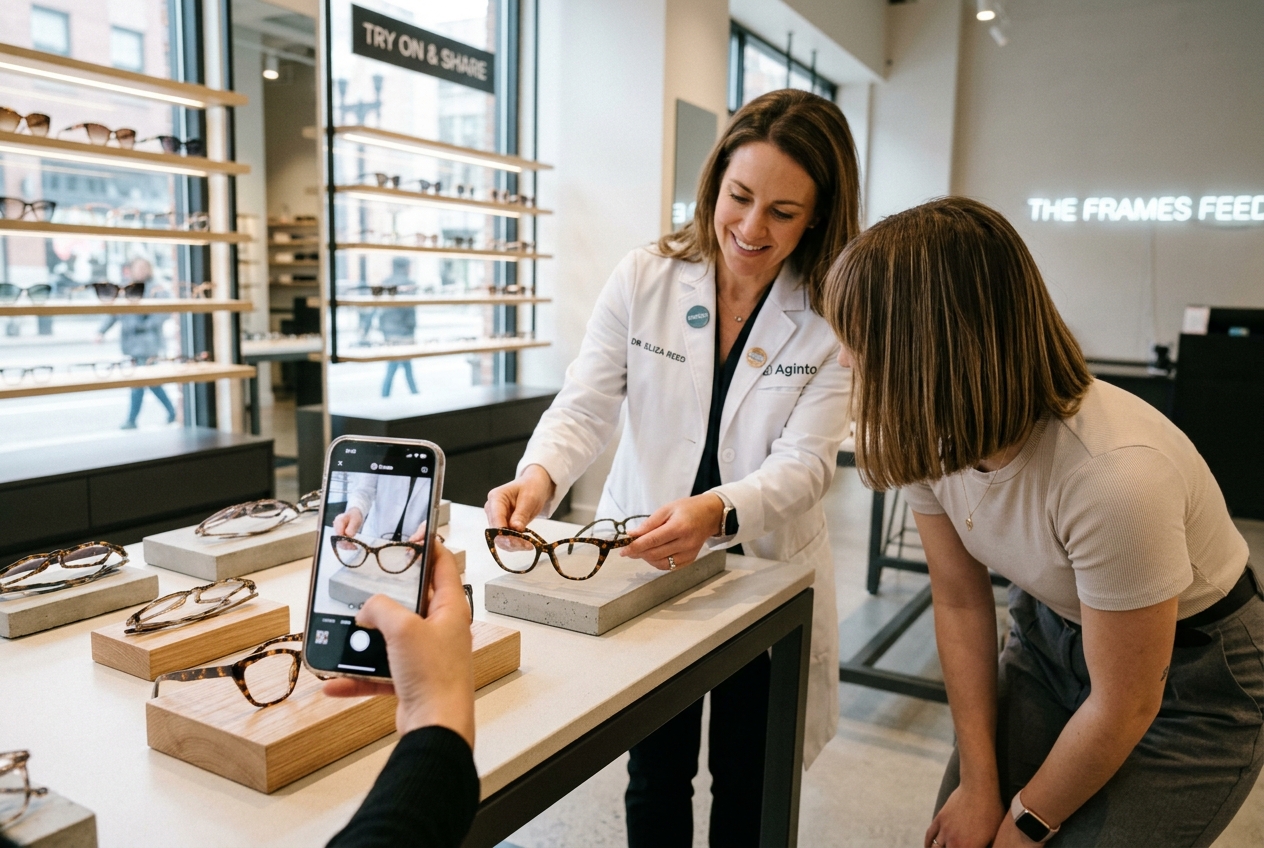
Start by organizing your content around themes instead of posting at random. A campaign might spotlight a single collection for two weeks, with consistent lighting, backgrounds, and captions so the styles feel curated rather than scattered. Show the same frame on different faces to help followers picture themselves wearing it. Pair close-up product shots, which tend to earn strong engagement when a new style drops, with lifestyle images that place the frames in real settings: a coffee shop, a hike, a workday. The contrast gives people both the detail they want and the context they need to imagine owning the pair.
Captions matter more than most practices think. A photo grabs the scroll, but a caption that names the style, mentions who it flatters, and adds a light reason to act turns a viewer into a visitor. Try simple prompts like asking followers which of two frames they prefer, which invites comments and signals to the algorithm that the post is worth showing to more people. Use a small, consistent set of local and eyewear hashtags so the right audience finds you. Highlight seasonal angles too, such as sunglasses heading into summer or blue-light styles when screen fatigue peaks. Tying these campaigns to a broader healthcare marketing plan keeps your social effort connected to the rest of your patient acquisition. Done consistently, frame campaigns build a recognizable visual identity that makes your practice the one people think of when they finally decide to update their look.
Partnering With Brands to Expand Reach
Among the smartest marketing strategies for eye care practices is borrowing reach from the frame brands you already carry. You do not have to build an audience entirely on your own when designers, manufacturers, and local influencers have spent years building theirs. Co-marketing lets you tap into followings that already trust a name, and the scale of business activity on the platform makes the opportunity real; Instagram reports that more than 150 million people engage with businesses on the app every month, a figure highlighted in Sprout Social’s roundup of Instagram statistics. A single well-placed collaboration can put your practice in front of people who would never have searched for an optometrist on their own.
Begin with the brands sitting in your own display cases. Many eyewear companies provide co-branded assets, run tagging programs, or reshare posts from retailers who feature their collections well. Tag the brand whenever you showcase its frames, use its campaign hashtags, and ask your sales reps what marketing support they offer. When a designer label reshares your post to its own large following, you gain exposure that would cost a small fortune to buy outright. These partnerships also lend credibility, signaling to shoppers that your office carries the styles they recognize and want.
Local partnerships work just as well and often convert better. Team up with a nearby boutique, salon, or fitness studio whose clientele overlaps with yours, and cross-promote each other’s content. Consider working with a micro-influencer in your town who genuinely needs glasses; an honest post about choosing frames at your office reaches a warm, nearby audience that is far more likely to book than a distant celebrity following. Structure these arrangements clearly, whether through a product trade, a styling session, or a small fee, and ask for content you can repurpose across your own channels. Treat brand partnerships as ongoing relationships rather than one-off favors, and over time they become a steady source of new patients who arrive already familiar with your name and the frames you sell.
Using Reels and Stories to Engage Younger Patients
Anyone weighing the questions patients ask when choosing an optometrist should pay attention to where younger people actually spend their time, because that audience increasingly decides with video. Reels and Stories are how practices reach patients in their teens, twenties, and thirties who scroll past static posts without a second glance. The numbers explain why: Reels now account for more than half of the time people spend on Instagram, and according to Buffer’s Instagram statistics, short video consistently earns more reach than image posts or Stories. For an eye care practice, that reach translates into appointments when it is used with a plan.
Reels reward quick, useful, and lightly entertaining content. Film a fifteen-second clip of a patient trying on three frame styles, a behind-the-scenes look at how lenses are cut, or a fast answer to a common question like how often to update a prescription. Keep them short, since briefer Reels tend to hold attention better than long ones, and add captions because many people watch without sound. Trending audio and a clear hook in the first second help the algorithm carry your video beyond your existing followers, putting your practice in front of nearby strangers who could become patients.
Stories do different work and deserve their own rhythm. Because they vanish after a day, they feel casual and immediate, which makes them perfect for polls, countdowns to a trunk show, quick frame-of-the-day features, or sharing a patient’s happy reaction. Use interactive stickers to invite replies, since every tap and answer deepens the relationship and keeps your account surfacing in their feed. Save your best Stories as Highlights so visitors to your profile can browse collections, hours, and reviews at a glance. The same patient-first approach that works for an eye care practice mirrors what we recommend for dental office marketing, where routine outpatient visits depend on a warm, approachable online presence. Mix education with personality so the account feels human rather than clinical. When younger patients see a practice that is approachable, current, and genuinely helpful on the formats they already love, choosing where to get their next pair of glasses becomes an easy decision.
Frequently Asked Questions
How can optometrists attract new patients?
Combine a strong local search presence with active, visual social media. Show your frames and team on Instagram, encourage happy patients to leave reviews, and keep your Google Business Profile accurate. Helpful content and consistent posting build familiarity, so when someone needs an eye exam or new glasses, your practice is the one they already recognize and trust.
What marketing strategies help eye care practices grow?
Lead with visuals, since eyewear sells on appearance. Pair frame-focused Instagram campaigns with brand partnerships, short video, and a few targeted digital ads. Back it all with reviews and email reminders for annual exams. The most effective practices blend organic social reach with paid promotion and reputation management rather than relying on any single channel.
How important are online reviews for eye doctors?
They are decisive. Most patients read reviews before booking, and a strong rating often determines whether they call at all. Reviews build trust that marketing alone cannot, especially for a health service. Ask satisfied patients to share feedback, respond to every review politely, and feature the best ones across your website and social channels.
Sharper Vision Forward
Instagram gives eye doctors a rare advantage: a product people genuinely enjoy looking at, shown to an audience that is already scrolling for inspiration. When you build campaigns around your frames, borrow reach through brand and local partnerships, and use Reels and Stories to win over younger patients, your practice becomes a destination rather than just another option. The offices that grow are the ones treating social media as a real channel, not a chore. Aginto helps eye care practices turn that visual potential into booked exams and lasting brand loyalty. To build a plan tailored to your practice, contact Aginto for a free consultation and bring your vision into sharper focus.