
Virtual Walkthroughs, Digital Permits, and Smarter Collaboration for Home Builders
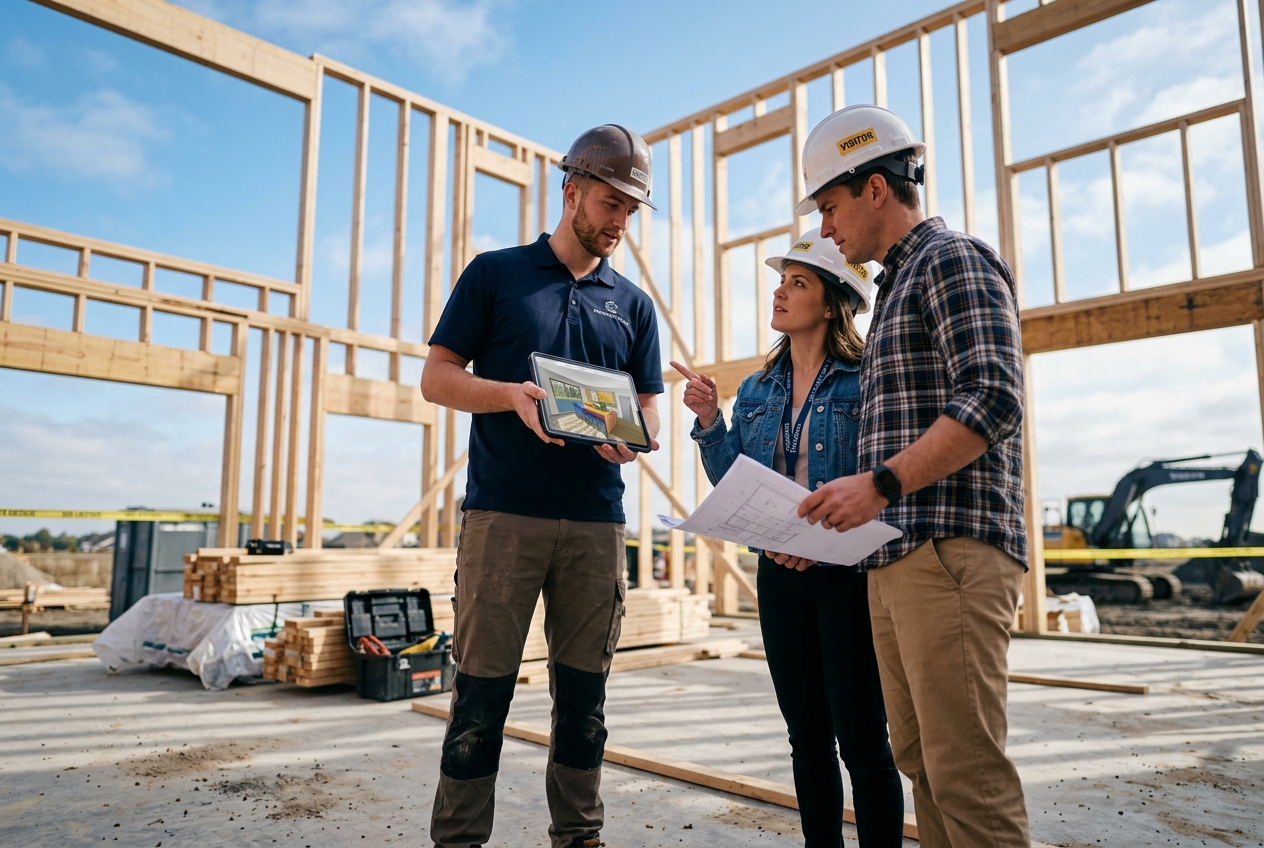
Virtual walkthroughs, digital permits, and collaboration apps are changing how home builders work — and what clients expect. Imagine walking through your future living room, kitchen, and backyard before a single wall goes up. That’s not a sales gimmick; it’s the new baseline. For builders serious about applying SEO strategies for home builders and contractors, these tools also sharpen your online presence and help the right clients find you first. Virtual walkthroughs turn abstract plans into something clients can actually feel, which cuts down on expensive changes once construction starts.
The same goes for document and permit management. Handling that manually isn’t just slow — it’s a liability. Digitizing these workflows saves time, reduces errors, and frees your team to focus on building. Here’s a closer look at how these innovations improve project management and the client experience from the first conversation to the final permit.
Introducing Clients to Virtual Walkthroughs
Virtual walkthroughs give clients the chance to explore their future home in detail before construction begins. They can get a realistic sense of spatial layout, room proportions, and overall feel — not from a floor plan, but from inside a rendered model they can actually navigate. That shift from abstract to concrete helps clients make better decisions and reduces the back-and-forth that slows projects down.
According to a study by the National Association of Realtors, 44% of homebuyers searched for properties online first, where interactive tools like virtual tours are in high demand. That preference for hands-on digital experiences isn’t going away.
To get the most out of virtual walkthroughs, start with high-quality software. Tools like SketchUp or Matterport create detailed, immersive 3D models that accurately represent the final build. When clients can adjust wall colors or experiment with furniture placement themselves, they feel ownership over the design — and builders field far fewer last-minute change requests. Think of it like test-driving a car before you buy: the more tangible the experience, the more confident the decision.
Embedding virtual walkthroughs on your website also supports your search visibility. By incorporating relevant keywords — “3D home tour,” “virtual home design,” “customizable virtual walkthrough” — you improve the chances of potential clients finding your services organically. Websites with multimedia content like virtual tours tend to see higher engagement rates, which positively affects search rankings.
That said, virtual walkthroughs work best alongside physical site visits, not as a replacement. Letting clients compare their digital impression with what they see in person builds trust and helps confirm decisions about materials, finishes, and overall scope. Offering live walkthroughs during in-person meetings or open houses also gives you a chance to answer questions in real time.
Builders who use this technology consistently also tend to be perceived as forward-thinking and client-focused — which matters when potential clients are weighing their options in a competitive market.
Feedback matters here too. After clients experience a virtual walkthrough, ask them what worked and what didn’t. Short surveys or a quick debrief conversation can sharpen your approach over time and make each future walkthrough more effective.
For builders looking to simplify pre-construction, virtual walkthroughs offer a clear return: better client understanding, fewer costly revisions, and a stronger first impression.
Digitizing Document and Permit Management
Managing documents is one of the most labor-intensive parts of the pre-construction process — and one of the most error-prone. According to a McKinsey report, the construction industry could improve productivity by up to 60% by implementing digital technologies. That’s not a marginal gain.
Cloud-based platforms like Procore or Buildertrend let workers access documents from anywhere, ensuring everyone is working from the most current version and reducing the hours lost searching through filing cabinets or email chains. The communication and collaboration benefits alone are worth the switch.
Permit management is where delays tend to pile up. Misplaced documents, slow follow-ups, unclear status updates — these are fixable problems. Digital permit management systems let builders submit documents electronically, track application statuses in real time, and get notified the moment something needs attention. That keeps projects moving instead of waiting on a call back from a municipal office.
Automation helps here too. Setting up automatic notifications for permit renewal dates or compliance deadlines removes a whole category of costly oversights. Automating routine tasks frees up time and resources for more strategic work — the kind that actually moves projects forward.
Building Information Modeling (BIM) takes this further. BIM integrates with digital document management systems and, as studies from the National Institute of Building Sciences have shown, automatically checks designs against building regulations before errors make it into the field.
Yes, there’s an upfront investment. But according to Dodge Data & Analytics, firms using advanced digital solutions in construction typically see a return on that investment within the first year, thanks to improved project controls and reduced rework.
The bottom line: digitizing document and permit management makes builders faster, more accurate, and easier to work with — which is exactly what clients are looking for.
Improving Client Collaboration Through Apps
The pre-construction phase is where the entire project takes shape. It’s also where miscommunication does the most damage. Apps built for project management and client communication give builders a structured way to share updates, gather approvals, and keep clients engaged — without burying them in technical detail.
Clients involved in regular updates via digital platforms report significantly higher satisfaction in service-based projects. Tools like Buildertrend or CoConstruct let clients log in to a personalized dashboard, check timelines, approve selections, and leave feedback — all in one place. That alone removes a significant amount of back-and-forth email.
3D modeling apps add another layer. When clients can virtually explore their future home and suggest changes before construction starts, you’re catching problems early — when they’re cheap to fix. SketchUp, for example, lets builders create detailed models that help clients visualize finishes, layouts, and material choices with real clarity. It’s the difference between a client saying “I think I want open shelving” and actually seeing it in context.
Centralized documentation matters just as much. Contracts, permits, change orders, and plans stored in one accessible location reduce the risk of something getting lost or misunderstood. According to the Project Management Institute, a well-documented project management system increases project success rates by nearly 16% through clearer communication and data transparency.
Messaging features — whether chat functions or built-in comment threads — keep the conversation going between formal meetings. Clients can flag concerns as they come up rather than waiting for a scheduled call. Ongoing digital communication has been shown to dramatically reduce misunderstanding-related incidents in construction projects.
Scheduling integrations round it out. Tools like Microsoft Project or Monday.com let builders sync timelines with clients automatically, so everyone is looking at the same master schedule. That reduces downtime and keeps expectations realistic.
Client collaboration isn’t just about transparency — it’s about trust. When clients feel genuinely involved in the process, they’re more confident in the outcome. And that confidence tends to translate into smoother projects, stronger referrals, and a reputation worth building on.
Frequently Asked Questions
How can home builders generate more high-quality leads?
Start with a strong online presence. That means optimizing your website for search engines using keywords relevant to your services, publishing useful blog content, and staying active on social media. Client testimonials and project portfolios build credibility. Pair that with an email marketing and targeted advertising strategy to capture and nurture leads over time.
What role does SEO play in growing a construction business?
SEO improves how easily potential clients find you online. By targeting relevant keywords, improving your site structure, and publishing quality content, you attract visitors who are actively searching for what you offer. Local SEO is especially important — optimizing your Google Business Profile and collecting positive reviews helps you show up when nearby clients are looking for a builder.
How can contractors manage client expectations effectively?
Set clear expectations early: realistic timelines, honest budgets, and a well-defined project scope. Keep clients updated regularly and address concerns before they become problems. Detailed contracts remove ambiguity, and project management tools give everyone a shared view of where things stand. The goal is to stay proactive, not reactive.
Laying the Next Foundation
Virtual walkthroughs, digital document management, and collaboration apps each solve a real problem in the pre-construction process. Together, they streamline communication, reduce delays, and give clients the kind of experience that builds long-term trust.
The next step is straightforward: look at where your current process creates friction — for your team or your clients — and identify which tools address it most directly. Whether that’s virtual walkthroughs, a document management platform, or a client-facing app, the builders who adopt these tools now are the ones setting the standard for everyone else.
If you’re ready to explore what that looks like for your business, a complimentary consultation is a good place to start. You can also browse our case studies to see how we’ve helped builders like you grow.

Virtual Walkthroughs, Digital Permits, and Smarter Collaboration for Home Builders
Virtual walkthroughs, digital permits, and collaboration apps are changing how home builders work — and what clients expect. Imagine walking through your future living room, kitchen, and backyard before a single wall goes up. That’s not a sales gimmick; it’s the new baseline. For builders serious about applying SEO strategies for home builders and contractors, these tools also sharpen your online presence and help the right clients find you first. Virtual walkthroughs turn abstract plans into something clients can actually feel, which cuts down on expensive changes once construction starts.
The same goes for document and permit management. Handling that manually isn’t just slow — it’s a liability. Digitizing these workflows saves time, reduces errors, and frees your team to focus on building. Here’s a closer look at how these innovations improve project management and the client experience from the first conversation to the final permit.
Introducing Clients to Virtual Walkthroughs
Virtual walkthroughs give clients the chance to explore their future home in detail before construction begins. They can get a realistic sense of spatial layout, room proportions, and overall feel — not from a floor plan, but from inside a rendered model they can actually navigate. That shift from abstract to concrete helps clients make better decisions and reduces the back-and-forth that slows projects down.
According to a study by the National Association of Realtors, 44% of homebuyers searched for properties online first, where interactive tools like virtual tours are in high demand. That preference for hands-on digital experiences isn’t going away.
To get the most out of virtual walkthroughs, start with high-quality software. Tools like SketchUp or Matterport create detailed, immersive 3D models that accurately represent the final build. When clients can adjust wall colors or experiment with furniture placement themselves, they feel ownership over the design — and builders field far fewer last-minute change requests. Think of it like test-driving a car before you buy: the more tangible the experience, the more confident the decision.
Embedding virtual walkthroughs on your website also supports your search visibility. By incorporating relevant keywords — “3D home tour,” “virtual home design,” “customizable virtual walkthrough” — you improve the chances of potential clients finding your services organically. Websites with multimedia content like virtual tours tend to see higher engagement rates, which positively affects search rankings.
That said, virtual walkthroughs work best alongside physical site visits, not as a replacement. Letting clients compare their digital impression with what they see in person builds trust and helps confirm decisions about materials, finishes, and overall scope. Offering live walkthroughs during in-person meetings or open houses also gives you a chance to answer questions in real time.
Builders who use this technology consistently also tend to be perceived as forward-thinking and client-focused — which matters when potential clients are weighing their options in a competitive market.
Feedback matters here too. After clients experience a virtual walkthrough, ask them what worked and what didn’t. Short surveys or a quick debrief conversation can sharpen your approach over time and make each future walkthrough more effective.
For builders looking to simplify pre-construction, virtual walkthroughs offer a clear return: better client understanding, fewer costly revisions, and a stronger first impression.
Digitizing Document and Permit Management
Managing documents is one of the most labor-intensive parts of the pre-construction process — and one of the most error-prone. According to a McKinsey report, the construction industry could improve productivity by up to 60% by implementing digital technologies. That’s not a marginal gain.
Cloud-based platforms like Procore or Buildertrend let workers access documents from anywhere, ensuring everyone is working from the most current version and reducing the hours lost searching through filing cabinets or email chains. The communication and collaboration benefits alone are worth the switch.
Permit management is where delays tend to pile up. Misplaced documents, slow follow-ups, unclear status updates — these are fixable problems. Digital permit management systems let builders submit documents electronically, track application statuses in real time, and get notified the moment something needs attention. That keeps projects moving instead of waiting on a call back from a municipal office.
Automation helps here too. Setting up automatic notifications for permit renewal dates or compliance deadlines removes a whole category of costly oversights. Automating routine tasks frees up time and resources for more strategic work — the kind that actually moves projects forward.
Building Information Modeling (BIM) takes this further. BIM integrates with digital document management systems and, as studies from the National Institute of Building Sciences have shown, automatically checks designs against building regulations before errors make it into the field.
Yes, there’s an upfront investment. But according to Dodge Data & Analytics, firms using advanced digital solutions in construction typically see a return on that investment within the first year, thanks to improved project controls and reduced rework.
The bottom line: digitizing document and permit management makes builders faster, more accurate, and easier to work with — which is exactly what clients are looking for.
Improving Client Collaboration Through Apps
The pre-construction phase is where the entire project takes shape. It’s also where miscommunication does the most damage. Apps built for project management and client communication give builders a structured way to share updates, gather approvals, and keep clients engaged — without burying them in technical detail.
Clients involved in regular updates via digital platforms report significantly higher satisfaction in service-based projects. Tools like Buildertrend or CoConstruct let clients log in to a personalized dashboard, check timelines, approve selections, and leave feedback — all in one place. That alone removes a significant amount of back-and-forth email.
3D modeling apps add another layer. When clients can virtually explore their future home and suggest changes before construction starts, you’re catching problems early — when they’re cheap to fix. SketchUp, for example, lets builders create detailed models that help clients visualize finishes, layouts, and material choices with real clarity. It’s the difference between a client saying “I think I want open shelving” and actually seeing it in context.
Centralized documentation matters just as much. Contracts, permits, change orders, and plans stored in one accessible location reduce the risk of something getting lost or misunderstood. According to the Project Management Institute, a well-documented project management system increases project success rates by nearly 16% through clearer communication and data transparency.
Messaging features — whether chat functions or built-in comment threads — keep the conversation going between formal meetings. Clients can flag concerns as they come up rather than waiting for a scheduled call. Ongoing digital communication has been shown to dramatically reduce misunderstanding-related incidents in construction projects.
Scheduling integrations round it out. Tools like Microsoft Project or Monday.com let builders sync timelines with clients automatically, so everyone is looking at the same master schedule. That reduces downtime and keeps expectations realistic.
Client collaboration isn’t just about transparency — it’s about trust. When clients feel genuinely involved in the process, they’re more confident in the outcome. And that confidence tends to translate into smoother projects, stronger referrals, and a reputation worth building on.
Frequently Asked Questions
How can home builders generate more high-quality leads?
Start with a strong online presence. That means optimizing your website for search engines using keywords relevant to your services, publishing useful blog content, and staying active on social media. Client testimonials and project portfolios build credibility. Pair that with an email marketing and targeted advertising strategy to capture and nurture leads over time.
What role does SEO play in growing a construction business?
SEO improves how easily potential clients find you online. By targeting relevant keywords, improving your site structure, and publishing quality content, you attract visitors who are actively searching for what you offer. Local SEO is especially important — optimizing your Google Business Profile and collecting positive reviews helps you show up when nearby clients are looking for a builder.
How can contractors manage client expectations effectively?
Set clear expectations early: realistic timelines, honest budgets, and a well-defined project scope. Keep clients updated regularly and address concerns before they become problems. Detailed contracts remove ambiguity, and project management tools give everyone a shared view of where things stand. The goal is to stay proactive, not reactive.
Laying the Next Foundation
Virtual walkthroughs, digital document management, and collaboration apps each solve a real problem in the pre-construction process. Together, they streamline communication, reduce delays, and give clients the kind of experience that builds long-term trust.
The next step is straightforward: look at where your current process creates friction — for your team or your clients — and identify which tools address it most directly. Whether that’s virtual walkthroughs, a document management platform, or a client-facing app, the builders who adopt these tools now are the ones setting the standard for everyone else.
If you’re ready to explore what that looks like for your business, a complimentary consultation is a good place to start. You can also browse our case studies to see how we’ve helped builders like you grow.
Published on April 21, 2026

