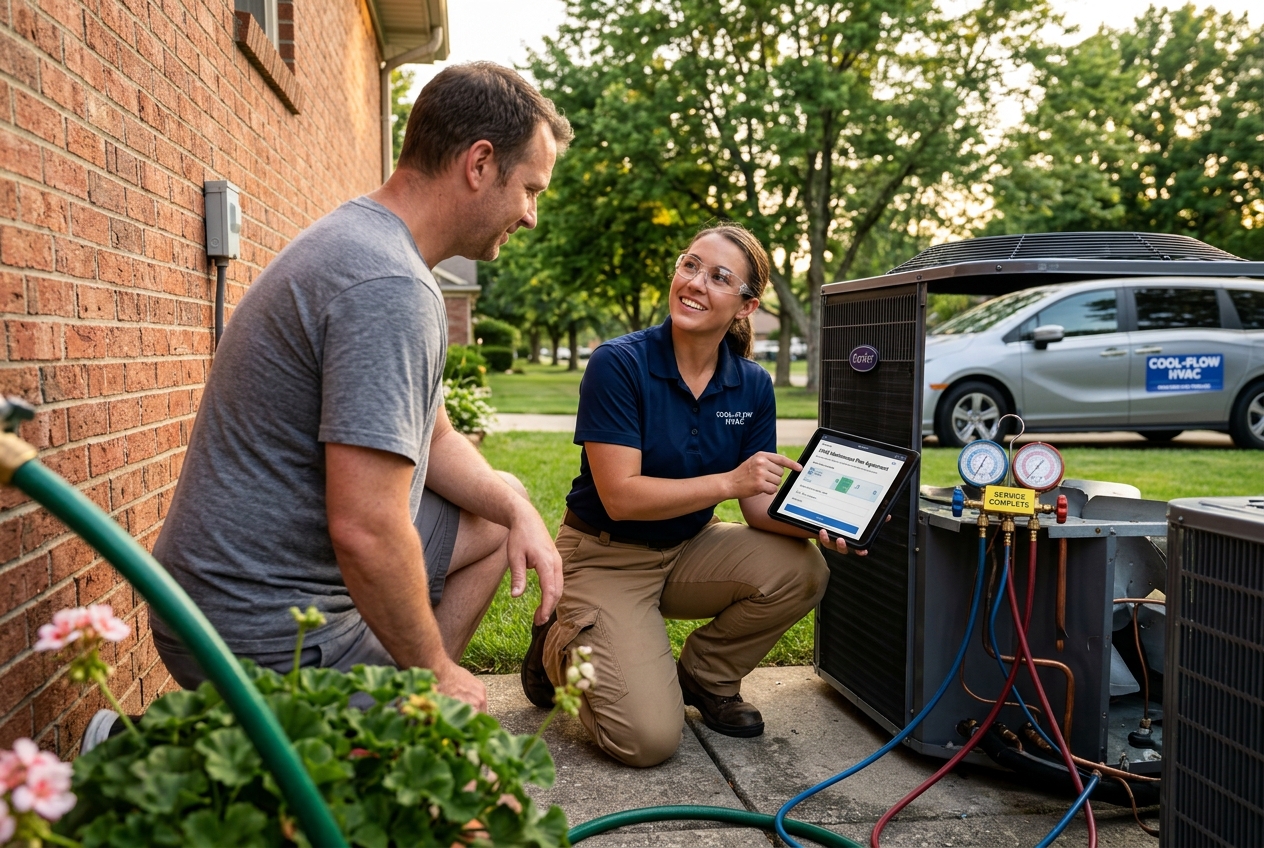

When a homeowner calls you in a panic because their air conditioning died in a July heatwave, do you treat it as a one-time fix or the start of a relationship that could last a decade? Too many heating and cooling companies pour money into generating emergency calls, solve the immediate crisis, collect payment, and never hear from that customer again. That is a costly habit. The same stressed homeowner who needs you at 9 p.m. is also the person most likely to sign a maintenance plan, call you first next time, and recommend you to neighbors, if you handle the moment well. We covered the foundations of getting found in our guide on the top 10 digital marketing strategies for HVAC companies. The sections below show how to convert crisis into loyalty, follow up after urgent jobs, and use maintenance plans to keep customers for years.
Training Staff to Convert Crisis Into Loyalty
The most overlooked of all HVAC marketing strategies that generate service calls is what happens during the call you already won, because an emergency is the rare moment when a customer is paying full attention and feeling genuinely vulnerable. How your technician behaves in that window decides whether they become a loyal client or a one-and-done transaction. The math makes the stakes clear: research highlighted by Harvard Business Review found that increasing customer retention by just 5 percent can raise profits anywhere from 25 to 95 percent. Turning a single emergency into a lasting relationship is one of the most profitable things your team can do.
It starts with how your people show up under pressure. Train technicians to lead with empathy before tools: acknowledge the stress, explain in plain language what went wrong, and walk the homeowner through the fix without jargon or scare tactics. A frightened customer who feels respected and informed relaxes, and that trust is the foundation everything else is built on. Coach your team to under-promise and over-deliver on timing, to keep the work area clean, and to treat the home as if it were their own.
Equip staff with the soft skills that turn competence into loyalty. Have technicians narrate their work so the customer understands the value being delivered, point out simple maintenance tips that prevent future breakdowns, and resist the urge to hard-sell in a moment of crisis. The goal is to be the calm expert who solved a scary problem, not the salesperson who exploited it. Give your team a simple, consistent close: a friendly recap of what was done, an honest note about the system’s overall health, and a low-pressure mention that you offer maintenance plans to prevent the next emergency. This retention mindset is what separates companies that treat home services marketing as a one-way funnel from those that build a loyal customer base. When every technician handles the urgent visit this way, you stop buying customers one call at a time and start earning relationships that keep paying off for years.
Following Up After Urgent Jobs
Reducing churn is closely tied to how HVAC companies can reduce seasonal slowdowns, and the bridge between the two is disciplined follow-up after every emergency visit. Most companies go silent the moment payment clears, which quietly hands the relationship back to the open market. That silence is expensive, because acquiring a brand-new customer typically costs roughly five times more than keeping an existing one, a gap documented in research comparing acquisition and retention costs. The homeowner you just helped is the cheapest, warmest lead you will ever have, but only if you reach back out before they forget you.
Build a simple, repeatable follow-up sequence and automate it so nothing slips. A day or two after the job, send a thank-you message that confirms the work, includes any documentation, and invites questions. A few days later, ask for a review while the relief of a working system is still fresh; positive reviews both reassure the customer and pull in new ones. Within a couple of weeks, send a short check-in to confirm everything is still running well. Each touch keeps your name in front of them and signals that you care beyond the invoice.
Use follow-up to add value, not just to ask for things. Share a quick seasonal tip, like changing filters before peak season or what to check before calling for service, so your messages feel helpful rather than promotional. Segment your outreach: someone who just had an AC emergency in summer is a natural candidate for a heating tune-up reminder in fall, which smooths out the slow shoulder seasons that strain cash flow. Capture every customer’s details in a CRM so follow-up is consistent across your whole team, not dependent on whoever remembers. Done right, this steady, useful contact transforms a stranger who called once into a repeat customer who thinks of you first every time their comfort is on the line, and who tells their neighbors to do the same.
Offering Maintenance Plans as Next Steps
Among the smartest SEO and PPC tips for heating and cooling businesses is making sure that every emergency lead you pay to attract has a clear next step waiting, and the strongest next step is a maintenance plan. These agreements turn unpredictable, one-off service calls into steady recurring revenue and lock in the relationship you worked so hard to earn during the crisis. The payoff is substantial. Industry analysis from ServiceTitan shows that recurring agreements and maintenance plans can account for a large share of a service business’s revenue, giving companies a dependable base that does not swing with the weather.
Position the plan as protection, not an upsell. Right after you have resolved an emergency is the ideal time to mention that regular maintenance is how homeowners avoid the exact situation they just lived through. Frame it around their pain: fewer surprise breakdowns, lower energy bills, longer equipment life, and priority scheduling when something does go wrong. Keep the offer simple and the value obvious, with clear tiers so customers can pick the level that fits their budget. A plan that prevents the next 9 p.m. panic call practically sells itself when introduced at the right moment.
Make the plans genuinely worth having and easy to keep. Bundle in seasonal tune-ups for both heating and cooling, discounts on repairs, waived service fees, and the kind of priority response that matters most in extreme weather. Members should feel like valued insiders, not subscribers on autopilot. Then protect renewals with the same discipline you use for follow-up: automated reminders before the plan expires, a short recap of what the membership saved them that year, and a friendly nudge to continue. Maintenance customers call you for installs and replacements at higher rates and refer more often, which compounds the value over time. Promoting these plans should be a core part of your HVAC marketing, since recurring members are the foundation of stable, year-round revenue. By making a maintenance plan the natural conclusion of every emergency visit, you convert the most stressful moment in a homeowner’s year into the beginning of a loyal, profitable, multi-year relationship.
Frequently Asked Questions
How can HVAC companies manage seasonal demand shifts?
Smooth the swings by converting one-time customers into year-round relationships. Use maintenance plans to schedule heating tune-ups in fall and cooling checks in spring, follow up with past emergency clients before each season, and adjust marketing spend to match demand. Recurring agreements and steady follow-up keep revenue flowing during the slower shoulder months.
What marketing strategies generate more HVAC service calls?
Start with strong local SEO and an accurate Google Business Profile so homeowners find you fast in an emergency. Add targeted paid ads, retargeting, and steady reviews to build trust. Then maximize every call by converting it into a repeat customer through great service, follow-up, and maintenance plans, which lowers your cost per new job.
Should HVAC companies invest in streaming or PPC ads?
Both can work when matched to your goals. PPC captures homeowners actively searching during a breakdown, making it ideal for emergency demand. Streaming ads build brand awareness so you are the name people remember when trouble hits. Many companies combine them, then protect that ad investment by retaining the customers those ads bring in.
Keeping Growth Cool
Emergency calls are expensive to win, so wasting them on one-time transactions is one of the costliest mistakes a heating and cooling company can make. When you train your team to turn crisis into trust, follow up with discipline after every urgent job, and offer maintenance plans as the natural next step, each emergency becomes the start of a relationship worth far more than the original repair. The companies that grow steadily are the ones that keep the customers they already paid to find. Aginto helps HVAC businesses build the marketing and retention systems that make that happen. To put a plan in place for your company, contact Aginto for a free consultation and keep your growth cool.