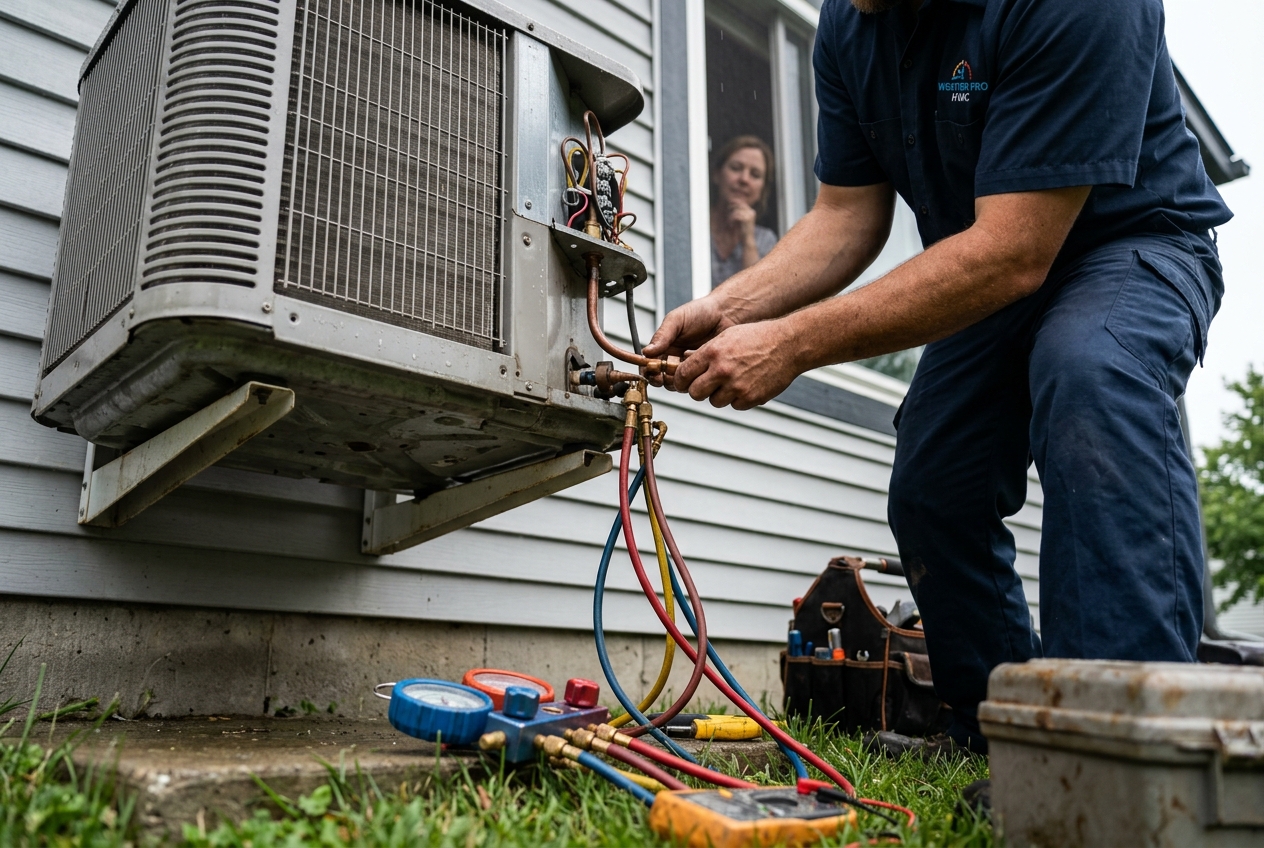

Timing Ads Around Weather Patterns and Seasons
Weather doesn’t wait — and neither do homeowners with a broken AC in July. If your HVAC business isn’t using HVAC marketing strategies that generate service calls at the exact moment someone’s sweating through their shirt or watching their breath fog up inside, you’re leaving real money on the table.
When a heatwave hits or a cold snap rolls in overnight, homeowners don’t browse casually — they act. These weather moments aren’t just inconveniences; they’re triggers. And for HVAC companies, they’re the single best opportunity to put the right ad in front of the right person at exactly the right time.
Weather shapes what homeowners need and when they need it. Timing your advertising around those shifts doesn’t just improve visibility — it generates more service calls from people who are already primed to pick up the phone.
Search interest for HVAC services spikes during extreme weather. During a heatwave, searches for air conditioning repair and installation climb sharply. A cold snap brings the same surge for heating services. According to the U.S. Energy Information Administration, nearly 87% of homes in the South use air conditioning — meaning as summer temperatures rise, so does the urgency for reliable A/C service. When your ads appear during those moments, you’re not interrupting anyone. You’re solving a problem they already have.
A practical starting point: monitor local weather forecasts and schedule your digital campaigns around predicted temperature swings. Set up alerts for significant changes. If a heatwave is coming, ramp up your ads a few days before it arrives — lead with fast response times and available appointments, not just general brand awareness.
Seasonal transitions are just as valuable as extreme weather events. Homeowners think about maintenance before the heat or cold fully sets in. Spring drives demand for A/C tune-ups; fall brings heating inspections. Launching campaigns at the start of those windows taps into a proactive mindset — people who want to avoid being caught off guard.
Your local climate matters too. A contractor in South Florida is selling something different than one in upstate New York. Tailor your messaging to the specific conditions your customers actually live with. Highlighting energy-efficient cooling options in a hot, humid market hits differently than promoting them somewhere with two weeks of summer.
Finally, don’t overlook retargeting. Homeowners who’ve already visited your site have already shown interest — retargeting keeps you visible when they circle back during a weather event and decide it’s time to call. It’s low-cost, high-relevance advertising that works especially well when conditions shift fast.
Crafting Messages That Address Immediate Needs
Retargeting is only as good as the message behind it. Generic ads get ignored. Ads that speak to what someone is feeling right now — that’s what earns the click.
The most effective approach is matching your message to the moment. When temperatures spike, homeowners become acutely aware of every rattle, weak airflow, or warm room in the house. When the first real cold arrives, that furnace they’ve been meaning to check suddenly becomes urgent. Your retargeting ads should reflect that tension. If someone visited your site during a heatwave, an ad emphasizing fast cooling relief and same-day availability is going to land harder than one about annual maintenance plans.
Behavioral data sharpens this further. Google Analytics shows which pages visitors spent the most time on — emergency repair, system replacement, maintenance agreements. Use that signal. Someone who lingered on your emergency repair page is telling you something. An ad offering a limited-time discount on repairs, served back to that person during a heat advisory, is relevant in a way that generic ads simply aren’t. That relevance is what drives conversions.
The language in your ads matters more than most people realize. Phrases like “quick cooling relief” or “heat back on before tonight” create a visceral connection to the problem the homeowner is trying to solve. Pair that with strong imagery and you’ve got an ad that doesn’t just inform — it resonates.
Social proof works hard in this category too. According to a BrightLocal Consumer Review Survey, 87% of consumers read reviews for local businesses, and HVAC services rank high in that consideration. Featuring a five-star review that highlights a fast response and fair price — right inside a retargeting ad — gives a hesitant homeowner the reassurance they need to make the call.
Put it all together and your retargeting ads stop being reminders and start being solutions, showing up exactly when someone is uncomfortable enough to act.
Measuring Conversions From Climate-Driven Campaigns
Running weather-timed ads is smart. Knowing which ones are actually working is what makes the strategy sustainable.
Start with a clear definition of conversion. For most HVAC companies, that means a booked appointment, a completed lead form, or an inbound call. Once you know what you’re measuring, build the tracking infrastructure around it.
Google Analytics is a strong foundation. Use UTM parameters in your ad URLs so you can see exactly which campaign drove which action — not just clicks, but completions. This tells you which weather conditions and which messages are generating real engagement, not just impressions.
Phone tracking deserves its own setup. Most HVAC jobs still start with a phone call, and without call tracking you’re flying blind on a major conversion channel. Services like CallRail assign unique numbers to individual ads, showing you which campaign prompted the call and how long the conversation lasted. During a cold snap, that data can tell you in near real-time which message is working and which one to pause.
Geo-targeting adds another layer of precision. When a specific region is experiencing extreme heat, you can concentrate your spend there — serving promotions on A/C repairs to the zip codes that need them most. Watching how conversion rates shift when you tighten or widen that geographic focus teaches you a lot about your market.
Historical seasonal data matters too. If you know that March and April consistently bring calls about tune-ups, and October brings heating inspections, you can plan ahead instead of reacting. Pair that pattern with current weather conditions and your campaigns get sharper every year.
Build in regular review cycles as well. Climate-driven ads require flexibility — what works in a mild spring doesn’t necessarily work in an early heat wave. Test your copy, images, and calls-to-action consistently, and treat every campaign as a source of data for the next one.
Frequently Asked Questions
How can HVAC companies manage seasonal demand shifts?
Seasonal demand shifts can be managed through a combination of strategic advertising and operational planning. During peak seasons, retargeting ads targeting homeowners actively experiencing heating or cooling problems are especially effective. Offseason demand can be supported through maintenance plan promotions and email campaigns focused on energy efficiency tips and system upkeep. Staying visible year-round — even when the weather is mild — keeps your brand top of mind when urgency returns.
What marketing strategies generate more HVAC service calls?
Strong SEO ensures homeowners find you when they search. PPC ads capture people actively looking for help right now. Retargeting brings back visitors who didn’t convert the first time. Local directory listings and positive reviews build the credibility that turns browsers into callers. Email campaigns tied to seasonal promotions and check-up reminders round out a system that works across the full customer journey. To see how these strategies have performed for real businesses, take a look at our case studies.
Should HVAC companies invest in streaming or PPC ads?
It depends on what you’re trying to accomplish. PPC works well for capturing homeowners who are already searching — it’s a direct lead-generation tool. Streaming ads are better for building brand awareness with a broader audience. Companies focused on immediate service calls will generally get more from PPC. Those investing in long-term brand recognition may find streaming worthwhile. A balanced approach — using PPC for direct response and streaming for awareness — can serve both goals without sacrificing either.
Keeping Growth Cool
Aligning your advertising with weather patterns gives your HVAC business a real edge — not because it’s clever, but because it’s relevant. Homeowners who are hot, cold, or worried about their systems don’t need to be sold to. They need to see your name at the right moment.
Tools like Google Analytics and call tracking make it possible to move beyond guessing and start making decisions based on what’s actually driving calls. The more you refine that feedback loop — adjusting timing, targeting, and messaging as conditions change — the more efficient your home services marketing spend becomes over time.
If you want to talk through how to apply these strategies to your specific service area, reach out to schedule a free consultation. Aginto’s team can help you build a campaign approach that keeps pace with the weather and your business goals.