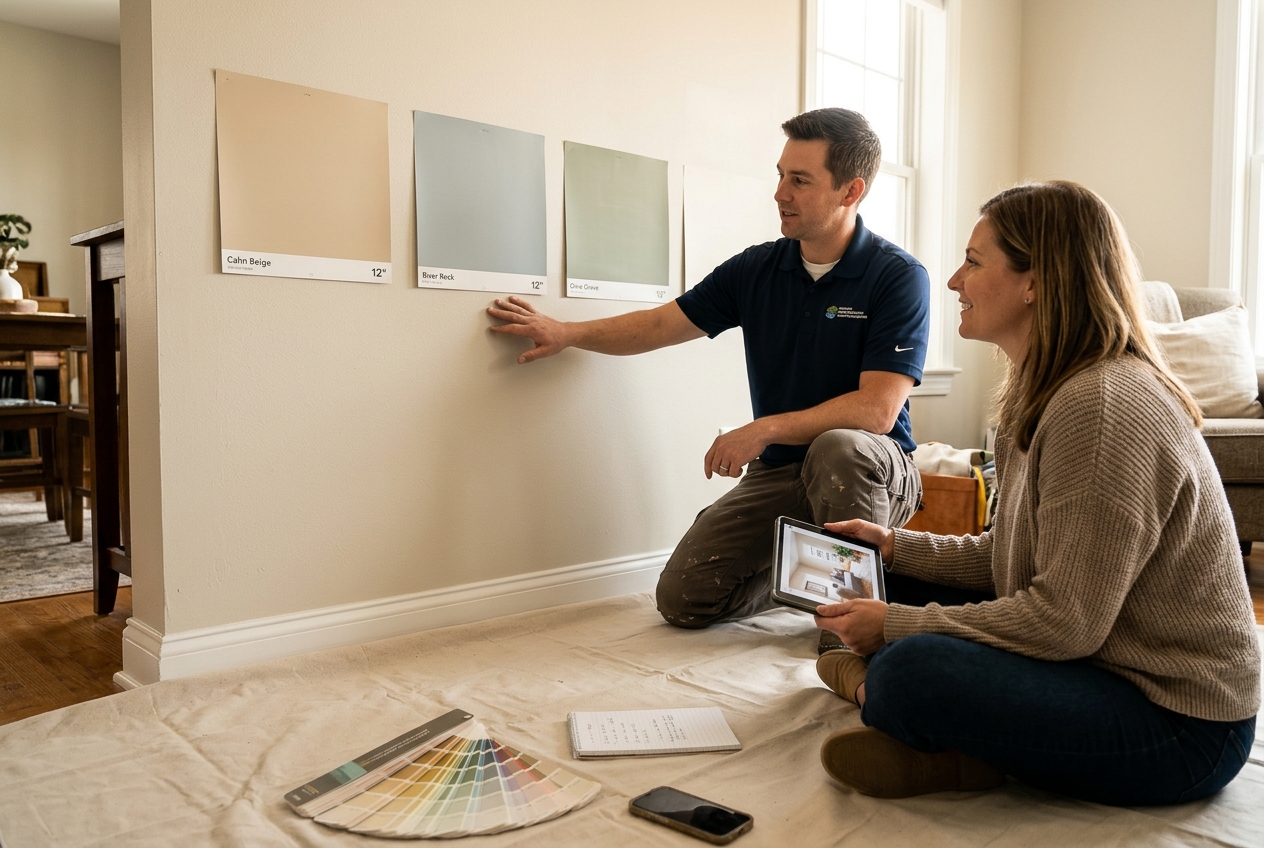

What if the free color consultation you almost stopped offering is actually the strongest sales tool your painting company owns? Most painters treat color help as a small favor — a quick visit before the real work of taping and rolling begins. But that sit-down with a homeowner is where trust gets built, where bigger jobs get born, and where you separate yourself from the guy who only quotes a price and disappears. Picking paint feels simple until a homeowner is staring at a wall of nearly identical grays at 9 p.m., second-guessing every swatch. When you step in and make that decision easier, you stop being a vendor and start being the expert they call for every project going forward. The sections below break down how a smart consultation guides nervous clients, proves your value before you lift a brush, and opens the door to larger, more profitable work.
Guiding Clients Through Decision Fatigue
Smart marketing for painters starts with a simple truth: homeowners freeze when they face too many choices. A single paint brand can sell more than 3,500 shades, and once you add finishes, undertones, and trim options, repainting one room turns into a math problem nobody wants to solve. That mental exhaustion has a name — decision fatigue — and it quietly kills jobs. When people feel worn down by options, they often pick nothing at all and push the project to “someday.”
Researchers have measured how this works. In a well-known grocery study, shoppers who saw 24 jam samples bought far less often than those shown only six — roughly 3% versus 30%. More options did not help people decide; it froze them. The same thing happens in a paint aisle, only worse, because the colors look almost identical and the stakes feel higher. A homeowner does not want to repaint twice.
A color consultation fixes this by shrinking the field for the client. Instead of handing over a fan deck and walking away, you ask how the room is used, who spends time there, and what feeling they want when they walk in. Then you narrow thousands of shades down to three solid options. Bring large peel-and-stick samples, not tiny chips, and tape them to the actual wall. Look at them in morning light and again under evening lamps, since the same color can read warm at noon and cold at night. A good rule is to never present more than three finalists at once; if the client wants to compare more, swap one out rather than piling on. You can also give the room a clear starting point by choosing the main wall color first, then letting trim and accents follow from it, so the decision builds in a logical order instead of landing all at once. Each step removes a little stress and makes the homeowner feel guided rather than sold to. That feeling of relief is exactly what they remember when they tell a neighbor who to call.
Positioning Expertise as Added Value
Good painter marketing convinces homeowners that your crew is worth more than the cheapest bid, and a color consultation proves it before a single wall gets taped. When you explain why a north-facing room needs a warmer white, or why a flat finish hides drywall flaws while a satin finish wipes clean in a hallway, you show knowledge the low-bid competitor simply does not have. That advice turns a price conversation into a value conversation.
This is the heart of value-based selling: instead of competing on who is cheapest, you help the client understand the result they are paying for. Sales research consistently shows that sellers who lead with expertise can justify higher prices and keep clients longer, because buyers trust people who clearly know more than they do. A homeowner who learns something useful from you assumes your prep work and application are just as careful.
Put this into practice with a few easy habits. Keep notes on common problems in your area — hard water stains, sun-faded south walls, humidity in bathrooms — and mention them during the visit so clients see you have done this hundreds of times. Bring a small binder or a tablet with before-and-after photos of similar rooms you have painted. Explain the “why” behind every recommendation in plain words, never jargon. And give one honest tip that does not earn you money, like which hardware-store primer works fine for a small touch-up. That small act of honesty signals you are giving advice, not a sales pitch. Another simple move is to send a short written recap after the visit that lists the colors, finishes, and reasons behind each pick. A homeowner who can reread your advice tends to share it with a spouse, which spreads your expertise to the other decision-maker in the house. By the end of the visit, the homeowner no longer sees a painter holding a quote; they see a trusted advisor who happens to also do the work. Price stops being the only thing they compare.
Using Consultations to Upsell Larger Projects
Some of the most useful questions clients ask about color consultations have nothing to do with paint chips. They ask whether the trim should match the walls, if the dated ceiling will clash, or how to tie three connected rooms together. Each question is an opening. When a homeowner trusts your eye for one room, they naturally start picturing the rest of the house — and you are standing right there to help them see it.
The trick is to ask about the future, not just the wall in front of you. Industry advice on upselling home improvement projects points to one powerful question: what are your long-term plans for this home? A family staying for years may want a whole-house color plan they tackle one room at a time. Someone selling soon will jump at neutral, buyer-friendly colors that lift resale value. Their answer tells you exactly which larger job to suggest, and it never feels pushy because they raised the topic first.
Look for natural add-ons while you are on site. If you are repainting a living room, the scuffed hallway and tired front door are right there to mention. Cabinet refinishing, accent walls, and exterior restoration and refresh work are easy to bundle when the client already trusts your taste. Bundling also saves them money on setup and travel, which gives you an honest reason to recommend it. Walk the home with the client, point out two or three rooms that would “pull the whole place together,” and offer a simple phased plan with rough pricing. Keep a simple checklist of common add-ons so you never forget to mention them, and always frame the larger plan around what the client said they wanted, not what earns you the most. Most homeowners do not buy more because they are pressured; they buy more because someone finally showed them what was possible. The color consultation is where that vision takes shape, one room and one trusted suggestion at a time.
Frequently Asked Questions
What are effective strategies for using color consultations as a marketing tool?
Treat the visit as relationship-building, not a quick favor. Narrow thousands of shades to three options, bring large samples, and view them in different light. Share expert tips freely, photograph the results, and ask the client to leave a review. Each step turns one consultation into referrals and repeat work.
How can painting companies improve results with color consultations?
Prepare before you arrive by asking how each room is used. On site, explain the reasons behind your recommendations in plain language and show before-and-after photos. Follow up with a written color plan and rough pricing for related rooms. This structure builds trust, raises perceived value, and opens larger jobs.
Why do color consultations matter for business growth?
They lower the homeowner’s stress, prove your expertise, and create natural openings for bigger projects — all before you quote a price. Clients who feel guided choose you over the cheapest bid and refer friends. That mix of trust, higher-value jobs, and word of mouth fuels steady, profitable growth.
Moving Forward
A color consultation is more than a courtesy; it is a chance to win trust, prove your value, and grow the size of every job before the first wall is even prepped. If you want help turning small touchpoints like these into a marketing system that brings in steady, higher-quality painting leads, Aginto can build it with you. Contact Aginto today to schedule a consultation and let our team show you how to put strategies like this to work for your business.