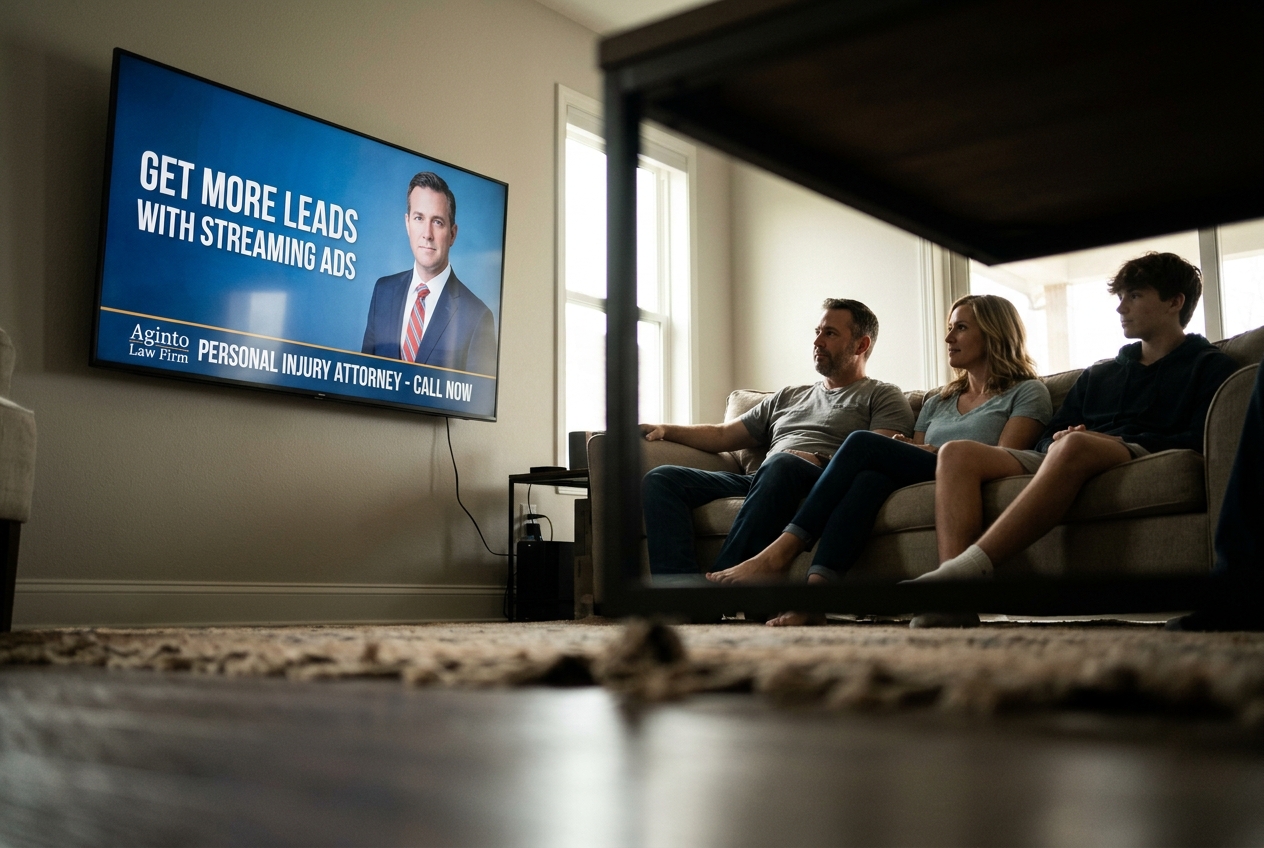

What if the same big screen that made national injury firms household names was now within reach of your two-attorney practice? For years, television belonged to the firms with seven-figure ad budgets. Streaming changed that math. Today a regional personal injury firm can run targeted ads on the same shows local viewers stream every night, often for a fraction of old cable rates. We have written before about building trust through smart messaging in our piece on content marketing tips for personal injury law firms, and streaming extends that reach to the living room. This article looks at who streaming actually reaches, how to craft messages that connect with everyday clients, and how to trace a streaming impression all the way back to a signed case, so the spend earns its place in your budget.
Highlighting Accessibility Through Regional Campaigns
Understanding how personal injury attorneys get more leads starts with meeting people where their attention already lives, and that place is increasingly streaming. The shift is not subtle. Nielsen reported that in May 2025, streaming captured 44.8% of total television usage, surpassing broadcast and cable combined for the first time, a milestone covered in Nielsen’s reporting on TV usage. For a local firm, that means the audience you want is no longer locked behind expensive broadcast buys; they are watching on smart TVs, and you can reach them by zip code.
Regional campaigns are where accessibility becomes real for smaller firms. Connected TV platforms let you target by metro area, county, or even neighborhood, so your budget is spent only on the communities you actually serve. A firm in Tampa does not pay to reach viewers in Miami; it concentrates every dollar on the people who could realistically become clients. That precision is the great equalizer. The old model rewarded whoever could afford the widest blast. The streaming model rewards relevance, which is something a focused local firm can deliver better than a distant national brand.
Accessibility also shows up in production and flexibility. You no longer need a single, expensive spot meant to run for a year. You can produce a few shorter, well-made ads, test them against each other, and shift spend toward whatever performs. Frequency caps keep you from annoying the same household, and dayparting lets you run during the evenings when local viewers are most engaged. The result is a presence that feels established and trustworthy without the budget that presence used to require. To frame the offer clearly and route interested viewers to the right next step, anchor your campaigns to a strong law firm marketing foundation and a focused personal injury attorney marketing page that turns curiosity into contact. When a regional campaign is built this way, the size of your firm stops being the thing that decides whether you can compete on television.
Building Messages That Resonate With Everyday Clients
Knowing your law firm intake process for injury clients shapes the message long before a viewer ever calls, because the people you reach on streaming are usually scared, hurt, and unsure who to trust. A polished ad that brags about verdicts can feel cold to someone who just wants to know if their bills will get paid. The firms that convert streaming attention into cases lead with empathy first and credentials second. They speak to the worry, then show they can handle it.
Start with the everyday reality of your audience. Most personal injury clients are not repeat buyers of legal services; they are ordinary people facing a crisis for the first time. Plain language beats legal jargon every time. Instead of “aggressive litigation,” say “we deal with the insurance company so you can focus on getting better.” Instead of listing case values, show a real person describing how your firm took the pressure off. That human framing matters because contingency-fee representation means clients pay nothing upfront, and saying so directly removes the biggest fear holding people back from calling.
Authenticity carries more weight than production gloss. A genuine client story, a recognizable local landmark, or an attorney speaking plainly to the camera builds more trust than slick stock footage. Reputable marketing research backs the broader point: HubSpot has found that personalization meaningfully lifts ad engagement, a pattern documented across its marketing statistics research, and on streaming you can tailor creative to the region, the season, or the type of injury common in your area. Keep the message focused on one clear idea per ad, end with a simple instruction, and make the firm feel approachable rather than intimidating. When everyday viewers see a firm that talks like a neighbor and proves it can deliver, the distance between a passive impression and a phone call gets a lot shorter, which is exactly what a smaller firm needs from every advertising dollar.
Tracking Conversions From Streaming Back to Cases
Every smart firm eventually asks the hard questions clients ask before hiring an injury lawyer, and the toughest internal version is simply: did this ad actually produce cases? Tracking streaming back to signed clients is the part that separates disciplined spenders from firms guessing in the dark. The challenge is real because viewers usually watch on a TV and convert on a phone or laptop, creating a cross-device gap. As industry analysis notes, connected TV advertising has grown from roughly a $5 billion market in 2019 to well over $30 billion, yet attribution remains its biggest measurement hurdle, a tension detailed in this guide to CTV attribution.
You can close that gap with a few practical tools. Device-graph attribution links the household that saw your ad to the same household’s later web visit or call, so you can see streaming-driven traffic even without a direct click. Pair that with call tracking numbers unique to each campaign, and ask every new lead a simple intake question: “How did you hear about us?” Those answers, logged consistently, build a clear picture over time. Geo-based testing helps too. Run ads in one metro and hold a comparable metro dark, then compare inbound case volume between them to isolate streaming’s real lift.
The metrics that matter for a law firm are not impressions for their own sake; they are qualified consultations and signed cases per dollar spent. Track cost per lead, cost per signed case, and the share of new clients who mention seeing you on TV. Feed that data back into the campaign: shift budget toward the regions, shows, and creative that produce real intake, and cut what only produces views. This is the same discipline that makes any channel accountable. When you can trace a streaming impression through a tracked call into a signed retainer, television stops being a vanity expense and becomes a measurable source of cases, which is the only standard that justifies keeping the spend in a lean firm’s budget.
Frequently Asked Questions
How can personal injury attorneys reduce client drop-off?
Keep clients informed at every stage. Set clear expectations at intake, send regular progress updates, and explain timelines in plain language so no one feels forgotten during a long case. Quick responses to questions and a single point of contact build trust, which keeps clients engaged and far less likely to walk away mid-case.
What intake strategies increase conversions for injury law firms?
Respond fast and remove friction. Use click-to-call buttons, short forms, and after-hours coverage so no lead slips away. Train intake staff to lead with empathy, gather key facts efficiently, and confirm next steps clearly. Tracking lead sources, including streaming campaigns, helps you invest in the channels that actually produce signed clients.
How does content marketing help personal injury lawyers stand out?
Useful content answers the questions injured people are already searching, building trust before they ever call. Clear articles, videos, and FAQs show empathy and expertise while improving search visibility. Over time, that authority sets your firm apart from competitors who only advertise, giving prospects a reason to choose you when they finally reach out.
Winning Trust, Step by Step
Streaming TV has quietly opened a door that used to be reserved for the biggest names in personal injury law. With regional targeting, empathetic messaging, and disciplined conversion tracking, a local firm can build real visibility and trace every dollar back to actual cases. The firms winning here are not the ones with the largest budgets; they are the ones using the channel smartly. Aginto helps personal injury attorneys plan, launch, and measure streaming campaigns that fit their market and their goals. To see what a focused streaming strategy could do for your firm, contact Aginto for a free consultation today.