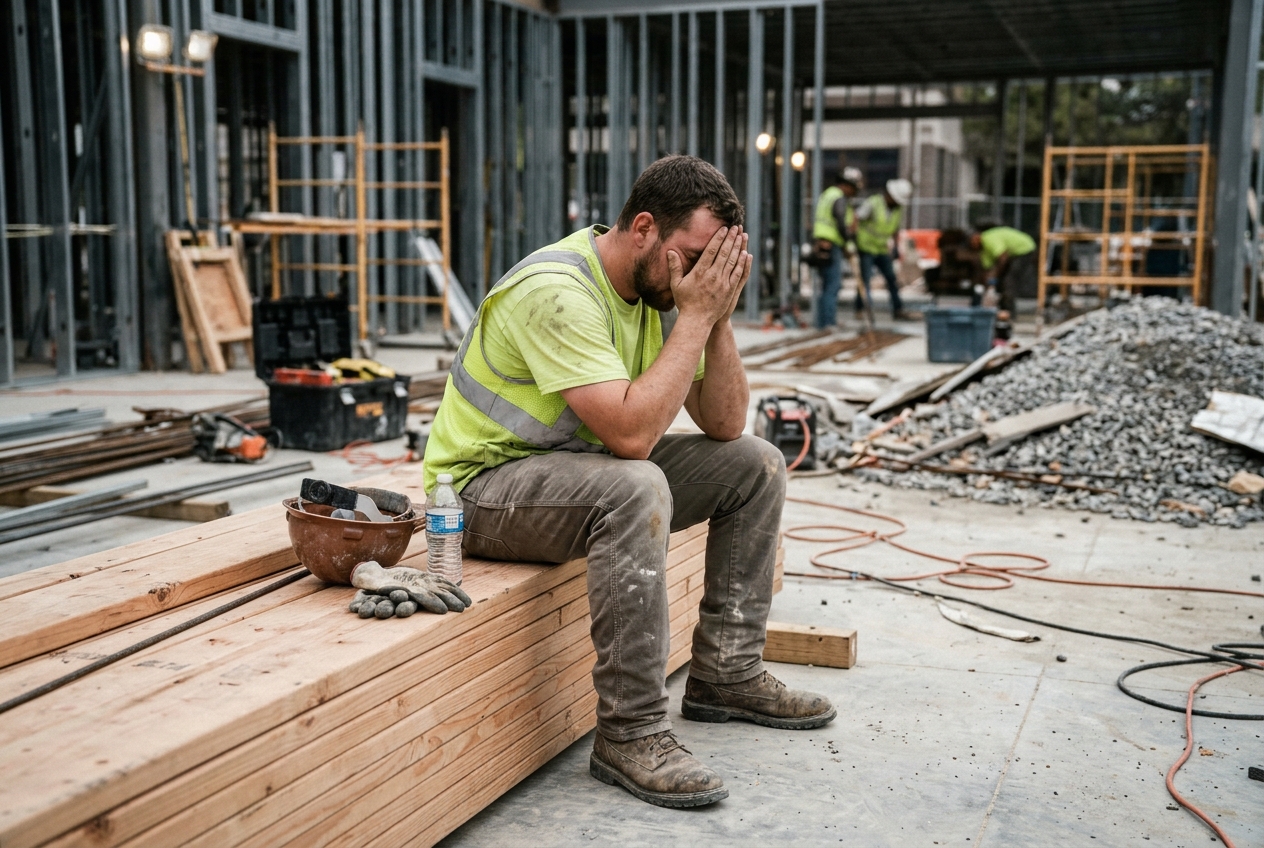

Have you ever lost a great crew member not to a competitor’s higher pay, but to plain exhaustion? In small general contractor teams, burnout rarely announces itself. It creeps in through missed details, short tempers, and quiet resignations, and by the time an owner notices, the damage to quality, schedules, and reputation is already done. With lean staffing, every burned-out worker carries an outsized cost, because there is no bench to absorb the slack. The good news is that burnout is preventable once you know what to watch for and how to build a healthier operation. Aginto’s article on what to do when your crews are booked but the leads keep coming tackles a related pressure, and this guide focuses on protecting the people who do the work.
Identifying Warning Signs in Project Staff
Owners who follow solid SEO strategies for home builders and contractors know that a strong brand depends on consistent work, and consistent work depends on a healthy crew, so spotting burnout early protects everything else. The scale of the problem is sobering: research shows that more than 80% of construction workers report experiencing stress at work, and roughly a third report poor mental health overall. Construction workers are more vulnerable to burnout than employees in nearly any other field, which means the warning signs are likely already present on your jobsites if you know how to read them.
The earliest signals are usually behavioral. A normally reliable worker starts showing up late, calling out more often, or going quiet on a crew that used to joke around. Productivity slips even when hours stay the same, and tasks that once took a morning stretch into the afternoon. Quality is another tell: rework climbs, punch lists grow longer, and small mistakes that used to be rare become routine. Pay attention to mood, too. Irritability, cynicism about the company or clients, and a flat, disengaged attitude often signal someone running on empty rather than someone who simply had a bad day.
Physical signs matter as well. Chronic fatigue, frequent minor injuries, and complaints about sleep can all point to a worker pushed past a sustainable limit, and in a trade where tired workers operate heavy equipment, that is a safety issue as much as a morale one. Watch your most dedicated people most closely, because the workers who never say no and always cover the extra shift are often the first to crash. Create low-pressure ways to check in, like a brief one-on-one at the end of a tough week, so people feel safe naming when they are overloaded. Track patterns across the team, not just individuals, since a spike in turnover, absenteeism, or callbacks usually means the workload itself, not any single person, has become the problem. Catching these signs early gives you room to adjust before a valued team member walks away or a project goes sideways.
Building Systems to Prevent Overload
Figuring out how to generate leads for construction companies is only half the battle; the other half is making sure your team can handle the work those leads create without breaking down. Work overload, the gap between what a project demands and what a worker can realistically deliver, is consistently ranked among the top drivers of construction burnout. The most effective defense is not pushing people harder but building systems that smooth the workload and remove unnecessary friction. Standardization is a proven lever here: project management research shows that standardized, repeatable processes reduce errors, cut wasted effort, and improve consistency, which directly lightens the mental load on your crews.
Start with realistic scheduling. Many small contractors overbook because saying yes feels safer than turning work away, but a calendar with no slack guarantees that any delay cascades into overtime and stress. Build buffer time between projects, and resist the urge to promise dates your crew cannot meet. Pair that with clear, documented processes for your common job types so every worker knows the steps, the standards, and who handles what. When the workflow is predictable, people spend less energy figuring out what to do and more energy doing it well.
Technology and delegation round out the system. Simple project management and scheduling software gives everyone visibility into timelines, reduces the chaos of last-minute changes, and prevents the double-booking that wrecks both schedules and morale. Define roles clearly so no single person becomes the bottleneck for every decision, and train a second person on critical tasks so one absence does not derail a job. Track your actual capacity honestly, and use referral partnerships to hand off overflow work rather than crushing your team to capture every lead. Hold short, regular planning meetings so problems surface early instead of exploding mid-project. None of this is glamorous, but consistent systems are what separate a contractor whose crew burns out every busy season from one whose team stays steady and productive year after year, protecting both your people and the reputation your business depends on.
Supporting Teams Through Flexible Scheduling
Some of the best marketing ideas for custom home builders mean nothing if the crew behind the brand is too exhausted to deliver, which is why supporting your team through flexible scheduling is as much a business strategy as a kindness. The evidence is strong: according to Gallup-cited research, employees with schedule flexibility report higher happiness and lower burnout, and companies that offer flexible arrangements see meaningfully lower turnover. In construction, where replacing a skilled worker is costly and slow, keeping good people is worth real effort, and flexibility is one of the most affordable retention tools available.
Flexibility looks different on a jobsite than in an office, but the principle holds. Rotate demanding assignments so the same people are not always stuck with the hardest, hottest, or most physically punishing tasks. Build in recovery time after stretches of long days or weekend work rather than rolling straight into the next sprint. Where the schedule allows, let workers swap shifts, adjust start times to beat brutal afternoon heat, or take a needed day without guilt. Even modest control over their own hours helps people manage their health and home lives, which is exactly what reduces the chronic stress that leads to burnout.
Plan flexibility into your operations rather than treating it as a favor granted under pressure. Cross-train your team so coverage is possible when someone needs time off, and keep a small roster of trusted subcontractors or temporary labor to absorb peak demand instead of grinding your core crew. Communicate openly about upcoming busy periods so people can plan their lives around them, and ask your team what scheduling changes would actually help, since the people doing the work usually know best. Recognize and reward the effort during crunch times, because feeling valued buffers against burnout almost as much as rest does. When workers trust that the company will protect their wellbeing during the inevitable busy stretches, they stay longer, work harder, and represent your brand with genuine pride. In a trade where reputation travels by word of mouth, a team that is supported rather than depleted becomes one of your strongest competitive advantages.
Frequently Asked Questions
How can home builders generate more high-quality leads?
Strong local SEO, a portfolio-driven website, and steady online reviews bring in better-qualified leads than scattershot advertising. Showcasing real projects and clear service areas attracts homeowners who match your work. A healthy, well-staffed team then delivers the quality that earns referrals, which remain one of the most reliable high-quality lead sources in construction.
What role does SEO play in growing a construction business?
SEO helps homeowners find you when they search for builders or contractors in your area, driving steady organic leads without paying per click. Location pages, project galleries, and helpful content build authority over time. Paired with reviews and a fast website, SEO turns search traffic into consultations and keeps your pipeline full year-round.
How can contractors manage client expectations effectively?
Set expectations in writing at contract signing, communicate clearly during any project shift, and use photos or progress updates to show work in real time. Realistic timelines matter most, and a rested, well-organized team meets them more reliably. Transparency throughout the job prevents most disputes and protects your reputation and referrals.
Laying the Next Foundation
Burnout in a small contractor team is expensive in ways that never show up neatly on a balance sheet: lost talent, slipping quality, missed deadlines, and a reputation that takes years to rebuild. Spotting the warning signs early, building systems that prevent overload, and supporting your crew with genuine flexibility protect both your people and your profit. A steady, healthy team is the foundation every other part of your business rests on. If you want help building a marketing engine that brings in the right work without overwhelming your crew, explore Aginto’s home services marketing and home builder marketing services, and contact us for a free consultation to plan growth your team can sustain.