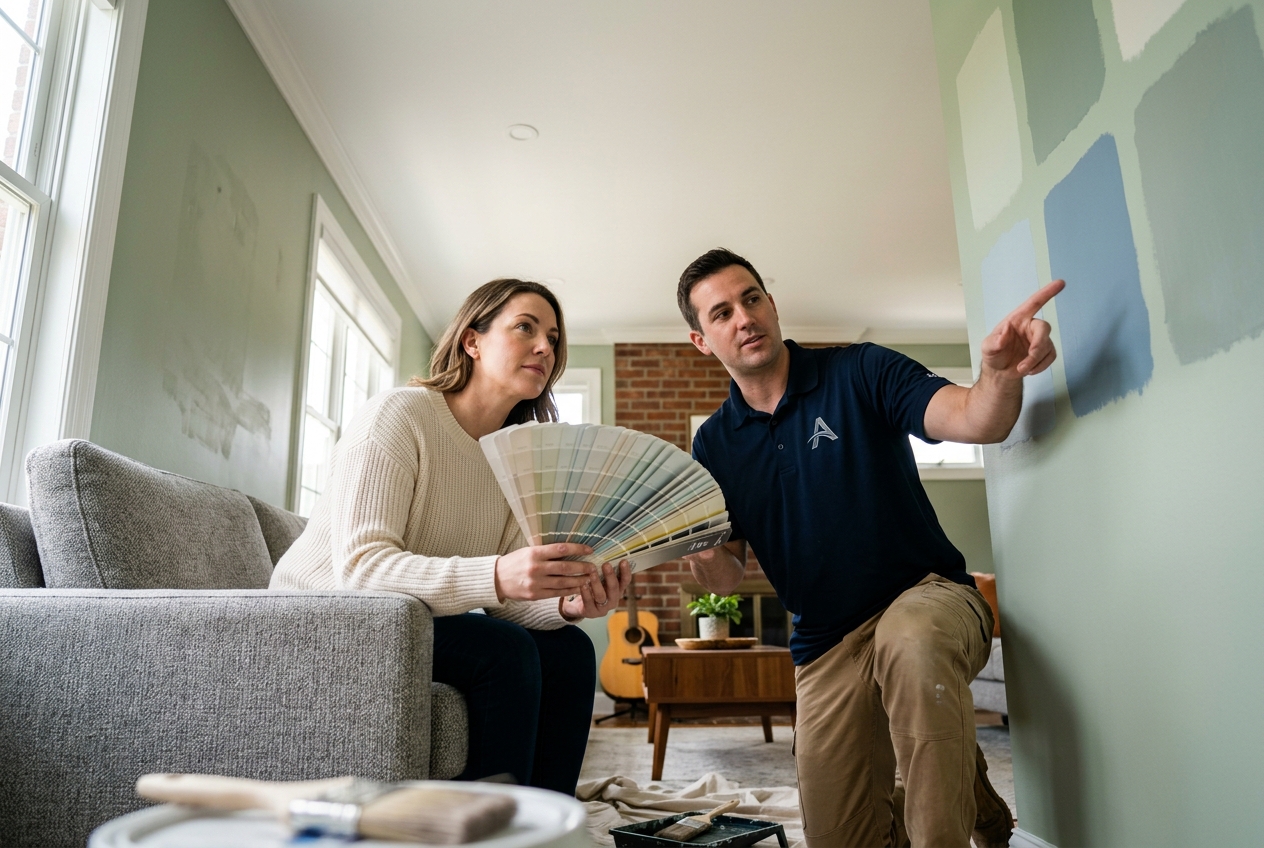

When a homeowner says they want a “warm and welcoming” living room or a “calm” bedroom, what are they really asking a painter to deliver? Rarely is it just a shade off a fan deck. Behind every color request sits a feeling the client wants to create and an emotion they are trying to avoid. Painters who understand that subtext stop being order-takers and start being trusted advisors, which is exactly the positioning that wins bigger jobs and loyal referrals. Our guide on branding for painters and color usage that builds trust shows how color shapes perception in your own marketing, too. This article unpacks the subconscious associations behind color choices, how to guide clients through emotional decisions, and how to position your expertise during a color consultation so clients see real value in your advice.
Understanding Subconscious Color Associations
The psychology of paint color is something most clients feel without being able to explain, and that gap is where smart marketing for painters begins. People react to color on an instinctive level before logic ever enters the room. A client may insist they “just like” a soft sage green, but underneath they are responding to associations with nature, health, and calm. Reading those signals lets you guide the conversation with authority instead of simply matching a swatch.
The pull of color is powerful and fast. Industry research shows that roughly 85 percent of consumers cite color as a primary reason they choose one option over another, and snap judgments form within seconds. The same instinct that drives a shopper toward a product drives a homeowner toward a wall color, often without conscious thought.
Each family of color carries a broad emotional fingerprint. Blues read as trustworthy, stable, and serene, which is why they work in bedrooms and bathrooms meant for rest. Greens evoke balance and renewal, fitting for kitchens and spaces tied to wellness. Warm tones like reds, oranges, and yellows bring energy, appetite, and sociability, making them popular in dining rooms and gathering spaces, though they overstimulate when overused. Neutrals signal flexibility and timelessness, reassuring clients worried about resale.
Context shifts meaning, too. The same gray that feels sophisticated in a sunlit den can feel cold and gloomy in a north-facing room with little light. Personal history matters as well; a color tied to a happy childhood home lands very differently than one a client associates with a stressful workplace. Part of your value is helping clients separate a color they love in theory from one that will actually serve the room.
When you can name the association a client is reaching for, you change the dynamic. Instead of guessing, you can say, “It sounds like you want this space to feel restful, so let me show you a few options that tend to read that way.” That kind of insight builds confidence and sets you apart from painters who only quote a price per gallon. Understanding the subconscious layer of color is the first step toward becoming the expert clients actually want to hire.
Guiding Clients Through Emotional Choices
Helping a homeowner commit to a color is often more about emotion than aesthetics, and this is where you can grow a painting business by becoming the calm, confident guide clients lean on. Color decisions feel high-stakes to people because a wrong choice is visible, expensive to fix, and lives with them daily. Your role is to reduce that anxiety and lead them toward a choice they will love long after the brushes are cleaned.
The emotional impact of color is well documented. A study on warm and cool environments found that people reported measurable differences in mood and comfort depending on the color of their surroundings, with cooler tones supporting calm and warmer, more saturated settings raising tension when overdone. That research backs up what good painters sense intuitively: the wrong palette can make a room feel agitating, and the right one can make it feel like home.
Start by asking how the client wants to feel in the space, not just what color they want. “What should this room do for you?” surfaces the real goal, whether that is relaxation, focus, energy, or togetherness. From there, you can translate feelings into options, presenting two or three curated choices rather than overwhelming them with a hundred chips. Limiting options reduces decision fatigue and makes clients feel guided rather than abandoned.
Use samples in the actual space and across different times of day. Light transforms color, and a shade that looks perfect at noon may feel dreary by evening. Painting large swatches on the wall, or using sizable peel-and-stick samples, lets clients live with the feeling before they commit. This step also demonstrates care, which deepens trust.
Acknowledge the emotional weight openly. Reassure nervous clients that hesitation is normal and that you have guided many homeowners through the same decision. When a client feels understood rather than rushed, they relax and trust your recommendations. Avoid pushing your personal taste; your job is to help them realize their vision with professional judgment layered on top. By treating color as an emotional choice and steering it with patience, you turn a potentially stressful decision into a reassuring experience clients remember and recommend.
Positioning Expertise During Color Consultations
Among the questions clients ask about paint color, the unspoken one is always, “Can I trust this person to get it right?” A structured color consultation is your chance to answer that with a confident yes. Treating the consultation as a real service, rather than a free favor tacked onto a quote, positions you as an expert and opens the door to larger, more profitable projects.
Trust is built on demonstrated competence and follow-through, and clients increasingly vet professionals before hiring. BrightLocal’s research shows that consumers read an average of around ten reviews before they feel they can trust a local business, which means the expertise you show in a consultation often ends up echoed in the testimonials that win your next client. Every consultation is both service and marketing.
Run the consultation with a clear process. Begin by understanding the home’s lighting, existing finishes, furniture, and the mood the client is chasing. Explain why certain colors will or will not work in their specific space, referencing undertones, light direction, and how adjacent rooms flow together. When you articulate the reasoning, clients see the depth behind your recommendations and value your guidance more.
Bring tools that signal professionalism: curated palettes, large samples, and visual examples of similar projects you have completed. Showing before-and-after photos of past work proves you can deliver the feeling clients want, not just apply paint. This is also a natural moment to discuss complementary services, such as refreshing trim, accent walls, or whole-home cohesion, that genuinely improve the result and grow the scope of the job.
Consider charging for in-depth consultations, even if you credit the fee toward the project. A modest fee frames your time as valuable expertise and attracts serious clients while filtering out tire-kickers. It also reinforces that color guidance is a skill, not a giveaway. Document your recommendations in a simple written summary the client can keep, which reinforces your professionalism and reduces second-guessing later. When you position the consultation as a genuine expert service, clients stop comparing you on price alone and start choosing you for judgment they cannot get from a hardware-store shelf. That shift is how a painting business raises both its rates and its reputation.
Frequently Asked Questions
What makes color consultations an effective service for painting businesses?
Color consultations turn painters into trusted advisors rather than commodity vendors. By helping clients translate feelings into the right palette, you reduce their anxiety, demonstrate expertise, and justify higher rates. Consultations also surface larger projects and generate strong reviews, since clients who feel expertly guided are far more likely to recommend you to friends and neighbors.
How can painting businesses get better results from color consultations?
Treat consultations as a structured service, not a free add-on. Ask how clients want to feel in a space, present a few curated options instead of overwhelming choices, and test samples in real light at different times of day. Document recommendations in writing, and consider a modest fee to signal value and attract serious clients.
Why does understanding color psychology matter for business growth?
Because clients buy feelings, not gallons. When you grasp the emotions behind color requests, you guide decisions with authority, win bigger projects, and stand out from painters who compete only on price. That expertise builds trust, earns glowing reviews, and produces referrals, all of which steadily grow revenue and strengthen your local reputation over time.
Moving Forward
Reading the emotion behind a color request, guiding clients calmly through the decision, and running consultations as a real expert service together transform how homeowners see your painting business. You stop competing on price and start being chosen for judgment and trust. If you want help turning that expertise into marketing that fills your schedule with the right clients, Aginto’s home services marketing team and our home restoration and improvement marketing specialists offer a free consultation built around your goals. Reach out today and let’s position your business as the local color expert homeowners ask for by name.