Most Roofers Leave Five-Star Reviews on the Table
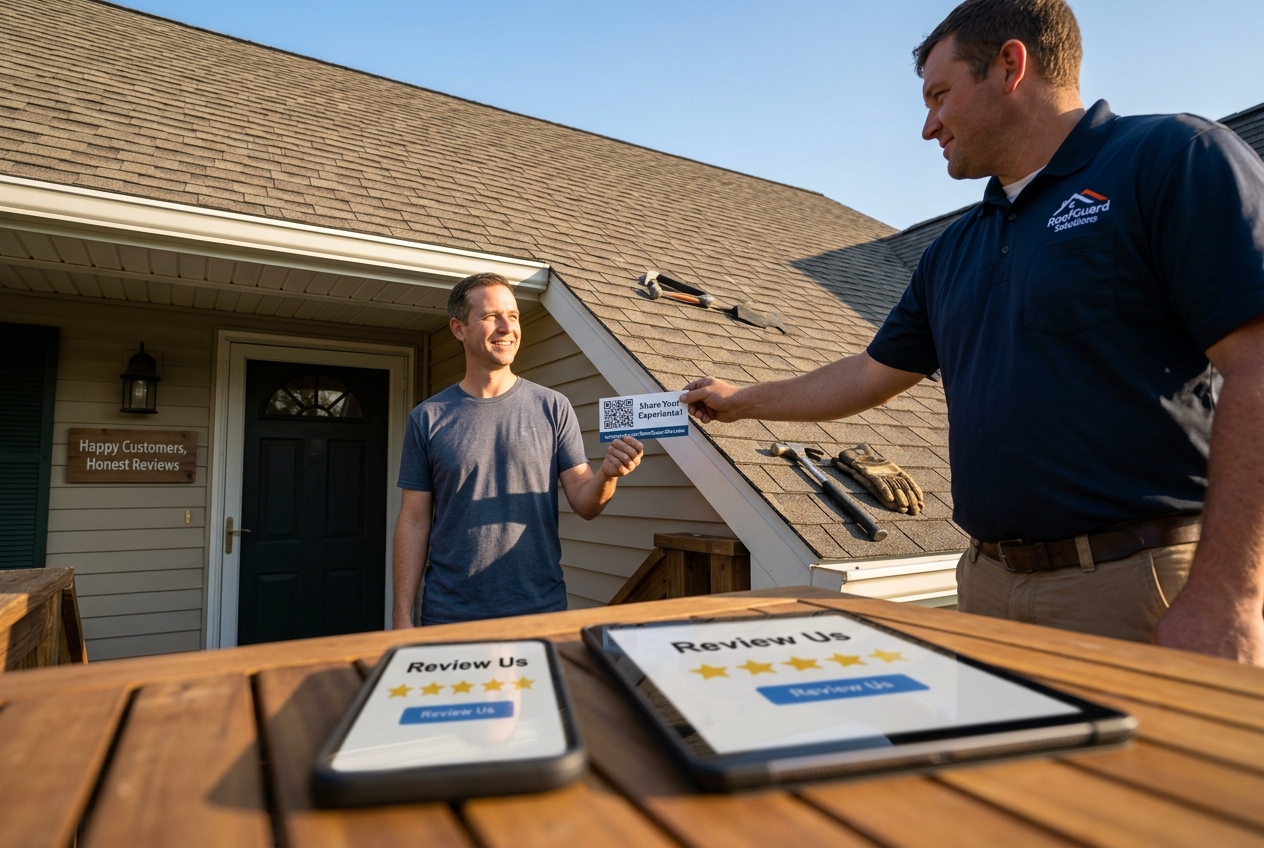
Most roofers finish a job, shake hands, and drive away — leaving a five-star review sitting unclaimed in a satisfied customer’s head.
If you’re trying to figure out how roofing companies get leads online, reviews are one of the most underused tools in the toolbox. Collecting and showcasing them builds trust, strengthens your reputation, and keeps new clients coming in. But there’s a right way to do it — one that doesn’t make your customers feel hounded. Striking the right balance when asking for feedback makes all the difference.
Service-based businesses often struggle to request reviews without sounding too persistent. With the right strategies and timing, though, it becomes much easier. Here are practical approaches that encourage genuine feedback, take work off your plate through automation, and help you turn positive reviews into real visibility — from personal touches to CRM-driven follow-ups.
Asking for Feedback Without Being Pushy
Asking clients for feedback can feel awkward. But finding the balance between being proactive and respectful is what separates businesses that accumulate reviews from those that don’t.
Clients are more likely to share their experience when the ask is timely. The best moment is right after you finish a job — the quality of the work and their satisfaction are still fresh. A follow-up text or email within a day or two keeps that connection warm and makes a response much more likely.
Make it easy. Include a direct link to your review page — Google, Yelp, or wherever you want the feedback to land. According to a 2020 Podium study, 81% of consumers say they’re likely to leave a review if a business makes the process simple. Fewer clicks means more reviews.
Personalized messages do more than generic ones. Use the client’s name and reference something specific about the job. Something like: “Hi John, we loved working on the new roof for your bungalow on Elm Street. Hope you’re happy with how it turned out — your feedback really helps our team and future homeowners.” That kind of message doesn’t feel like a form letter.
Sometimes a small incentive helps — a discount on future services or a giveaway entry can nudge people to follow through. Just make sure it doesn’t come across as buying a good review. Authenticity matters.
It’s also worth reminding clients why their review matters. According to BrightLocal’s 2023 Local Consumer Review Survey, 87% of consumers read reviews for local businesses. When people know their words help neighbors make better decisions, they’re more invested in leaving them.
If someone agreed to leave a review but went quiet, a gentle follow-up works. Keep the tone friendly and grateful — you’re not chasing them, just reminding them.
The goal is respectful persistence, not pressure. Get the timing right, remove friction, and say thank you. That combination works.
Automating Requests Through CRM Systems
Reviews can make or break a roofing company’s reputation. The problem is that manually following up with every customer is time-consuming — and things fall through the cracks. That’s where automating review requests through a CRM system pays off.
A good CRM lets you manage customer interactions more consistently. Systems like Salesforce and HubSpot integrate with your email tools and other platforms, so you can trigger review requests automatically without rebuilding your workflow from scratch.
Timing matters here too. Sending a request within 24–48 hours of job completion — while the experience is still fresh — leads to higher response rates than reaching out weeks later. Set that trigger once, and your CRM handles it every time.
Personalization is where CRMs really shine for this. Rather than sending a generic “please leave us a review” message, your CRM can pull the customer’s name, the type of job, and other details to craft something that feels specific. Research from the Aberdeen Group found that personalized emails improve click-through rates by 14% and conversion rates by 10% — and the same logic applies to review requests.
You can also segment your customers. Clients who got a full roof replacement might get a different follow-up than someone who came in for minor repairs. Tailoring the ask to the experience makes it more relevant — and more likely to get a response.
Worried about negative reviews? A two-step process helps. First, collect feedback privately. If there’s a problem, you can address it before it goes public. That gives you a shot at turning a frustrated customer into a satisfied one — and a much better chance of a positive public review.
Finally, set up follow-up reminders for customers who didn’t respond the first time. Statista data suggests that over 30% of non-responders will leave a review after a single follow-up. That’s a significant number of reviews left on the table if you skip it.
Automating this process reduces the admin burden on your team and creates a reliable, consistent pipeline of customer feedback — without anyone having to remember to send emails manually.
Showcasing Reviews to Boost Future Sales
Collecting reviews is only half the job. Where and how you display them determines whether they actually drive new business.
Studies show that 88% of people trust online reviews as much as personal recommendations. That’s a powerful statistic — it means a well-placed review from a past customer can carry the same weight as a friend’s recommendation. But only if potential clients can actually see it.
Start with your website. A dedicated testimonials page is useful, but don’t stop there. Put reviews on your service pages, your homepage, and near your contact forms — anywhere a visitor might be on the edge of a decision. Star ratings and customer photos add authenticity that plain text alone doesn’t.
Third-party platforms matter just as much. Keep your Google Business Profile, Yelp, and Angie’s List profiles complete and current. These platforms carry real trust with consumers because the reviews aren’t curated by you. Monitor them regularly and respond to feedback — positive and negative. A professional, thoughtful reply to a critical review often says more about your business than a five-star rating does.
Social media is another strong channel. Facebook lets clients leave reviews directly on your business page. Beyond that, pull short quotes from your best reviews and turn them into posts — it’s easy content that highlights real customer satisfaction and keeps your feed active.
There’s an SEO benefit here too. Google rewards active profiles and businesses that engage with users. The more you interact with reviewers and keep your profiles fresh, the more visibility you earn in local search results.
When you’re curating which reviews to spotlight, lean into ones that mention safety, reliability, and quality. Those are the values homeowners care most about when inviting someone onto their roof. A review that says “they were clean, on time, and the work has held up through two storms” is worth more to a hesitant prospect than a dozen generic compliments.
Building trust through reviews is an ongoing practice. Stay consistent, respond actively, and make your best testimonials visible — and they’ll keep working for you long after the job is done.
Frequently Asked Questions
What is the best way for roofers to get local leads?
Local leads start with visibility. Optimize your Google Business Profile with current contact info, project photos, and a steady stream of reviews. Get involved in your local community — events, partnerships with complementary businesses, and localized content like neighborhood-specific blog posts all help. Targeted local ads round out the strategy and put your name in front of homeowners who are actively searching.
Do roof inspection ads generate full replacement jobs?
They can, especially when they’re framed as a genuine service rather than a sales hook. Free or discounted inspections attract homeowners who aren’t sure about the condition of their roof. A thorough, honest assessment — followed by a clear proposal with costs and timelines — builds the kind of trust that converts inspections into full jobs.
How can roofers use social media to build trust?
Show your work. Post photos and videos of completed projects, share customer testimonials, and give people a look at your process. Respond to comments and questions promptly. Offer practical tips — maintenance advice, what to look for after a storm — and you’ll position yourself as a go-to resource rather than just another contractor running ads.
Take the Next Step
Refining how you collect and display reviews can meaningfully grow your business’s credibility and reach. Start with the timing of your requests, make the process frictionless, and personalize where you can. Add a CRM to automate the follow-up, and make sure your best testimonials are visible everywhere a potential client might look.
If you’d like help building a review strategy that fits your roofing business, the team at Aginto offers a complimentary consultation. Reach out and let’s talk about what’s working, what isn’t, and where the opportunities are. You can also explore our case studies to see how we’ve helped other home service businesses grow their online presence.