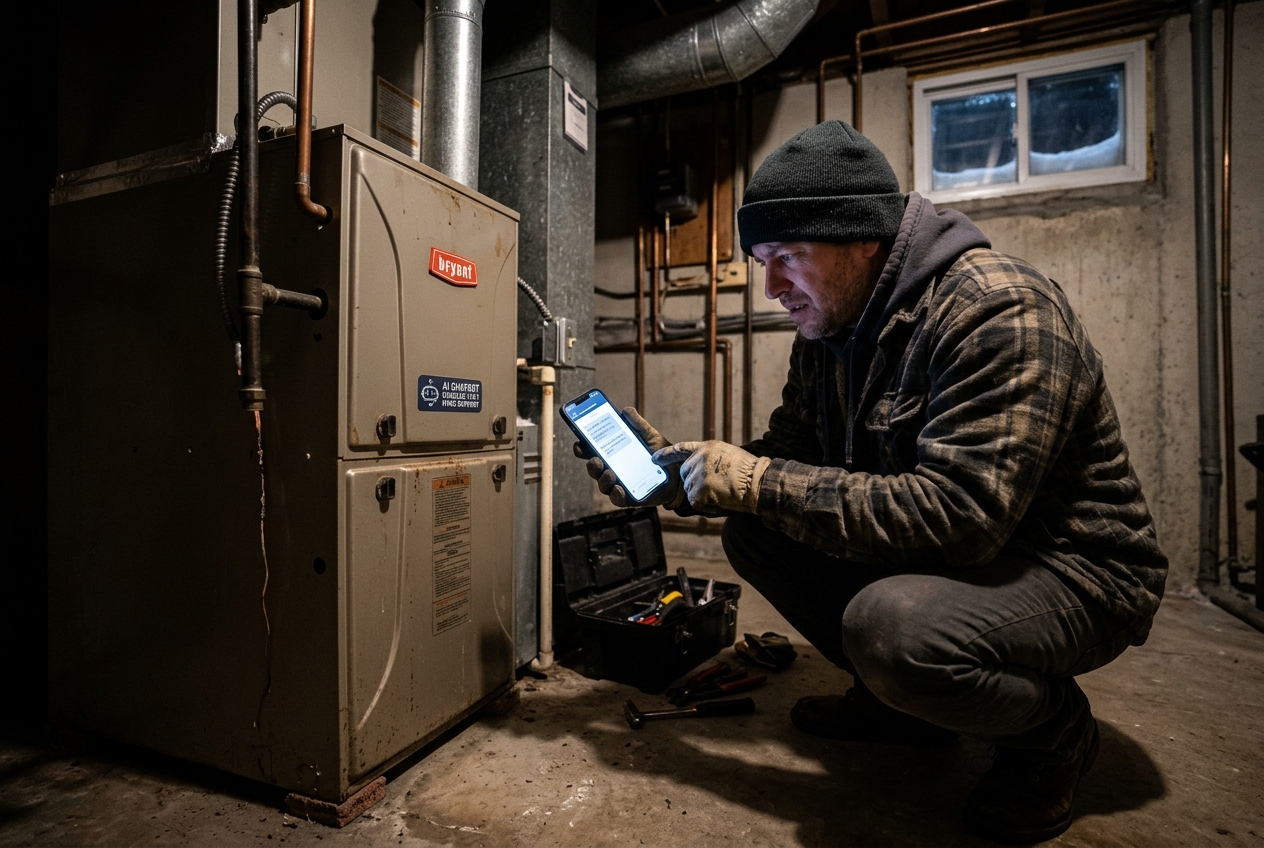
What happens to the homeowner whose furnace dies at 11 p.m. in January, finds your website, and sees no way to reach you until morning? In most cases, they keep scrolling until they find a competitor who answers. After-hours emergencies are some of the most valuable leads an HVAC company can get — the customer is motivated, stressed, and ready to book immediately — yet they are also the easiest to lose. An AI-powered chatbot changes that equation. It can greet that late-night visitor, triage the emergency, capture their details, and even schedule a visit while your office sleeps. This article covers how to use chatbots to respond when staff is offline, write scripts that sound genuinely human, and feed that captured data straight into your CRM.
Responding to Emergencies When Staff Is Offline
Among the most reliable hvac marketing strategies that generate service calls, few are as overlooked as simply being reachable after hours. HVAC failures don’t follow a 9-to-5 schedule. Heat goes out on the coldest night, air conditioning quits during a holiday weekend, and the homeowner’s first instinct is to grab their phone and search. If your business can’t respond in that moment, the lead evaporates. An AI chatbot acts as a tireless first responder, engaging visitors instantly no matter the hour and keeping them on your site instead of bouncing to a competitor.
The stakes are bigger than most owners realize. Industry data shows that roughly 42% of home service inquiries arrive outside standard business hours, and the majority of callers who hit voicemail simply move on to the next company. Every unanswered after-hours emergency is a booked job handed to your competition.
A well-built chatbot closes that gap. The moment a visitor lands on your site at night, the bot can open with a simple, reassuring prompt — “Furnace out? We can help right now.” From there it triages: it asks whether this is an emergency, what system is affected, and how urgent the situation is. Based on the answers, it can flag true emergencies for immediate dispatch, schedule non-urgent visits for the next morning, and collect the contact details you need either way.
Speed is the whole point. The bot captures the lead in real time, sends an instant confirmation so the homeowner feels taken care of, and routes urgent cases to your on-call technician or after-hours line. Even when no one is awake to answer, the customer leaves the interaction feeling helped rather than ignored. That reassurance alone often wins the job. Set the bot to gather name, phone, address, and a short description of the problem, then trigger an alert to your team. By the time your office opens, you have a queue of warm, qualified leads waiting — leads that would otherwise have called someone else hours earlier.
Personalizing Scripts to Sound Human
One of the quieter ways how hvac companies can reduce seasonal slowdowns is by capturing more of the leads they already attract, and a chatbot that sounds robotic will lose them fast. Homeowners can tell within seconds whether they’re talking to a stiff, scripted machine or a helpful guide. The goal is a conversation that feels warm, clear, and genuinely useful — not a cold form pretending to be a person. Personalization is what makes the difference between a visitor who engages and one who closes the tab.
The payoff for getting it right is significant. Research shows that businesses using AI chatbots have seen lead conversions rise by up to 67%, largely because the bots respond instantly and guide visitors through the next step instead of leaving them to figure it out alone. A natural, friendly script amplifies that effect by keeping people comfortable enough to share their information.
Start with tone. Write your bot’s responses the way a friendly dispatcher would actually talk — short sentences, plain language, a little warmth. Replace “Please input your service request” with “Tell me what’s going on and I’ll get you set up.” Use the homeowner’s name once they share it, acknowledge their stress on an emergency call, and avoid jargon that makes them feel lost.
Anticipate the real questions. Build branches for the things people actually ask: “How fast can someone come out?” “What will this cost?” “Do you work on my brand of system?” Giving honest, helpful answers — even a price range — builds trust and keeps the conversation moving toward a booking. Add personality where it fits, but never at the expense of clarity.
Know when to hand off. The best scripts recognize their limits and offer a smooth path to a human when the situation calls for it — a true emergency, a complex question, an upset customer. A line like “Let me connect you with our on-call tech right now” reassures the homeowner that a real person is available. Test your scripts with actual customers, listen to where conversations stall, and refine the wording over time. A chatbot that sounds human doesn’t replace your team’s personality — it extends it to every hour of the day.
Integrating Chat Data Into CRM Systems
The most effective seo and ppc tips for heating and cooling businesses all share one principle: capture the lead, then never let it slip through the cracks. A chatbot that collects great information but dumps it into a disconnected inbox wastes most of its value. The real power comes when every chat flows automatically into your CRM, where it can be tracked, followed up, and nurtured. Integration turns a one-time conversation into a managed relationship that drives revenue long after the first interaction.
The business case is strong. CRM users consistently report better outcomes — studies find that keeping customer data unified in one system can lift customer retention by up to 27%, because every interaction is logged, visible, and ready for timely follow-up. For an HVAC company, that means fewer leads forgotten and more one-time emergency calls converted into long-term maintenance clients.
Set up the pipeline so it runs without manual effort. When the chatbot captures a name, phone number, address, and description of the problem, that record should land in your CRM instantly, tagged by source and urgency. Connect the bot to your scheduling tool so booked appointments appear on the calendar automatically, and trigger an internal alert so your team sees new emergency leads the moment they arrive.
Use the data to follow up intelligently. A lead who asked about a failing furnace at midnight is a perfect candidate for a maintenance-plan offer a week later. Automated email and text workflows can nurture colder leads, send seasonal tune-up reminders, and re-engage customers when their system ages. Because the chatbot already logged what each person needed, your follow-up can speak directly to their situation instead of sending a generic blast.
Integration also sharpens your marketing. With chat data in your CRM, you can see which pages, ads, and times of day generate the most leads, then double down on what works. You learn which questions homeowners ask most, which lets you improve both your bot scripts and your website copy. Over time, the chatbot becomes more than an after-hours answering service — it becomes a structured source of customer intelligence that feeds your entire growth strategy, from scheduling to retention to smarter ad spend.
Frequently Asked Questions
How can HVAC companies manage seasonal demand shifts?
Smooth out the peaks and valleys with maintenance plans, off-season promotions, and automated follow-up that keeps leads warm. Capture every inquiry — including after-hours ones — into a CRM so you can re-engage customers when demand dips. Steady communication and recurring service agreements help stabilize cash flow across the year.
What marketing strategies generate more HVAC service calls?
Strong local SEO, targeted search and streaming ads, fast lead response, and consistent reviews drive the most calls. Adding an AI chatbot to capture after-hours emergencies ensures motivated homeowners reach you instead of a competitor. Pair visibility with instant response and clear follow-up to turn searches into booked jobs.
Should HVAC companies invest in streaming or PPC ads?
Both can work well when targeted to your service area. PPC captures homeowners actively searching for repairs right now, while streaming TV builds brand awareness and trust over time. Used together — and paired with fast lead capture tools like chatbots — they create a balanced pipeline of immediate and long-term service calls.
Keeping Growth Cool
After-hours leads are too valuable to lose to a voicemail box. An AI chatbot lets your HVAC company respond to emergencies around the clock, hold conversations that feel genuinely human, and feed every lead into a CRM that drives smart, timely follow-up. Together those pieces turn missed calls into booked jobs and one-time customers into loyal clients. If you’re ready to build a system that captures and converts more HVAC leads day and night, contact Aginto for a free consultation and let’s design a plan around your goals.