
Why Video Introductions Belong in Your Medical Practice’s SEO Strategy
First impressions happen before patients ever walk through your door — and that’s exactly where SEO strategies for medical practice websites, combined with video introductions, can give your practice a real edge. For many patients, visiting a clinic for the first time brings a wave of uncertainty and anxiety. Healthcare practices are finding smarter ways to bridge that gap. Through video introductions, providers can extend a warm welcome before the first appointment, giving patients a genuine glimpse of what to expect.
Video introductions aren’t just a novelty. They can meaningfully improve patient satisfaction and trust by demystifying the healthcare environment and letting your personality come through before anyone sets foot in your office. Here’s how these short videos can make a big difference.
Setting Patient Expectations Through Introductions
Good communication in healthcare starts well before a patient steps through your doors. Video introductions help set expectations and build connections before that first appointment. By putting a real face to a name, these videos ease anxiety and establish a foundation of comfort and trust.
The Impact of Video Introductions
A study published in the Journal of Medical Internet Research found that video introductions improve patient satisfaction and trust. Watching a short clip about their provider helps patients feel more at ease — they arrive with a sense of familiarity rather than walking in cold. For medical practices where anxiety is a genuine barrier to care, that head start matters.
Enhancing Patient Understanding
A big part of setting expectations is helping patients know what’s coming. Videos can walk through the services you offer, what a typical consultation looks like, and anything patients should do to prepare. A dermatology clinic, for example, might use a short welcome video to explain their new patient intake process — what forms to bring, what to expect from a skin assessment, how long the visit usually takes. That kind of clarity reduces uncertainty and helps patients show up feeling ready.
Highlighting the Provider’s Personality and Expertise
Video gives you a platform to be a person, not just a credential. Sharing your experience, areas of specialty, and even a personal interest or two makes you more approachable. Patients don’t just choose providers based on qualifications — they want someone they feel comfortable with. A short video showing how you think about patient care can help prospective patients decide, before they ever call, whether your practice feels right for them.
Incorporating SEO Strategies for Improved Reach
To get the most out of your videos, work them into your broader SEO strategy. Optimize video titles, descriptions, and tags with relevant search terms — things like “family medicine doctor introduction” or “pediatrician video welcome.” Embedding these videos on your homepage or about page improves search visibility and puts the content directly in front of people who are actively looking for a provider. More visibility means more traffic, and more traffic means more opportunities for new patient engagement. See how other practices have made this work by browsing our case studies.
Accessibility and Follow-Up
Make sure your video content works for everyone. Add closed captions for hearing-impaired viewers and consider offering versions in other languages if your patient population is multilingual. After a patient watches the introduction, a follow-up email or text with practical details — parking info, check-in forms, what to bring — reinforces the warm first impression and keeps expectations clear heading into the visit.
Highlighting Personality and Approachability
Personal connection in healthcare changes the entire patient experience. Video introductions are one of the simplest tools a provider can use to convey genuine warmth before ever meeting a patient in person — and that early rapport pays dividends in trust and communication.
According to a study in the Journal of Health Psychology, patient anxiety can lead to miscommunication and dissatisfaction during appointments. A friendly, approachable video introduction can take the edge off. When patients see a calm, personable provider before they arrive, they’re more likely to walk in ready to engage honestly.
Speak directly to the camera in a conversational tone. Skip the medical jargon. A Yale University study found that plain language leads to higher comprehension rates among patients — and comprehension is the bedrock of trust.
A brief personal story goes a long way. A pediatrician might mention how a childhood fascination with science grew into a career helping kids stay healthy. It’s a small detail, but it’s the kind of thing that sticks. It tells patients something about who you are and why you do what you do — and that matters more than most providers realize.
Don’t underestimate nonverbal cues either. Eye contact with the camera, a genuine smile, an open posture — these signal warmth and competence before you’ve said a word. The Association for Psychological Science has found that positive facial expressions meaningfully enhance how people perceive both friendliness and ability.
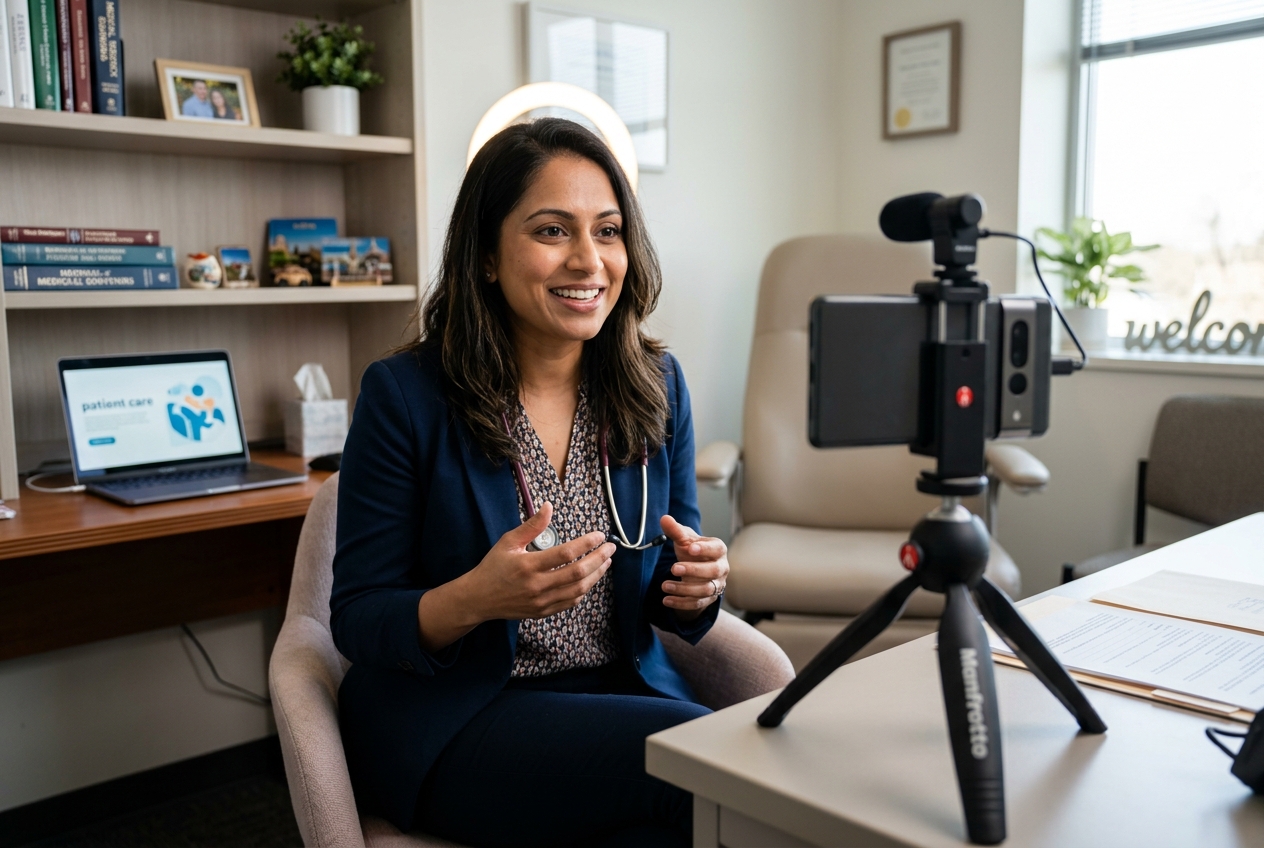
Your surroundings matter too. Filming in your actual office — not against a blank white wall — gives patients a preview of the environment where they’ll be treated. It’s a small visual reassurance that the space is real, professional, and welcoming.
Take a moment to explain your approach to care. Whether you prioritize holistic health, patient education, or something else entirely, putting it into words helps patients understand what to expect and whether your philosophy aligns with their needs. Research from the University of Pennsylvania’s Perelman School of Medicine shows that patients are more satisfied and engaged when they connect with a provider’s care approach.
Finally, briefly address privacy. Mentioning how patient information is protected — even in just a sentence or two — signals that you take confidentiality seriously and reduces any hesitation patients might have about sharing sensitive details.
Embedding Videos Into Appointment Reminders
Embedding a video into an appointment reminder does something a standard text message simply can’t: it puts a familiar face in front of your patient before they’ve even left their house.
Traditional reminders get the job done logistically. But a short personalized video adds a human layer that can meaningfully reduce the anxiety that often precedes medical visits. It also sets your practice apart in a competitive healthcare market.
Start with content that’s genuinely useful. A 30-to-60-second clip where you introduce yourself, explain what the visit will cover, or walk through what to expect is enough to make patients feel more comfortable and connected. Research by Software Advice found that 77% of patients feel video calls with doctors offer some form of healthcare convenience. If a live video call delivers that, a friendly pre-visit introduction can do the same — on the patient’s own time, on their own terms.
For delivery, embed videos in email templates or link to them via SMS, hosted on a secure platform that meets privacy standards. When sending via email, make the subject line clear: something like “Your Upcoming Appointment with Dr. Smith — Video Inside!” works well. The body of the message can then prompt patients to watch before their visit.
On the technical side, optimize for fast loading and mobile viewing. Platforms like Vimeo or YouTube allow for private or unlisted hosting. If your video contains any personal health information, HIPAA compliance isn’t optional — confirm your hosting platform supports the necessary privacy controls.
Keep the production quality clean: clear video, crisp audio, and a professional but warm setting that reflects your actual office environment. Look at the camera, not the screen. Speak as if you’re talking directly to that patient. That’s what makes it feel genuine rather than produced.
Testimonials can add another layer of credibility. A brief clip of a satisfied patient sharing their experience — linked from your reminder email — can reinforce trust in a way that your own words alone can’t. Seventy-two percent of consumers say positive testimonials increase their trust in a business, and healthcare is no different.
Track your results. Most hosting platforms offer viewership analytics — who watched, how long, whether they clicked through. That data helps you understand what’s resonating and where you might refine things. Engagement metrics are your feedback loop.
Integrating videos into appointment reminders isn’t a passing trend. It’s a thoughtful, patient-centered approach that makes the experience feel more human from the very first touchpoint.
Building Stronger Care Connections
Integrating video introductions into your practice is one of the more practical ways to improve both patient experience and communication — and you can start simply. Record a short, genuine introduction that reflects your practice’s values and approach. Refine it over time based on patient feedback and engagement data. The goal is content that feels relatable, informative, and professional — because that’s what builds lasting trust.
If you’re ready to explore how video content can fit your specific goals or want guidance on implementation, talking to a digital marketing expert is a smart next step. Aginto offers a complimentary consultation to help identify opportunities tailored to your practice. Reach out and let’s talk about how these strategies can improve your patient interactions and your practice’s visibility.