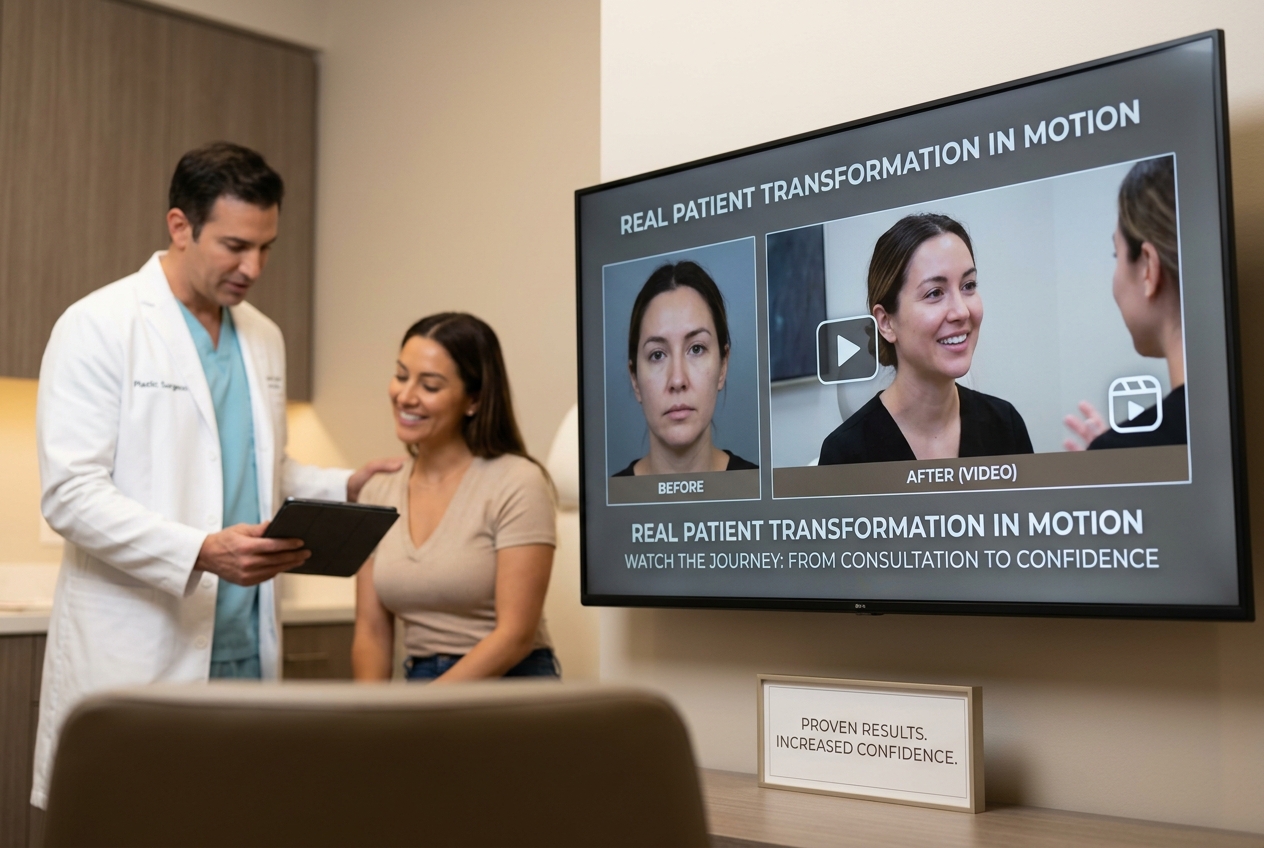

What finally convinces someone to book a cosmetic procedure they have quietly considered for years? Rarely a price list or a credential. More often it is the moment they watch a real person move, smile, and speak after a transformation and think, that could be me. Static before-and-after photos have carried plastic surgery marketing for decades, but video does something a single frame cannot: it shows movement, emotion, and natural results from every angle. Our guide on lifestyle storytelling for plastic surgery brands explains why that emotional layer matters so much. When prospective patients can see authentic outcomes in motion, hesitation gives way to confidence, and confidence is what fills consultation calendars. This article breaks down how to use transformation video well, from the footage you capture to where you place it on your site.
Highlighting Natural Results in Visual Storytelling
Understanding how to market a plastic surgery practice online starts with a shift in mindset: patients are not buying a procedure, they are buying a believable result. Believability is exactly where video outperforms the still photo. A photo can be lit, posed, and retouched until it reads as too perfect to trust. Video resists that doubt because it shows the patient blinking, turning, and talking, which signals authenticity in a way a glossy image never can. The persuasive power is measurable. According to Wyzowl’s research, 93% of video marketers report a strong return on investment from video, and viewers retain far more of a message they watch than one they read. For a field built on visual proof, that retention translates directly into remembered results and booked consultations.
The key word is natural. Prospective patients today are wary of outcomes that look exaggerated or surgically obvious, and an over-edited reel can backfire by raising suspicion instead of trust. Film in even, flattering light without heavy filters. Let the patient move through ordinary motions, turning their head, laughing, holding a normal conversation, so viewers see how the result behaves in real life rather than in a frozen, idealized pose. Subtle, honest footage reassures people that your work enhances rather than distorts, which is precisely what most cosmetic patients want.
Pacing and structure matter too. Open with a brief glimpse of the patient before, hold long enough for the viewer to register the starting point, then reveal the after with room to breathe. Avoid jarring cuts that feel like a sales gimmick. A short, calm sequence of fifteen to thirty seconds usually lands better than a frantic montage. Add a quiet caption naming the procedure so viewers understand exactly what they are seeing. Above all, secure written consent and follow advertising rules from your board and platform before publishing any patient footage. When the storytelling stays grounded in real, natural results, the video does the persuading for you, and the viewer arrives at your consultation already half-convinced.
Building Campaigns Around Transformation Journeys
The most effective plastic surgeon advertising strategies that attract patients treat a single video not as a one-off post but as the centerpiece of a complete transformation journey. One clip can spark interest, but a sequenced campaign carries a viewer from curiosity to consultation. Demand for this content is real and steady: the American Society of Plastic Surgeons reported in its 2024 statistics that interest in aesthetic procedures held firm even amid economic uncertainty, with millions of cosmetic surgeries and minimally invasive treatments performed. A large, attentive audience is already searching, and a journey-based campaign meets them at each stage of their thinking.
Map the journey the way a patient actually experiences it. The first touchpoint is awareness, a short transformation clip that stops the scroll and introduces what is possible. The second is consideration, where you go deeper: a patient describing why they chose the procedure, what recovery felt like, and how they feel now. The third is decision, where you address the practical fears that hold people back, cost, downtime, safety, and pain, in calm and honest terms. Each video answers the question the previous one raised, so the prospect never has to leave your ecosystem to find reassurance elsewhere.
Real patient voices carry this structure. A surgeon listing technical steps is informative, but a former patient saying the result gave them confidence they had not felt in years is persuasive on an entirely different level. Collect testimonials that focus on the emotional and lifestyle outcome, not just the clinical one, and weave them through the journey so every stage has a human face. Distribute the sequence across the channels where your audience already spends time, then retarget viewers who watched the first clip with the next one in the series. This keeps the story moving forward and your practice top of mind. A campaign built as a journey respects how real decisions are made, slowly, emotionally, and with mounting confidence, and it consistently turns passive viewers into people ready to pick up the phone.
Placing Videos Strategically on Landing Pages
Knowing the best ways to grow cosmetic surgery patient leads comes down to a detail many practices overlook: where the video actually sits on the page. A brilliant transformation clip buried at the bottom of a cluttered landing page does almost nothing, while the same clip placed above the fold can lift conversions sharply. The data is striking. According to industry research compiled by Wix, landing pages that include video can convert at meaningfully higher rates than text-only pages, with some studies citing increases of 80% or more. That gap is the difference between a visitor who clicks away and one who fills out a consultation form.
Position the video where the eye lands first. On a procedure landing page, that usually means near the top, paired with a clear headline and a single, obvious call to action. The viewer should be able to watch a result and then immediately request a consultation without scrolling or hunting for a button. Keep the surrounding page clean. Competing pop-ups, dense paragraphs, and multiple buttons all pull attention away from the two things that matter: the video and the next step. One strong video and one clear action outperform a page crammed with options every time.
Technical execution protects all that effort. Compress files so they load fast, because a slow-loading video on a phone will be abandoned before it plays, and most of your traffic is mobile. Add captions, since many people watch with the sound off, and a silent, captioned clip still tells the story. Include a thumbnail that previews the transformation so visitors know what they are about to see. Match each video to the specific procedure on that page rather than running one generic reel everywhere, because relevance is what holds attention. Finally, test placements. Try the video high on the page versus beside the booking form, and let the booking numbers, not a hunch, decide the winner. Thoughtful placement turns good footage into a dependable engine for new patient inquiries.
Frequently Asked Questions
How can plastic surgeons attract more patients online?
Combine a fast, visually strong website with authentic video, before-and-after galleries, and genuine patient testimonials. Optimize for local search so people nearby find you, run targeted ads to reach the right audience, and answer common questions clearly. Consistency across these channels builds the trust that turns online interest into booked consultations.
What marketing strategies work best for cosmetic surgery practices?
The strongest results come from blending search optimization for long-term visibility, paid ads for immediate reach, and social media for ongoing engagement. Video content, especially real patient transformations and testimonials, adds credibility that text cannot. Email follow-up keeps interested prospects warm until they feel ready to schedule their first appointment.
How do before-and-after photos impact plastic surgery leads?
Before-and-after visuals are among the most persuasive tools available, offering concrete proof of skill and setting realistic expectations. They often become the deciding factor when patients compare providers. Used across your website, ads, and social channels, they consistently turn casual interest into serious consultation requests and qualified leads.
Building Confidence Ahead
Transformation video works because it does what a price list never can: it lets a hesitant patient picture themselves on the other side of the decision. Capture natural, honest results, build them into a journey that carries viewers from curiosity to confidence, and place each clip where it earns the most attention. Done well, video becomes your most reliable source of qualified consultations. If you want help producing and positioning content that turns viewers into patients, the team at Aginto is ready to build a strategy around your practice. Reach out today to schedule a consultation and start converting interest into booked procedures.