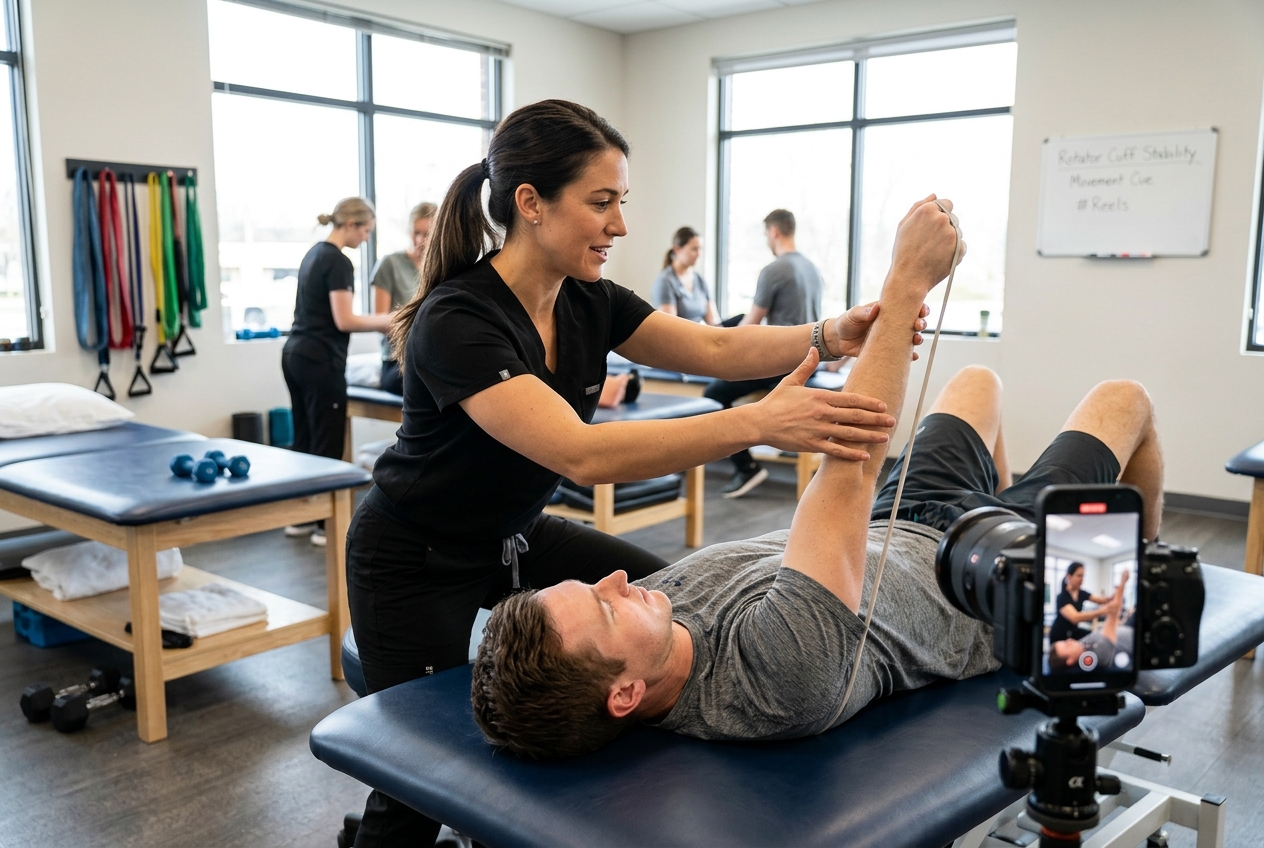

What if a 20-second clip of a single corrective exercise could do more for your clinic than a month of paid ads? That is the quiet promise of Instagram Reels for physical therapy practices. Short, vertical video has become the way people learn, compare, and decide who to trust with their recovery. For a profession built on movement, Reels let you show exactly what you do instead of describing it. A patient scrolling at night can watch you coach a shoulder mobility drill, see your hands-on cueing, and feel like they already know you before they ever call. For more on how short video fits a broader healthcare strategy, our breakdown of video introductions that help providers connect before the first visit is a useful companion. This article breaks down how to use Reels to demonstrate value one movement at a time, educate the people you want as patients, and turn real recovery stories into content that builds lasting trust.
Demonstrating Exercises in Short Clips
The fastest path to understanding how physical therapists get more referrals through social media is to lead with what you already do best: teaching movement. Short exercise clips are the backbone of a Reels strategy because they translate clinical skill into something a non-clinical viewer can grasp in seconds. A 15-to-30-second Reel showing a clean demonstration of a hip hinge, a rotator cuff progression, or a balance drill gives prospective patients a preview of your coaching style and your attention to form. That preview matters more than most clinics realize. Reels also travel further than other formats: according to social media engagement research compiled by Vidico, Reels reach roughly 36% more users than carousel posts and far more than static photos, which means your exercise demonstrations land in front of people who do not yet follow you.
Keep each clip focused on one movement and one clear takeaway. Trying to cram a full rehab program into a single Reel overwhelms viewers and buries the point. Open with the problem the exercise solves, stated plainly, so the right person stops scrolling: “Knee aching on stairs? Try this.” Then show the movement from a useful angle, demonstrate one or two common mistakes, and finish with the corrected version. That before-and-after framing inside a single clip teaches the viewer something real and positions you as the expert who noticed the detail they had been doing wrong.
Production does not need to be elaborate. A phone on a tripod, decent natural light, and clear audio or on-screen captions are enough. Captions matter because most people watch with the sound off, and a movement cue written across the screen reinforces the lesson. Film in your actual clinic so viewers see the space where they would be treated.
Consistency beats polish. Posting two or three exercise Reels a week builds a library that quietly answers the questions patients are already typing into search. Group clips into themes such as low back relief, post-surgical knee recovery, or runner mobility, and you create a body of work that signals depth. Over time, that steady stream of demonstrations becomes a referral engine: satisfied followers share your clips with friends, and other providers who scroll your feed start recognizing your name when it is time to send a patient your way.
Educating Patients Through Visual Content
Strong SEO for physical therapy clinics and a smart Reels plan share the same goal: meeting patients with answers before they decide. Education-focused Reels go a step beyond exercise demos by explaining the “why” behind treatment. When you break down what a frozen shoulder actually is, why tendons take time to heal, or how posture affects headaches, you do more than inform — you build the kind of credibility that turns a casual viewer into a booked appointment. This matters because online presence now drives provider selection. Research highlighted by Inc. on why providers need a strong online presence found that 63% of patients choose one provider over another based largely on a convincing online presence.
The best educational Reels answer a single question a patient is genuinely worried about. “Is it safe to exercise with a herniated disc?” or “Why does my heel hurt every morning?” make excellent topics because they mirror real searches and real fears. Speak directly to the camera, skip the jargon, and explain concepts the way you would to a patient sitting across from you. When a clinical term is unavoidable, define it in plain words. Clarity is what earns trust, and trust is what fills your schedule.
Visual aids strengthen the message. Use a quick anatomy graphic, point to the joint on your own body, or show a model to make an abstract idea concrete. A Reel that visually maps where sciatic pain travels helps a viewer recognize their own symptoms and connect that recognition to your expertise. You can also bust common myths — that rest always heals back pain, or that cracking joints causes arthritis — which positions you as the reliable source amid a sea of bad online advice.
Structure your educational content into mini-series so followers know what to expect. A weekly “Myth Monday” or “Movement of the Week” gives your feed rhythm and gives viewers a reason to return. Pin your strongest educational Reels to the top of your profile so first-time visitors immediately see your depth of knowledge. Each clip should stand alone, yet together they form a resource library that quietly educates your community, reduces the anxiety that keeps people from seeking care, and makes booking with you feel like the obvious next step rather than a leap of faith.
Sharing Success Stories With Motion
Few things drive referrals like proof, which is why success-story Reels belong at the center of marketing strategies for physiotherapy practices. Showing a patient regain range of motion, walk without a limp, or return to a sport they love communicates outcomes in a way no testimonial paragraph can match. Motion is the message: a side-by-side clip of week-one limitation next to week-eight freedom tells a complete recovery arc in seconds. This kind of social proof carries real weight, since BrightLocal’s Local Consumer Review Survey reports that a large share of consumers trust online reviews and testimonials nearly as much as a recommendation from someone they know.
Consent comes first, always. Get written, specific permission before filming or posting any patient, and be clear about where the content will appear and for how long. Many patients are proud of their progress and happy to share, but the request must be respectful and the patient must control how much of their face, name, or condition is shown. Some of the most powerful story Reels focus on the movement itself — hands, knees, a returning gait — without ever showing a face, which keeps the proof intact while protecting privacy.
Structure each story Reel as a small narrative. Start with where the patient began and the goal that mattered to them, whether that was lifting a grandchild or finishing a 5K. Show a few honest milestones along the way, then land on the result. A short on-screen quote from the patient in their own words adds warmth and authenticity that scripted marketing cannot fake. The viewer sees not just a clinical outcome but a person whose life improved, and they imagine themselves in that same arc.
Mix up the kinds of stories you tell so your feed reflects the breadth of who you help — the post-surgical knee, the office worker with chronic neck pain, the weekend athlete, the older adult rebuilding balance. This variety lets different viewers see themselves in your work. Pair each story with a soft, relevant caption that names the condition and the timeframe so viewers understand what is realistic. Done consistently, success-story Reels become your most persuasive content, turning real recoveries into the kind of proof that prompts both patients and referring providers to reach out. They also slot neatly into a wider healthcare marketing plan, where video, search, and reputation work reinforce one another.
Frequently Asked Questions
How can physical therapy practices reduce patient drop-off?
Reduce drop-off by keeping patients engaged between visits. Send short follow-up videos of their home exercises, set clear milestones so progress feels visible, and check in with reminders that show you care. Education Reels also help, reinforcing why completing the full plan matters and keeping your practice top of mind.
What marketing strategies help physical therapists get referrals?
Consistent, helpful content is the strongest referral driver. Share exercise demonstrations, patient education, and consented success stories on social media so both patients and referring providers see your expertise. Combine that with a fast, mobile-friendly website, active review management, and relationships with local physicians and trainers who can send patients your way.
Should physical therapy clinics invest in video marketing?
Yes. Video lets you show movement and coaching in a way text cannot, which is ideal for a hands-on profession. Short clips build trust before the first visit, travel further on social platforms than photos, and answer the questions patients already search. The production cost is low and the credibility payoff is high.
Stronger Steps Ahead
Instagram Reels give physical therapy practices a rare chance to show value the moment it matters, turning everyday clinical skill into content that educates, reassures, and converts. Demonstrating exercises, explaining the “why,” and sharing real recoveries all work together to build trust before a patient ever picks up the phone. If you want help shaping a Reels and broader digital strategy that fits your clinic’s goals and brings the right patients through your door, reach out to Aginto for a complimentary consultation and let’s map out your next move together.